
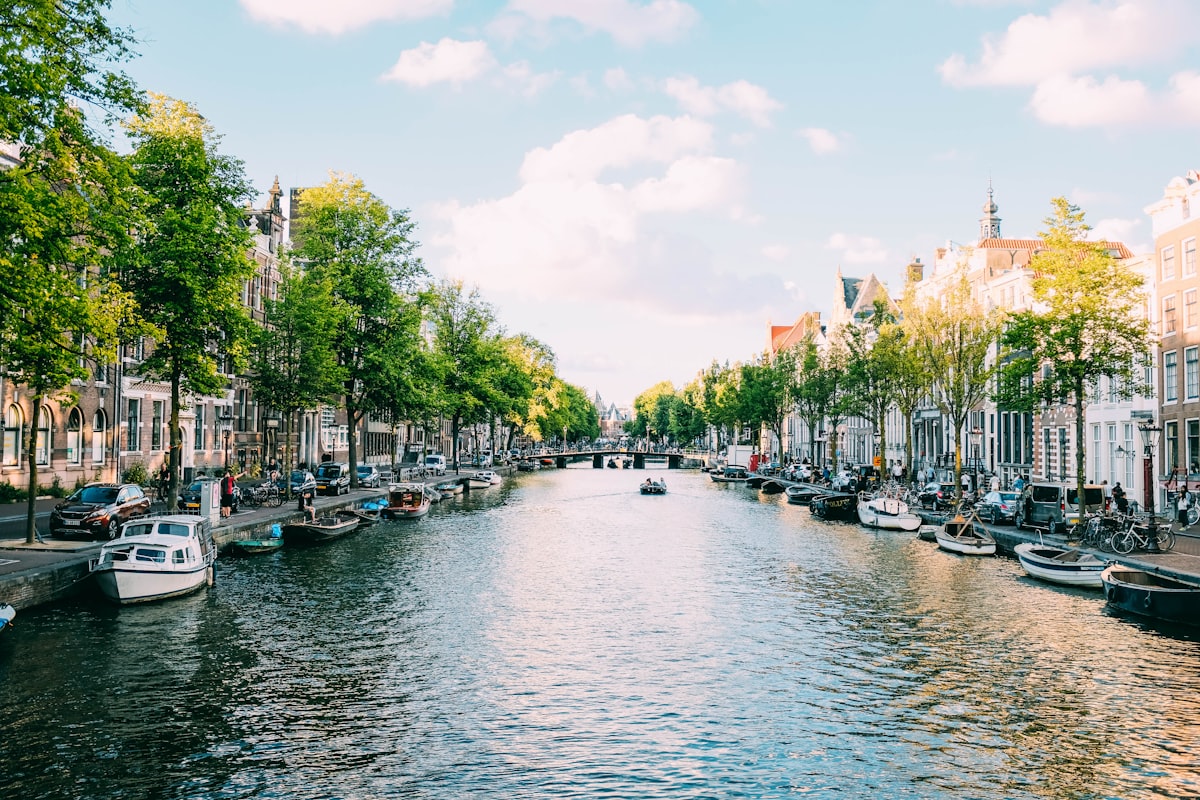
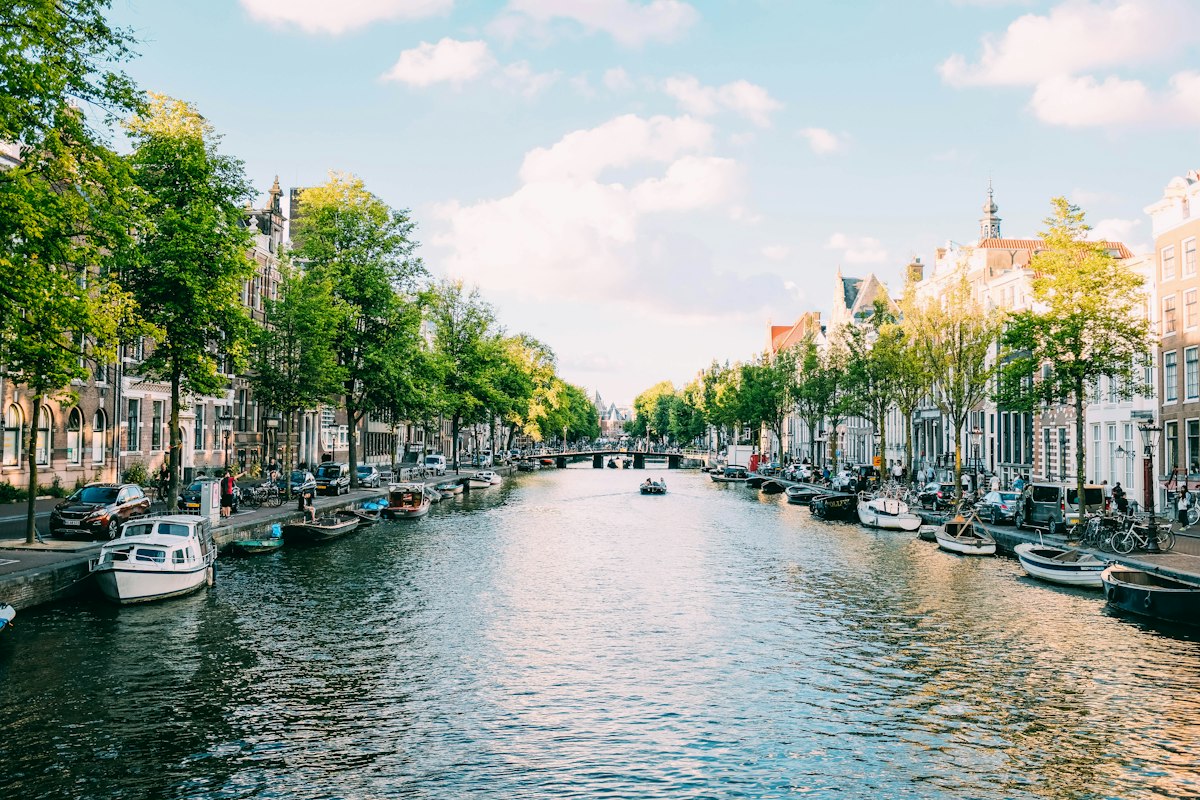
Amsterdam is a city that operates at bicycle speed and that is exactly the correct speed for it. The canal ring is the best urban cycling landscape in the world — 165 canals, 1,281 bridges, and a grid of streets designed for human movement rather than cars. Everything is close together: the Rijksmuseum, the Anne Frank House, the Vondelpark, the Jordaan neighbourhood. Walk anywhere and you will pass something worth stopping for. The city has a liberalism that has been tested and maintained for four centuries and the result is an atmosphere unlike anywhere else in Europe.
1. The Rijksmuseum

”
The Rijksmuseum holds the greatest collection of Dutch Golden Age painting in the world. Rembrandt’s Night Watch occupies its own room and is larger than most people expect. Vermeer’s The Milkmaid and The Love Letter are two rooms away. The decorative arts collection — delftware, silver, furniture — is comprehensive and undervisited. The building itself is a 19th-century neo-Gothic palace. Book timed entry online; the morning slots fill first. Allow three hours minimum. The museum garden, accessible for free, has displayed works including Rodin’s The Thinker.
2. Anne Frank House

”
The Anne Frank House is the most emotionally significant site in Amsterdam. The secret annex where Anne Frank and seven others hid from the Nazi occupation for two years before being discovered in 1944 is preserved as it was, stripped of furniture after the occupants were taken. The diary entries displayed alongside the rooms she wrote them in produce a form of understanding that reading the book alone cannot. Book tickets online three to four weeks in advance — they sell out completely and are not available at the door. Evening slots are quieter.
3. Rent a Bicycle for a Day

”
Renting a bicycle in Amsterdam and riding it for a full day is the single activity that most transforms the city from a collection of tourist sites into a place people actually live. MacBike and Orangebike are the main rental companies. Ride through the Jordaan in the morning, cross to the Eastern Docklands for the contemporary architecture, continue to the NDSM Wharf industrial arts complex in Amsterdam-Noord via the free ferry across the IJ, and return through the Vondelpark. The entire circuit takes four to five hours and passes more of the real Amsterdam than any guided tour.
4. The Jordaan Neighbourhood

”
The Jordaan was a working-class neighbourhood in the 17th century and is now the most desirable residential area in Amsterdam — the narrow streets, the small hofjes (almshouse courtyards hidden behind wooden doors), the independent shops and brown cafés have survived gentrification with their character largely intact. The Noordermarkt on Saturday morning has the best organic food market in the city. The Westerkerk tower (€9 to climb) has the best view of the canal ring. The Anne Frank House is on the eastern edge of the Jordaan; arriving from the west through the neighbourhood makes a better approach.
5. Van Gogh Museum

”
The Van Gogh Museum has the largest collection of Van Gogh’s work in the world — 200 paintings, 500 drawings, and 700 letters, tracing his development from the dark Dutch period through the Impressionist transformation in Paris to the incandescent colour of Arles and Saint-Rémy. The chronological hang makes the artistic development viscerally clear. Book tickets well in advance — this is the most visited museum in the Netherlands. The museum shop has the best art books in Amsterdam.
6. Day Trip to Keukenhof [April-May Only]

”
Keukenhof is the world’s largest flower garden — seven million bulbs planted across 32 hectares, open for eight weeks from late March to mid-May when the tulips, hyacinths, and daffodils are in bloom. It is one of the most photographed places in Europe for a reason: the scale and the density of colour are genuinely extraordinary. Arrive early to avoid the worst of the crowds. Combine with a drive through the flower-growing fields of the Bollenstreek — the strip between Leiden and Haarlem — where the commercial tulip cultivation produces landscapes of solid colour stripes visible for kilometres.
7. The Heineken Experience

”
The Heineken Experience in the former Heineken brewery on the Stadhouderskade is the best-produced brand museum in Europe — self-guided, genuinely interactive, and ending with two fresh beers included in the entry price. The horse stables that supplied the brewery’s delivery horses are still intact inside the complex. The tour explains the brewing process with more clarity and less smugness than most brewery tours. Book online for a time slot and skip the queue that forms at the door.
8. Foam Photography Museum

”
Foam on the Keizersgracht is one of the best photography museums in Europe: four floors of a canal house given over to rotating exhibitions of international photography, from documentary to conceptual to fashion. The programme changes every six to eight weeks. The museum shop has the best photography book selection in Amsterdam. Small, focused, and manageable in 90 minutes — a good addition to a day that includes the Rijksmuseum without the exhaustion of another large museum.
9. Albert Cuyp Market
”
The Albert Cuyp Market in De Pijp is the largest outdoor market in the Netherlands — 260 stalls, 300 metres long, open six days a week. It sells everything from stroopwafels and raw herring to fabric, household goods, and tropical produce from the Dutch Caribbean community. The surrounding De Pijp neighbourhood has the most diverse restaurant scene in Amsterdam — Indonesian, Surinamese, Turkish, Ethiopian — reflecting the city’s history as a trading capital with connections to every inhabited continent. Eat raw herring with onions at the market; it is an acquired taste that Amsterdam considers a fast food essential.
10. The Eastern Docklands
”
The Eastern Docklands east of Centraal Station was former port infrastructure transformed in the 1990s and 2000s into one of the most architecturally interesting residential areas in Europe. The Java Island, KNSM Island, and Borneo Island peninsulas have housing by architects including Sjoerd Soeters and Kees Christiaanse — design that was experimental at the time and has aged well. The Lloyd Hotel on KNSM Island has a bar and restaurant accessible to non-guests and the best design collection of any hotel in Amsterdam.
Practical Information
”
Amsterdam Centraal is the main transport hub — Schiphol Airport is 20 minutes by direct train. The GVB public transport card covers trams, buses, and the metro; load credit at the station. Bicycles are the fastest way to cross the city. I Amsterdam City Cards cover museum entry and public transport and pay for themselves after three or four museums. The peak tourist season is April-May (tulip season) and July-August; September and October are significantly less crowded. The city does not have an off-season — it is busy year-round.