
Germany beyond Berlin is a country of contradictions that work: baroque Munich that throws the world’s largest beer festival, Rhine castles that look invented but are genuine medieval fortifications, the Black Forest that is exactly as described, Bavarian Alps that compete with Austria and Switzerland for drama and lose to neither. The country is also the most overlooked destination in Western Europe for food — the regional cuisines of Swabia, Bavaria, and the Rhineland are serious cooking traditions that deserve more international attention than they receive.
1. Munich and Oktoberfest

”
Munich is the most liveable city in Germany by most measures — the English Garden (larger than Central Park), the Marienplatz with the Glockenspiel, the Deutsches Museum (the largest science and technology museum in the world), the Pinakothek art museums. Oktoberfest runs for 16 days from late September through early October — six million visitors, fourteen beer tents, one million litres of beer per year. The tents book up completely; the Hofbräu tent accepts walk-ins until the afternoon. Reserve a table at the Augustiner tent months in advance for the best experience. The beer is served in one-litre Masskrug; the Bavarian food — Weisswurst, Brezn, roast chicken — is the correct accompaniment.
2. Neuschwanstein Castle

”
Neuschwanstein is the most visited castle in Germany and the inspiration for the Disney castle. Ludwig II of Bavaria built it between 1869 and 1886 as a retreat from public life and it is extraordinary — a neo-Romanesque fantasy perched on a rocky crag above the Bavarian Alps. The interior tour covers the throne room (the throne was never installed; Ludwig died before the castle was finished), the singer’s hall, and the artificial stalactite cave. Book tickets online well in advance in summer; the queues at the door can be three hours. The view from the Marienbrücke bridge above the castle is the correct photograph.
3. The Romantic Road

”
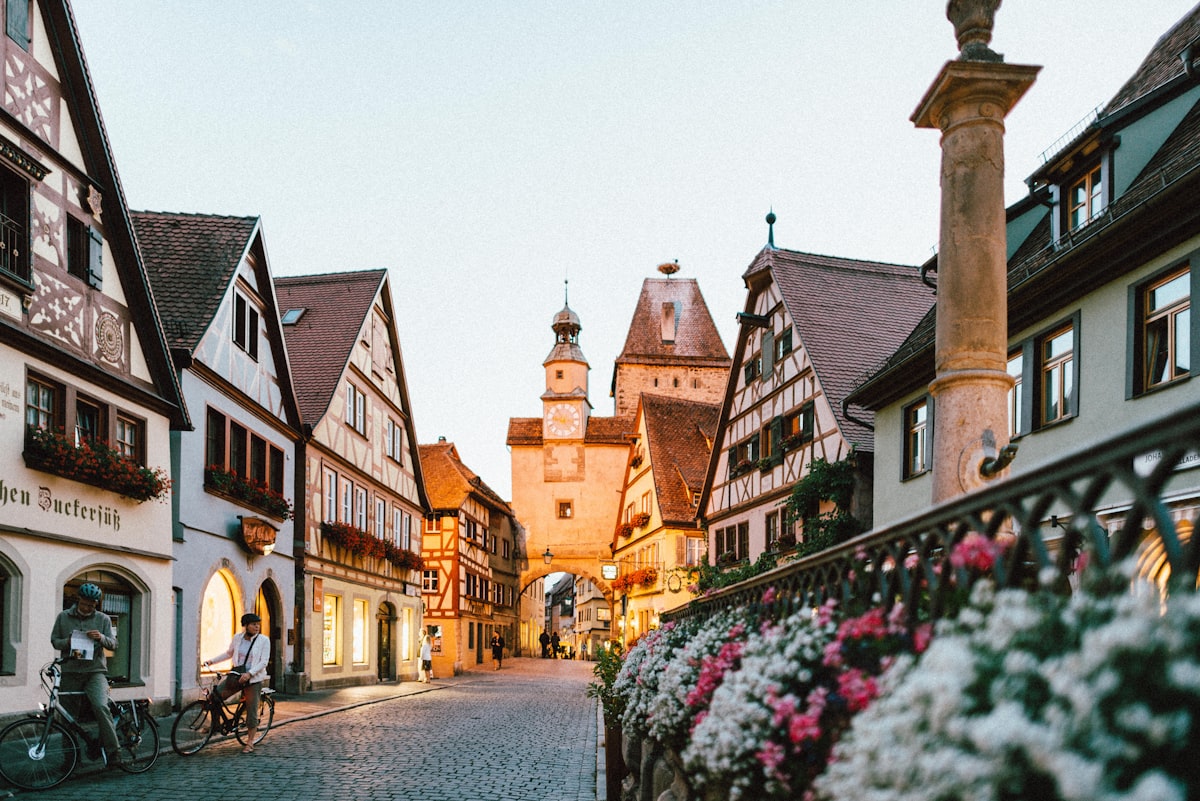
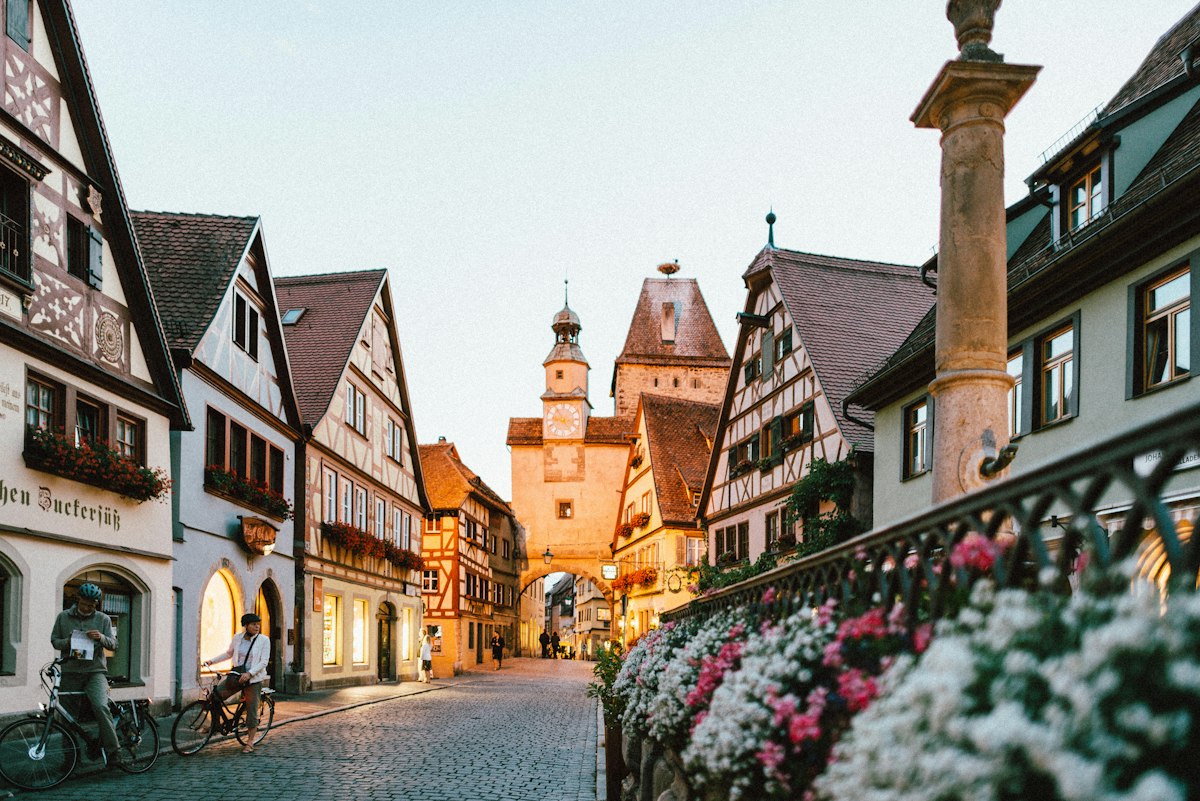
The Romantic Road (Romantische Straße) is a 460-kilometre tourist route through Bavaria and Baden-Württemberg connecting medieval towns that were preserved by their economic decline in the 18th and 19th centuries. Rothenburg ob der Tauber is the most complete: the town wall is intact, the half-timbered houses are original, and the Käthe Wohlfahrt Christmas shop is open year-round. Dinkelsbühl and Nördlingen are smaller and less visited. The route ends at Füssen, the nearest town to Neuschwanstein.
4. The Rhine Valley

”
The Middle Rhine Valley between Bingen and Koblenz is a UNESCO World Heritage landscape — 65 kilometres of river gorge with a castle or castle ruin on every other hillside, vineyards producing Riesling on near-vertical slopes, and towns that have been in the wine trade since Roman times. The best way to see it is by boat — Köln-Düsseldorfer river boats run the route in both directions with stops at the major towns. The Lorelei rock, where the Rhine makes its sharpest turn, and the Pfalzgrafenstein castle built on an island in the middle of the river are the highlights.
5. The Black Forest

”
The Black Forest (Schwarzwald) is a forested highland in Baden-Württemberg that gave the world cuckoo clocks, Black Forest cake (Schwarzwälder Kirschtorte), and a name that has been attached to every pine-forest landscape in Europe since. The actual Black Forest is good: hiking trails through dense spruce and fir, the spa town of Baden-Baden with its 19th-century Roman baths and casino, the open-air museum at Vogtsbauernhof with traditional farmhouses, and the Titisee lake surrounded by hills. Drive the Schwarzwald-Hochstrasse ridge road for the best overview.
6. Hamburg

”
Hamburg is Germany’s second city and most international — a port that has traded with the world since the Hanseatic League and absorbed the cultures of every country it traded with. The Speicherstadt — the largest warehouse district in the world, built between 1883 and 1927 on 24 artificial islands — is now a UNESCO World Heritage site containing museums, design studios, and the Miniatur Wunderland (the world’s largest model railway). The Reeperbahn is the red-light district famous for its nightlife. The Elbphilharmonie, a concert hall built on a former warehouse, is the most architecturally significant building in Germany since reunification.
Practical Information

”
Germany’s ICE high-speed rail network connects Berlin to Munich (4 hours), Hamburg (1.5 hours), Frankfurt (4 hours), and Cologne (4.5 hours). The Deutschland-Ticket — a monthly flat-rate ticket covering all regional trains and local public transport — is the best value for exploring multiple regions. Driving is practical for the Romantic Road, Rhine Valley, and Black Forest. Germany uses the euro. The best months vary by region — Bavaria is best in late September (Oktoberfest) and December (Christmas markets), the Rhine Valley in June and September (harvest season), Berlin year-round.