
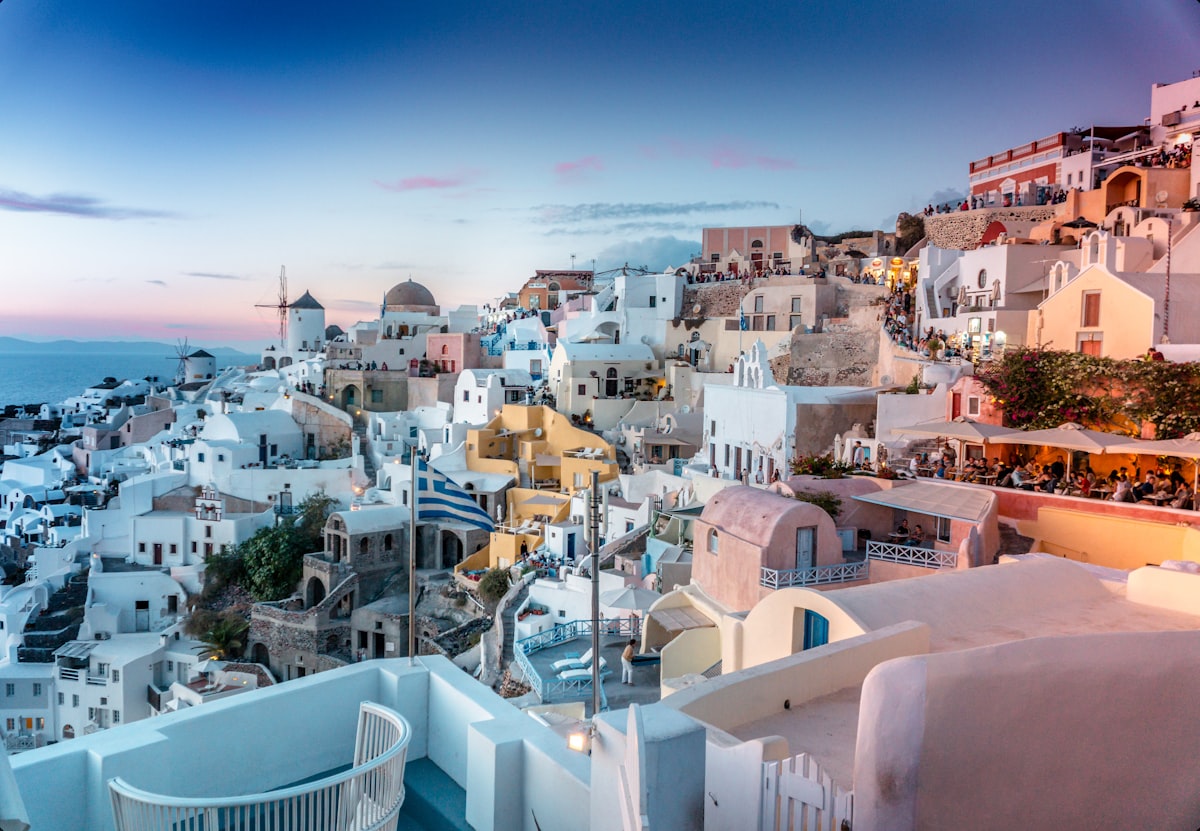
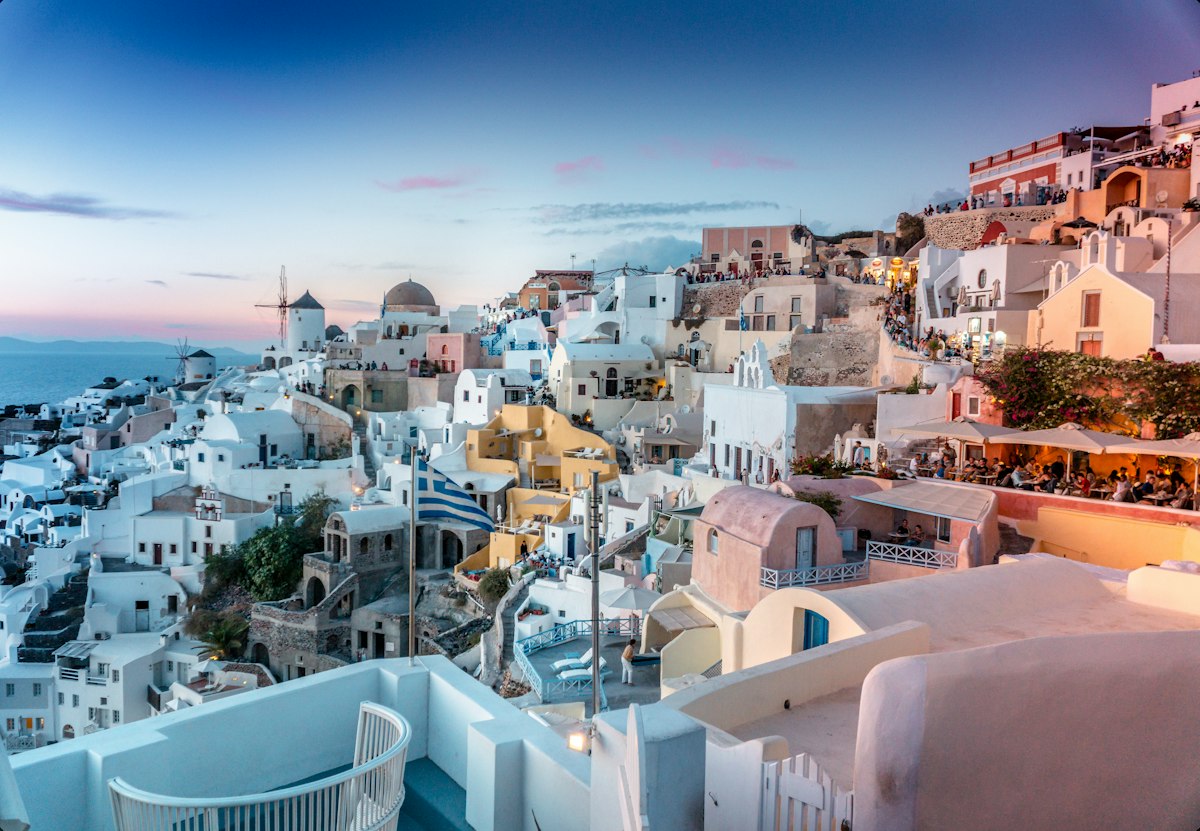
I arrived in Santorini expecting to be cynical about it. The island is one of the most photographed places on Earth, its images so ubiquitous that arriving feels like stepping inside a photograph you have already seen a thousand times. Within an hour of checking into my cave house in Oia, watching the sun drop toward the caldera while the sky turned colours I do not have names for, the cynicism evaporated completely.
Oia: The Sunset Capital of the World
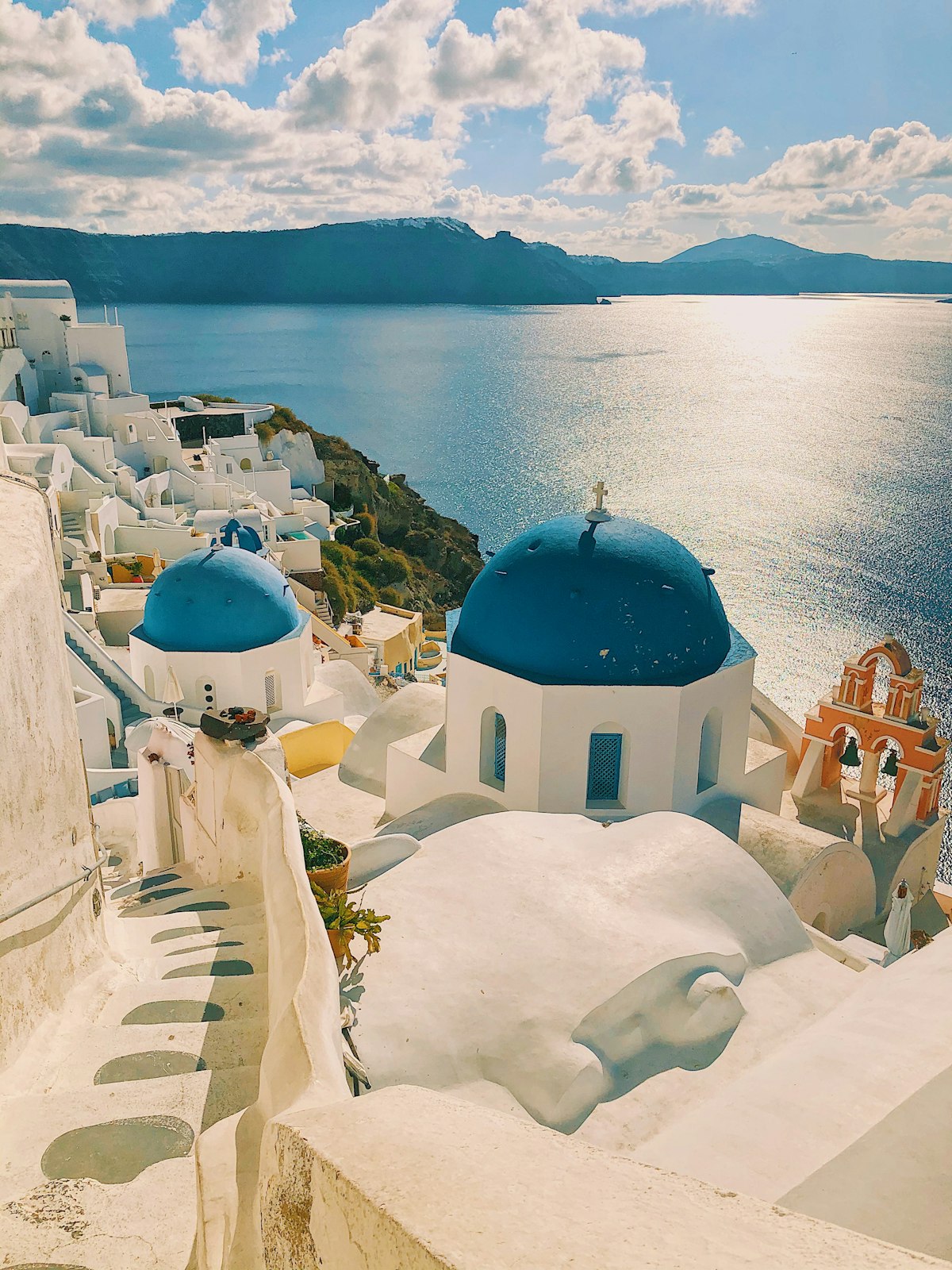
Oia is the village at the northern tip of the caldera where everyone comes to watch the sunset, and the crowds that gather at the ruined castle for the evening show are significant. I watched it twice from there and twice from the terrace of my accommodation, and the terrace was considerably better. The blue-domed churches, the white cave houses carved into the cliff, the caldera stretching away to the submerged volcano — the photographs are accurate. It is that beautiful.
Walk the caldera rim from Fira to Oia on foot — about two hours along a path above the cliffs, with the sea five hundred metres below and the volcanic islands in the distance. It is one of the finest walks in Greece and requires nothing more than reasonable fitness and a bottle of water.
Fira: The Capital and Its Surprises
Fira is the island’s capital and busiest town, and most visitors pass through it quickly on the way to Oia or the beaches. I spent more time there than expected and found things worth finding: the Museum of Prehistoric Thera, which houses extraordinary finds from the ancient Akrotiri settlement, is genuinely fascinating; the caldera views from the main street at night are equal to Oia’s in atmosphere if not in reputation; and the restaurants back from the main tourist drag serve excellent Greek food at prices that remind you this is still Greece, not Monaco.
Akrotiri: A City Frozen in Time
Akrotiri is an ancient Minoan city buried by the volcanic eruption of around 1600 BC — a Bronze Age Pompeii — and the excavation site, now covered by a modern shelter, is one of the most remarkable archaeological sites I have visited anywhere. Multi-storey buildings, preserved streets, sophisticated drainage systems, extraordinary frescoes: the people of Akrotiri were running a highly civilised city while most of Europe was living in roundhouses. The site is easy to overlook in the rush to reach the beaches; do not make that mistake.
The Beaches: Black Sand and Red Cliffs
Santorini’s beaches are not the fine white sand of other Greek islands — they are black and red volcanic, dramatic rather than classically pretty. The Red Beach, below steep ochre-red cliffs near Akrotiri, is genuinely striking. The black sand beaches at Perissa and Perivolos on the south coast are long and well-organised, with good beach bars and clear water. I preferred the quieter black pebble beach at Vlychada, which has a strange, lunar landscape of eroded cliffs behind it and far fewer people.
The Wine
Santorini produces some of the finest white wine in Greece, made from the Assyrtiko grape grown in volcanic soil in a unique basket-trained style — the vines grown in low spirals to protect them from the wind. The resulting wine is mineral, dry and unlike anything produced elsewhere. Visit a winery — Santo Wines, above the caldera, has the most dramatic setting — and try an Assyrtiko with a plate of local fava and grilled octopus. It is one of the better afternoon activities the island offers.
Practical Tips
- Arrive by ferry from Athens for the full experience — the approach to the caldera by boat is extraordinary. The fast ferry from Piraeus takes about five hours.
- Book accommodation on the caldera rim far in advance — the cave hotels in Oia and Imerovigli sell out months ahead for summer.
- Hire an ATV or car to explore the island — it is small enough to cover in a day.
- Best time to visit: May-June and September-October for warm weather without the August crush.
Exploring more of Greece? Read our guide to the best quiet resorts in Crete — a perfect island to combine with Santorini on a Greek island-hopping itinerary.