
A practical philippines island hopping itinerary is built around connections, not a checklist of beaches. Domestic flights cover long gaps, fast ferries link selected regional hubs, and RoRo vessels carry vehicles and buses on slower crossings. The key is to group islands that share a gateway, count most transfers as half or full days, and protect important flights with generous buffers. This guide explains each transport type, how to verify tickets and conditions, and how to shape a realistic two-week route through Cebu, Bohol, and Palawan without assuming that every advertised service operates daily.

Philippines Island Hopping Itinerary: Choose the Right Transport
No single transport method serves the whole archipelago. The best choice depends on distance, sea conditions, baggage, the location of airports and ports, and what follows the transfer. Compare complete door-to-door journeys rather than the time printed on a flight or ferry ticket.
Domestic flights for long distances
Flying usually makes sense between major island groups, such as Manila or Cebu and Palawan. Direct services can save a day, but routes and frequencies change, and some journeys still require a connection through a hub. Search the exact travel date on airline websites, confirm both airport and terminal, and check whether the ticket is protected through to the destination. Separate bookings can be cheaper, but the second carrier may have no obligation to help after a missed connection.
Fast ferries for regional links
Passenger ferries are useful where established ports face one another, with Cebu–Bohol being a common route-building example. A scheduled crossing still involves terminal access, check-in, possible port charges, baggage handling, boarding, and transport after arrival. Seats can sell out around weekends and holidays, so reserve important legs directly with the operator or an authorised seller when possible.
RoRo ferries, buses, and vans
Roll-on/roll-off ferries, usually called RoRo, move vehicles between islands and form part of longer overland corridors. They can suit travellers taking a bus or private vehicle across a shorter strait, but they are generally slower than passenger fast craft. Confirm whether a quoted bus fare includes the ferry, terminal fees, and any required transfer between the bus stop and vessel.
Booking Tickets and Checking Current Information
Build the route first, then book its least frequent or least flexible leg. Use airline, ferry operator, port, and airport websites or verified accounts for current details; accommodation staff can help confirm the local transfer between a terminal and hotel. Aggregators are useful for comparison, but an operator’s own notice is more relevant when a departure moves or weather deteriorates.
Connection buffers that work
Leave at least several hours between transport booked on separate tickets, more when a terminal change or ferry is involved. An overnight buffer is the safer choice before a long-haul international flight. After arriving by ferry, allow time to leave the vessel, collect baggage, queue, and make a road transfer. When two legs cannot be comfortably separated, change the route rather than hoping every stage runs perfectly.
Rules for Building a Sensible Route
- Choose one gateway and two or three island bases. Manila and Cebu provide useful connections, but changing hubs adds complexity.
- Stay at least three nights per main base. Four or five is better where boat days depend on weather.
- Group nearby destinations. Cebu and Bohol pair naturally; Palawan is usually a separate regional block.
- Count transfer days honestly. A morning departure may consume the day once packing, queues, and hotel access are included.
- Keep one movable day. Use it for a postponed boat trip, rest, or a land activity.
- Finish near the international departure airport. Do not arrive from a remote island hours before the flight home.
A realistic two-week route
Days 1–2: Cebu City or Mactan. Arrive, recover, and spend a day on nearby heritage, food, or a responsibly operated marine activity. Staying close to the next terminal reduces stress. Confirm whether the Bohol ferry leaves from Cebu City and allow for city traffic.
Days 3–5: Bohol. Take a morning passenger ferry if current schedules and conditions permit. Base on Panglao for beach access or closer to Loboc for countryside. Use one day for the Chocolate Hills, a conservation-focused tarsier visit, and selected historic or natural stops; reserve another for diving, snorkelling, or rest. Keep the final evening free before departure.
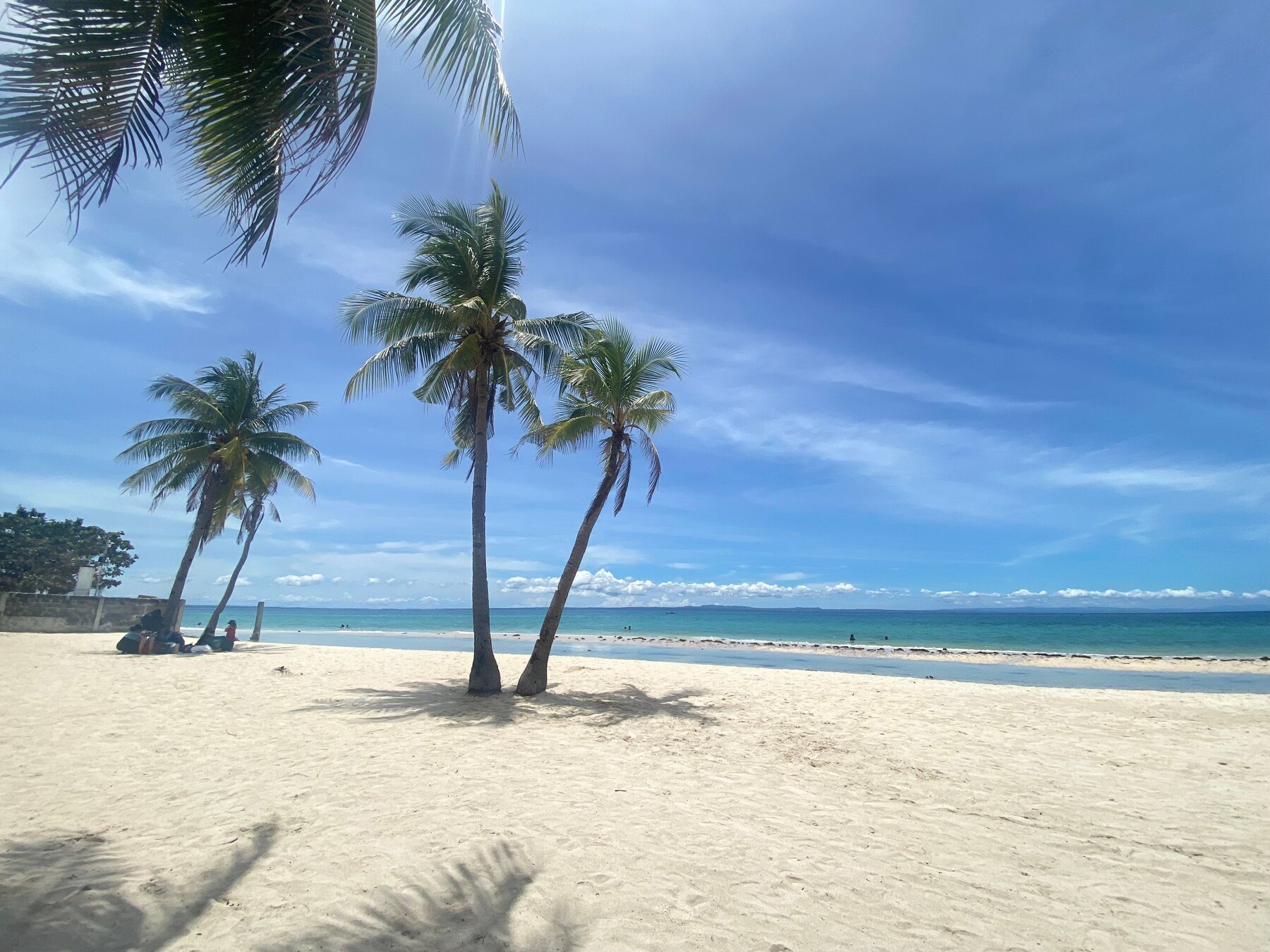
Day 6: Return to Cebu. Treat the ferry and airport-area transfer as the day’s main task. If the Palawan flight is on a separate ticket, sleep in Cebu and fly the next morning. A same-day connection is only reasonable with a wide margin and a workable backup.
Days 7–11: El Nido or Coron. Fly to the chosen Palawan gateway using a route that actually operates on the date. Select one base rather than squeezing in both. Five nights allow two potential boat days, a land day, and weather flexibility. Confirm permits, life jackets, group size, lunch, drinking water, and cancellation terms before paying an excursion operator.
Day 12: Fly to Manila. Keep the evening simple and stay in a district suited to the next day’s plans. Check the arrival and departure terminals because crossing the city can take substantial time.
Day 13: Manila. Use this as both a city day and disruption buffer. Group nearby sights such as Intramuros and the museum district rather than spending hours in traffic.
Day 14: Depart. Leave for the airport early, accounting for weekday, weather, terminal, and airline guidance. This final-night arrangement protects the international ticket if an earlier island flight changes.
Alternatives for different priorities
For a slower trip, omit Palawan and divide the time among Cebu, Bohol, and one well-connected nearby base after confirming ferry options. Beach-focused travellers can replace Bohol or Palawan with Boracay, remembering that arrival involves a gateway airport, road transfer, port, and short boat ride. Surfers may choose Siargao from Cebu if flights suit their dates. Divers can focus on fewer bases and must respect the interval recommended by their training agency or dive professional before flying.
El Nido and Coron can be paired when the inter-island vessel is operating and the schedule has spare days, but the crossing is weather-sensitive. It should not sit directly before an international departure. If connections look awkward, spending extra nights in one Palawan base is a stronger plan than adding another port.
Weather, Cancellations, and Safety
Rainfall, wind, and sea conditions vary across the country and do not follow one simple national pattern. Tropical systems can disrupt transport far from their centre. Check the Philippine weather service, coast guard, local authorities, airline, and ferry operator. If a captain or authority cancels, accept the decision and switch to a land-based day; never pressure a crew to depart.
Travel insurance should cover medical care, evacuation, missed transport, delays, and planned activities. Use licensed operators, wear the provided life jacket, and listen to safety briefings. Keep passport copies and booking records separate from the originals. On roads, use seat belts where available; rent a motorbike only with the appropriate licence, experience, helmet, and insurance.
Baggage, money, and connectivity
Domestic baggage limits may be lower than an international allowance, and small aircraft or fast craft can apply distinct rules. Check weight and size for every leg, prepay when useful, and label bags clearly. A soft-sided case or backpack is easier on steps and beach landings. Keep medicines, documents, electronics, and a change of clothes in the cabin bag, protected from spray.
Carry Philippine pesos in smaller notes because cards and cash machines are not dependable on every island. Split emergency cash between secure places and tell the bank about travel if needed. A local SIM or eSIM helps with updates, but coverage can disappear between towns and offshore. Download maps, tickets, insurance details, and hotel addresses for offline use.
What to pack
Pack light clothing, a modest layer for churches, a rain shell, secure sandals, sun hat, rash guard, personal medication, and a compact dry bag. Add a refillable bottle where safe refills are available and a small power bank that meets airline rules. Reef-conscious sun protection begins with shade and covering skin; follow local guidance on products used near sensitive marine areas.
Lower-impact island travel
Fewer bases reduce repeated transport and support longer local stays. Choose responsible local accommodation and guides, refill water, avoid unnecessary single-use items, and carry rubbish out. Do not touch coral, feed wildlife, collect shells, or fly a drone without permission.
Frequently Asked Questions
How many islands fit into two weeks?
Two or three main bases are realistic, excluding gateway nights. More stops create repeated transfer days and leave little room for weather changes. Choose places connected through the same hub and stay longer where boat activities are central.
Should ferry tickets be booked in advance?
Reserve important crossings once plans are firm, particularly around holidays and weekends. Booking needs vary by operator and route, so check the current official sales channel. Flexible terms are valuable during periods of unsettled weather.
Are flights always faster than ferries?
No. A regional ferry may be quicker door to door once airport transfers and waiting time are counted. Flights are usually more practical across larger gaps. Compare terminals, check-in, baggage, and onward transport as well as scheduled duration.
What happens when a ferry is cancelled?
Follow the operator’s rebooking or refund instructions, inform the accommodation, and avoid unofficial departures in unsafe conditions. Use the route’s spare day or stay another night. Insurance may help with eligible expenses, subject to its documentation and policy terms.
Official checks and editorial note
Last fact-check: 3 August 2026. This is a research-led planning guide, not a fabricated first-hand travel diary. Flight and ferry schedules, environmental fees, entry rules and weather conditions can change.
- Official Philippine eTravel system
- Philippine Department of Tourism
- Palawan provincial tourism information