

The Philippines is an archipelago of over 7,000 islands, and that number alone explains why it rewards a very different kind of trip planning than a single-country, single-region destination — distances between the highlights in this guide are considerable, often requiring a domestic flight rather than a scenic drive, and no single itinerary covers the whole country in any reasonable timeframe. What unites the regions covered here is a level of natural scenery, from limestone karst lagoons to terraced rice mountains, that consistently ranks among the best in Southeast Asia, alongside a famously warm and unpretentious hospitality that visitors consistently single out as the country’s defining trait.
This guide covers five very different regions worth building a Philippines trip around: Palawan’s island lagoons, Boracay’s rehabilitated beach, Bohol’s hills and tarsiers, the ancient rice terraces of northern Luzon, and Manila as the practical hub connecting them all.
Palawan: El Nido’s Limestone Lagoons
El Nido, on the northern tip of Palawan, is built around Bacuit Bay, a scattering of dramatic limestone karst islands rising sheer out of turquoise water, and the standard way to see it is through a series of island-hopping tours, labelled A through D, each covering a different set of lagoons, beaches and snorkelling spots. Big Lagoon and Small Lagoon, reached by kayak through narrow gaps in the surrounding cliffs, are the most photographed stops on the standard circuit, and while they draw real crowds by mid-morning, an early departure or a private tour booked specifically to beat the group boats noticeably improves the experience.
Further south, Coron, on a separate island reached by boat or flight from El Nido, offers its own draw in the form of several Japanese shipwrecks from the Second World War, sunk in a single US air raid in 1944 and now among the more accessible wreck-diving sites in the world, alongside Kayangan Lake, regularly ranked among the cleanest lakes in Asia and reached by a short but steep climb up limestone cliffs. Inland, Palawan’s Puerto Princesa Underground River, one of the longest navigable underground rivers in the world and a UNESCO World Heritage site, is worth building into an El Nido trip as well, though permits are limited daily and best arranged a few days ahead through a licensed tour operator.
Boracay: A Comeback Story
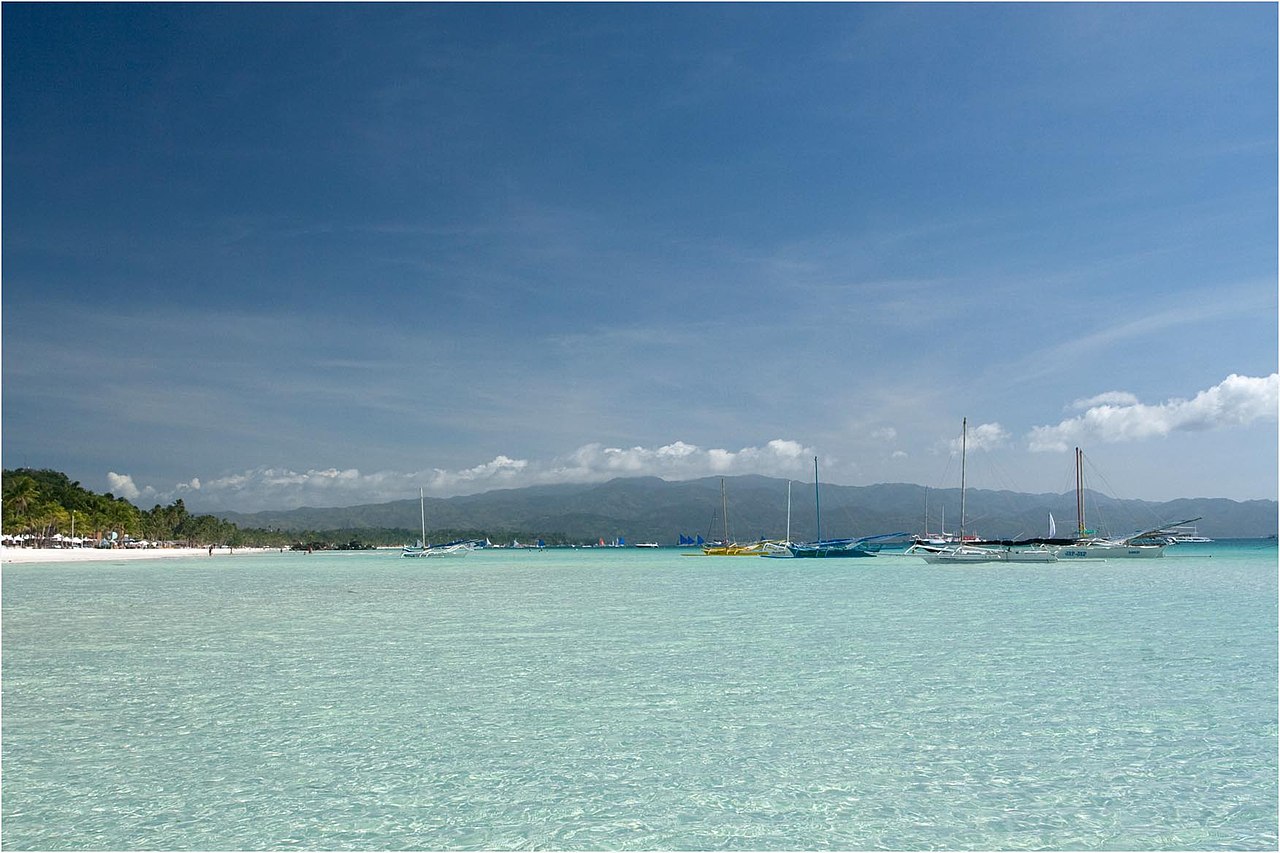
Boracay’s White Beach, four kilometres of fine white sand routinely ranked among the best beaches in the world, became so overrun with unregulated development and pollution by 2018 that the Philippine government took the unusual step of closing the entire island to tourism for six months for a full environmental rehabilitation. The result is a noticeably cleaner, better-managed island today, with stricter caps on visitor numbers, improved wastewater treatment, and a genuine effort to prevent the same overtourism damage from recurring, making it something of a case study in how a destination can recover from being loved to death.
Beyond the beach itself, Boracay has a strong watersports scene, particularly kiteboarding on the island’s quieter Bulabog Beach during the windy season from November to April, giving the island two distinct personalities depending on which coast and which season you visit. The rehabilitation also introduced a hard cap on daily arrivals and mandatory environmental fees, and while some longtime visitors miss the freewheeling, unregulated party atmosphere of the pre-2018 island, the trade-off has produced noticeably clearer water and a beach that is far less likely to repeat its earlier decline.
The Chocolate Hills and Bohol

The Chocolate Hills, over a thousand near-perfectly symmetrical grass-covered mounds spread across Bohol province, turn from green to a distinctive brown during the dry season, giving them their name, and their formation remains genuinely debated among geologists, with theories ranging from marine limestone deposits eroded over time to more folkloric local legends involving giants. Bohol is also home to the tarsier, one of the smallest primates in the world with enormous eyes adapted for nocturnal hunting, and several sanctuaries near Loboc allow close, if strictly regulated, viewing of these shy, endangered animals in a semi-natural forest setting.
A river cruise along the Loboc River, often paired with a traditional lunch buffet and live music performance aboard a floating restaurant, is a popular, if touristy, way to see another side of the island’s scenery, and Panglao, Bohol’s beach hub connected by a short bridge, offers some of the country’s best diving away from the larger crowds of Boracay or El Nido. Balicasag Island, a short boat ride from Panglao, is another well-regarded dive and snorkel site, known for its resident sea turtle population and a steep drop-off wall that draws serious divers alongside casual snorkellers happy to stay closer to the surface.
The Banaue Rice Terraces

The rice terraces around Banaue, carved into the mountains of northern Luzon by the indigenous Ifugao people an estimated 2,000 years ago using only hand tools, are often described as the “eighth wonder of the world” in Philippine tourism marketing, and while that claim invites scepticism, the scale of the terracing, climbing thousands of feet up steep mountainsides with an engineered irrigation system still functioning after two millennia, is genuinely remarkable. The nearby village of Batad, reachable only by a steep hike since no road reaches it directly, sits inside an amphitheatre-shaped cluster of terraces considered by many visitors to be the most dramatic single view in the entire region.
The Ifugao communities that built and still maintain these terraces continue to practise traditional rice cultivation methods, and several villages offer homestay accommodation that puts a meaningful share of tourism income directly into the hands of the people responsible for preserving this UNESCO World Heritage landscape.
Manila and Everyday Filipino Life

Manila, the sprawling capital, is rarely anyone’s primary reason to visit the Philippines, but Intramuros, the walled Spanish colonial core built in the 16th century and one of the oldest districts in Asia still bearing its original layout, gives a useful historical grounding for a country whose culture reflects centuries of Spanish and later American influence layered over its indigenous and broader Southeast Asian roots. Most visitors treat Manila as a transit point rather than a destination, connecting onward to the islands covered in this guide by domestic flight, and that approach is generally the right one unless you have a specific historical or culinary interest in the capital itself.
Food, Cost and When to Visit

Adobo, meat marinated and simmered in vinegar, soy sauce, garlic and pepper, is widely considered the closest thing the Philippines has to a national dish, though nearly every region and even every family has its own variation, and lechon, whole roasted pig with famously crisp skin, remains the centrepiece of Filipino celebrations nationwide. English is an official language and spoken widely across the country, a legacy of American colonial administration, which makes the Philippines noticeably easier to navigate independently than several of its Southeast Asian neighbours.
The Philippines runs cheap by international standards, with island-hopping tours, guesthouse accommodation and street food all representing strong value, though flights between islands add up quickly on a multi-region trip and are worth booking well ahead for the best fares. The dry season, roughly November to May, is the best window for most of the islands in this guide, while June through October brings the typhoon season, which can disrupt inter-island ferries and flights with little notice, making trip insurance and flexible bookings genuinely worth the extra cost during those months.
Most Western nationalities receive a visa-free entry of up to 30 days on arrival. Given the distances involved, a realistic single trip covers two or perhaps three of the regions in this guide rather than all five; Palawan paired with either Boracay or Bohol is a common and manageable combination, while the Banaue rice terraces, further north and logistically separate, are better suited to a dedicated trip built around Manila and northern Luzon specifically.
Practical planning notes for this trip
A useful itinerary for Philippines Travel Guide: Palawan, Boracay & Bohol should be built around travel time, opening days, weather and realistic energy levels rather than a list of attractions. The notes below turn the destinations in this guide into practical decisions. Confirm transport schedules and entry rules with official sources shortly before departure, because seasonal services and local requirements can change.
When planning around Palawan: El Nido's Limestone Lagoons, check where you will sleep the night before and after, then compare the door-to-door journey rather than the advertised travel time. Leave a margin for station transfers, meals and weather delays. If the stop requires an early reservation, secure that first and arrange flexible activities around it. This keeps one delayed connection from disrupting the rest of the route.
Treat Boracay: A Comeback Story as a route decision, not just a photo stop. Ask what time of day best suits the place, how crowded periods affect the experience, and whether a slower alternative would add more value. Group nearby sights on the same day, but avoid packing distant areas together simply because they look close on a map. Local terrain and traffic often matter more than straight-line distance.
Budgeting for The Chocolate Hills and Bohol should include transport to the exact entrance or neighbourhood, reservation fees, food near the attraction and the cost of returning after evening services become less frequent. Keep a separate contingency amount for price changes. A cheaper room can become the expensive option when repeated transfers consume both money and usable sightseeing time.
For The Banaue Rice Terraces, verify seasonal conditions rather than relying on a general country forecast. Rain, heat, daylight and local holidays can change what is practical from one region to another. Build one indoor or low-effort alternative into the day. That backup is especially valuable when tickets are timed or when the next stage of the itinerary depends on a fixed train, flight or ferry.
Final checks before departure
- Recheck official entry requirements, opening times and transport schedules.
- Keep bookings, insurance details and essential addresses available offline.
- Allow recovery time after long journeys instead of planning a major activity immediately.
- Review the route a few days before travel and replace any outdated detail.
Choosing between Palawan, Boracay and Bohol
Last fact-check: 3 August 2026. This is a researched comparison. Weather disruptions, ferry schedules and local environmental rules can change, so check official information before each island transfer.
| Destination | Best suited to | Main planning issue |
|---|---|---|
| Palawan | Lagoons, diving and multi-stop island routes | Long transfers between Puerto Princesa, El Nido and Coron |
| Boracay | An easy beach stay with many hotels and restaurants | Airport?port?island transfer and local visitor requirements |
| Bohol | Wildlife, countryside and a beach combination | Balancing Panglao with inland sightseeing |
Complete the official Philippine eTravel process when required and ignore lookalike commercial websites. The Department of Tourism and its official Boracay information are useful starting points for destination updates.
For a first trip, two island regions are usually more realistic than three. Every extra island can consume most of a day in airport, ferry and road transfers. Compare the wider region in our Southeast Asia islands guide.
