

Spain is one of those countries where most visitors see two cities — Barcelona and Madrid — and leave thinking they have seen Spain. They have not. The country is too large, too geographically varied, and too regionally distinct for any two cities to represent it. The north is green and rainy and eats differently from the south. Andalusia feels closer to Morocco than to Catalonia. The Basque Country has its own language, its own cuisine, and its own identity that it will defend with considerable conviction.
1. Granada — The Alhambra and the Albaicín
”
The Alhambra is the finest example of Moorish architecture in Europe and one of the most visited monuments in the world — the daily ticket allocation sells out weeks in advance. Book the Nasrid Palaces tickets the moment they become available (three months ahead on the official website). The Generalife gardens are less crowded and equally beautiful. The Albaicín neighbourhood across the valley from the Alhambra is a UNESCO-listed maze of whitewashed lanes and Moorish houses that survived the Reconquista largely intact. The viewpoint at the Mirador de San Nicolás at sunset is one of the most photographed views in Spain.
2. San Sebastián — The Best Food City in Europe

”
San Sebastián has more Michelin stars per capita than anywhere in the world except Kyoto. The pintxos bars of the Parte Vieja — the old town — are the correct introduction: small slices of baguette topped with everything from anchovy and pepper to foie gras and mushroom, eaten standing at the bar with a glass of txakoli. The serious restaurants — Arzak, Mugaritz, Akelarre — require booking months ahead but represent the most innovative cooking in Europe. The Playa de la Concha curving around the bay is the best city beach in Spain.
3. Seville — Flamenco and the Alcázar

”
Seville in April during the Feria de Abril is one of the great festival experiences in Europe — a week of flamenco, horses, and fino sherry in a fairground of casetas (private pavilions) that the city erects on the Triana side of the river. Outside festival season, the Alcázar (a working royal palace, still used by the Spanish royal family) and the Cathedral — the largest Gothic cathedral in the world — are the main draws. The Triana neighbourhood across the river, historically the Roma quarter and the birthplace of Sevillian flamenco, is the best place to eat and the most authentic part of the city.
4. Madrid — Museums and Late Nights

”
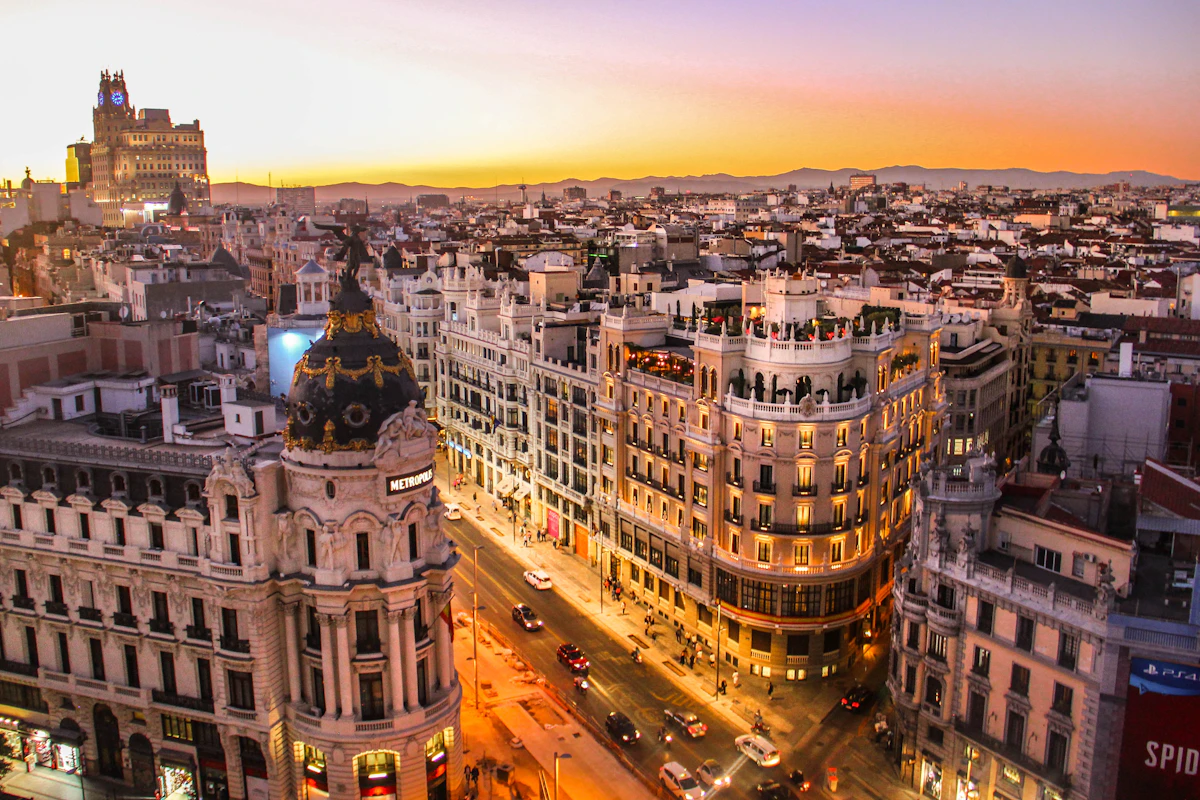
Madrid has three of the world’s great art museums within walking distance of each other: the Prado (Velázquez, Goya, El Greco, Bosch), the Reina Sofía (Picasso’s Guernica, Dalí, Miró), and the Thyssen-Bornemisza (everything from medieval to contemporary). The city also operates on a schedule that takes adjustment — dinner before 9pm is eating early, the best bars fill after midnight, and the Rastro flea market on Sunday mornings starts at 9am and runs until 2pm. The Barrio de las Letras, the literary quarter, has the best concentration of independent restaurants and bookshops in the city.
5. Toledo — Medieval Capital

”
Toledo was the capital of Spain before Madrid and contains more history per square kilometre than almost any other city in Europe. The old town is built on a granite hill surrounded on three sides by the Tagus River and is almost entirely intact from the medieval period. El Greco spent most of his life here and the Museo del Greco holds the best collection of his work outside the Prado. The Cathedral is one of the finest examples of High Gothic architecture in Spain. Toledo is 30 minutes from Madrid by high-speed train — the most straightforward day trip in the country.
6. The Camino de Santiago

”
The Camino Francés — the most popular of the many routes to Santiago de Compostela — runs 800 kilometres from Saint-Jean-Pied-de-Port on the French border across northern Spain to the cathedral in Santiago. Most people walk it in 30-35 days. The last 100 kilometres from Sarria qualify for the Compostela certificate and attract pilgrims who want the experience without the full commitment. The Camino Portugués from Porto is a quieter alternative that is gaining popularity. The walk itself — the landscape, the albergue system, the community of pilgrims — is transformative in a way that is difficult to describe without sounding like a brochure.
7. Córdoba — The Mezquita

”
The Mezquita of Córdoba — a mosque converted to a cathedral in the 13th century, with a Renaissance nave inserted into the middle of the Moorish prayer hall — is one of the most architecturally disorienting buildings in Europe. The forest of red-and-white striped arches extending in every direction, interrupted abruptly by a soaring Catholic choir, represents the collision of civilisations made physical. The Judería surrounding it — the former Jewish quarter — has the most intact medieval street plan in Andalusia.
8. The Canary Islands in Winter

”
The Canary Islands have the best year-round climate in Europe — average temperatures of 20-24°C throughout winter — and are a two-hour flight from mainland Spain. Tenerife has the Teide volcano (3,718 metres, the highest point in Spain) and the Anaga Rural Park, a laurel forest UNESCO biosphere reserve. Lanzarote has a landscape shaped by 18th-century volcanic eruptions that still looks like nothing else on Earth. Fuerteventura has the best beaches. La Gomera and La Palma are the least developed and reward slower travel.
9. Bilbao and the Basque Coast
”
Bilbao was a declining industrial port city until the Guggenheim opened in 1997 and transformed the urban economy. Frank Gehry’s titanium-clad building is genuinely extraordinary — the exterior changes character completely depending on light conditions and viewing angle. The collection inside is excellent but the building is the attraction. The Basque coast between Bilbao and San Sebastián — the Costa Vasca — has dramatic cliffs, surf beaches, and fishing villages that have barely changed in a century. Getaria, birthplace of the first man to circumnavigate the world, has one of the best fish restaurants in the Basque Country.
10. Ronda — The Cliff City
”
Ronda sits on a plateau divided by a 120-metre gorge, connected by the 18th-century Puente Nuevo bridge. The view from the bridge over the gorge is one of the most dramatic in Andalusia. The old town on the far side of the gorge has the oldest bullring in Spain — the Plaza de Toros de Ronda, built in 1785 — and a concentration of Moorish architecture. Hemingway set part of For Whom the Bell Tolls here. Ronda is 90 minutes from Málaga and makes the best day trip from the Costa del Sol.
Practical Information
”
Spain’s AVE high-speed rail network connects Madrid to Barcelona, Seville, Málaga, Granada, and Valencia quickly and cheaply booked in advance. Renfe’s Avlo low-cost high-speed service offers fares under 10 euros for advance bookings on some routes. Driving is the best option for Andalusia’s smaller towns, the Basque coast, and any itinerary that takes you off the main rail corridors. August is the hottest and most crowded month across the country; locals take their holidays in August and many small businesses in cities close. September and October are the best months almost everywhere.
How to turn this Spain list into a workable route
Last fact-check: 3 August 2026. This is a researched destination comparison, not a claim that every place was personally visited. Use Spain?s official tourism portal for current destination and accessibility information.
For a first trip of seven to ten days, choose one connected region instead of collecting distant cities. Madrid, Toledo, C?rdoba, Seville and Granada form a logical rail-based route. Northern Spain works better as a separate journey focused on Bilbao, San Sebasti?n and part of the Camino. The Canary Islands require their own flight time and should not be treated as a quick addition to an already crowded mainland itinerary.
Reservations worth making first
- Book the Alhambra through the official Alhambra and Generalife website; named-entry requirements and popular slots make this the most important reservation in Granada.
- Price long-distance trains before choosing hotels, especially when travelling at weekends or around major events.
- If walking the Camino, use the official Camino overview to compare routes rather than assuming there is one standard itinerary.
A slower route normally produces a better trip than one that combines Barcelona, Madrid, Andalusia and the islands in a single week.
