
Seoul itinerary 5 days: A Practical Neighborhood Plan
This Seoul itinerary 5 days plan groups sights by neighborhood, leaving enough room for meals, wrong turns, and a slower afternoon when jet lag appears. It moves from the historic center to western Seoul, then across the river, rather than sending you back and forth for a checklist of landmarks. Each day has one clear anchor and a few nearby choices. Use the alternatives for rain, heat, limited mobility, or simple fatigue; skipping one stop will often make the day better.
Before Your Seoul itinerary 5 days Begins
Airport arrival and getting around
From Incheon International Airport, the AREX railway is usually the clearest option for Seoul Station and connections onward. The all-stop train serves more stations; the express suits travelers staying near Seoul Station. Airport limousine buses can be easier with large luggage, but traffic affects journey time. A taxi offers door-to-door convenience for a group or late arrival. From Gimpo Airport, the subway or AREX links efficiently with central Seoul. Check the final service of the night.
A rechargeable T-money card is the flexible default: it works across the wider metropolitan network and calculates eligible transfers when you tap correctly. Seoul’s short-term Climate Card offers unlimited travel for selected periods, but excludes some lines and airport or non-Seoul services. Compare your routes, pass duration, physical-card cost, and current coverage. Frequent riders may benefit; those traveling beyond Seoul may prefer T-money. Confirm changing rules on the Seoul Metropolitan Government Climate Card page.
Where to stay
Jongno or Euljiro makes the first two days easy. Myeongdong is convenient for airport buses, shopping, and navigation. Hongdae suits late dining and airport-rail access, though it adds travel to the palaces and Gangnam. Gangnam works for business or nightlife but is less efficient for the historic days. Choose a hotel within a comfortable walk of a subway station.
Day 1: Gyeongbokgung, Gwanghwamun, and Insadong
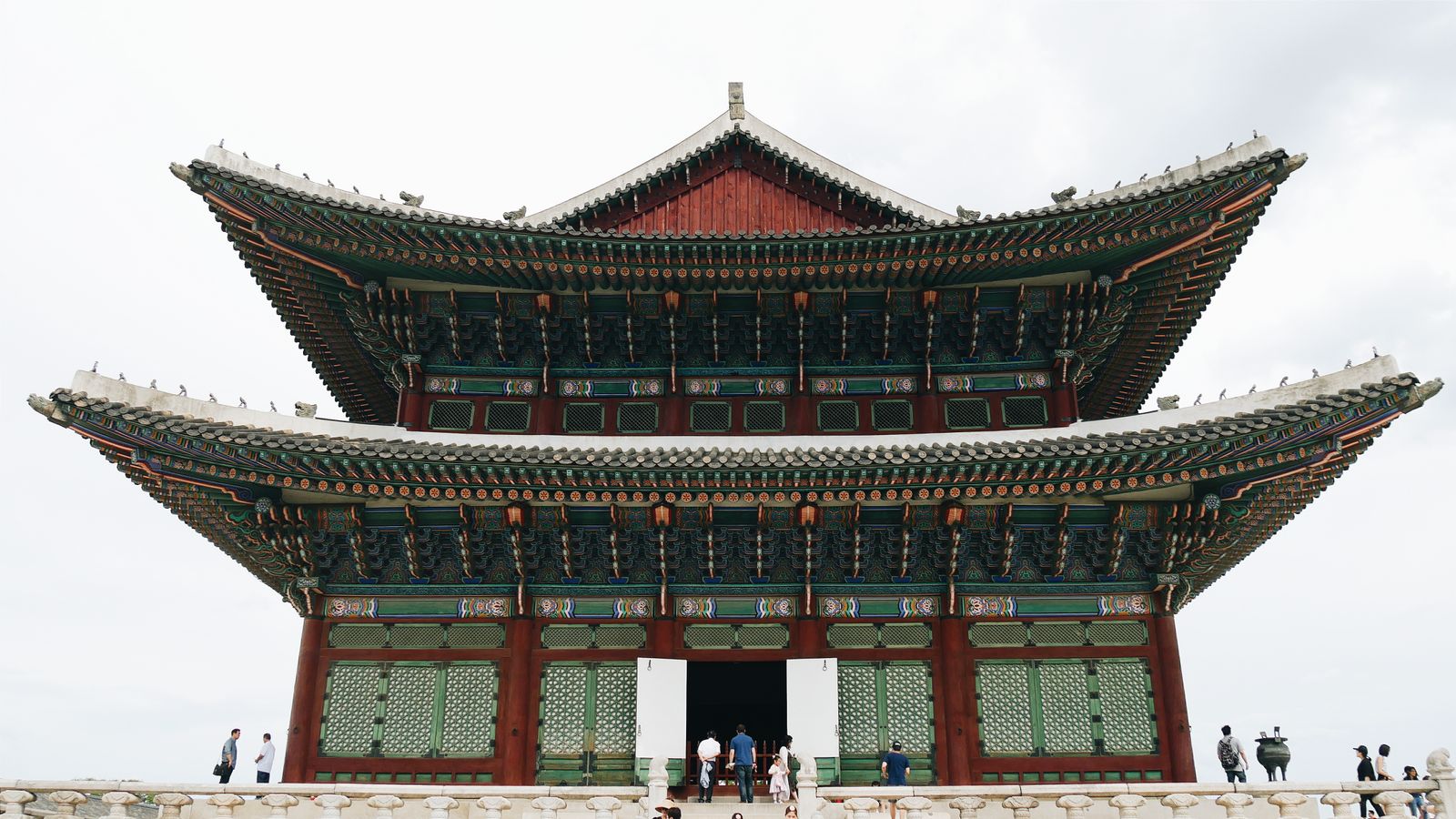
Begin at Gyeongbokgung when it opens, before tour groups thicken. Give the main palace grounds roughly two hours, longer if you add the National Palace Museum or National Folk Museum. The palace is normally closed on Tuesdays; when Tuesday is a public holiday, the closure may move to the next non-holiday weekday. Seasonal hours and special events vary, so verify the date on the official palace site shortly before your visit. If your first day is the closure day, swap Days 1 and 2, while remembering that Changdeokgung normally closes Mondays.
Walk south through Gwanghwamun Square, pausing for its historical displays. For lunch, look in Seochon, Jongno, or Insadong for kalguksu noodles, mandu dumplings, or a set meal with banchan. Spend the afternoon along Insadong’s main street and side lanes, then browse Ikseon-dong only if energy remains. Its cafe queues can consume the evening. Finish with dinner nearby. This route is about six to eight kilometers depending on museum choices.
Day 2: Bukchon, Changdeokgung, Gwangjang, and DDP
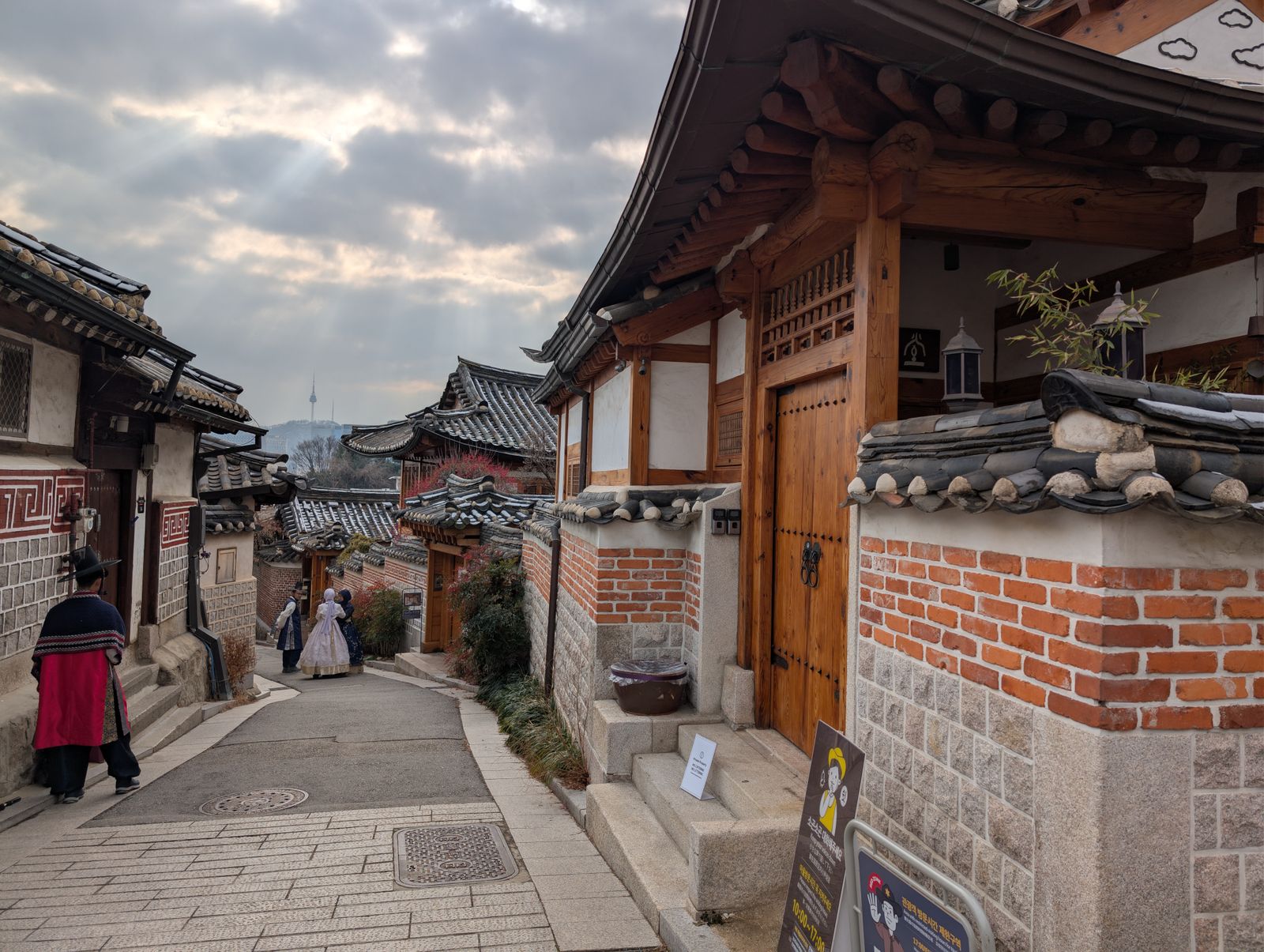
Visit Bukchon Hanok Village in the morning, but remember that its lanes are residential. Keep voices low, avoid blocking doors, do not photograph residents without permission, and obey restricted-hour signs. The area is hilly, so a short public-viewpoint loop is enough. A cultural center or craft workshop provides useful context.
Continue to Changdeokgung if palace architecture or gardens are a priority. General palace admission and the Huwon, often called the Secret Garden, are separate; Huwon access is by timed guided tour and places can sell out. Reserve through the official palace system when available and confirm language, seasonal schedule, and the usual Monday closure. Without a booking, see the main palace or substitute the nearby National Museum of Modern and Contemporary Art, Seoul. Do not force both a long Bukchon visit and a full garden tour into a rushed morning.
Take transit to Gwangjang Market for a late lunch. Choose one or two foods—bindaetteok mung-bean pancake, mayak gimbap, noodles, or yukhoe if raw beef suits you. Ask the price before ordering and keep passageways clear. Continue to Dongdaemun Design Plaza for its architecture, shops, or an exhibition. End here after dusk, or leave earlier for dinner. Check market and exhibition schedules independently.
Day 3: Hongdae, Yeonnam, Mangwon, and the Han River
Start late enough to match western Seoul’s rhythm. Walk the Gyeongui Line Forest Park through Yeonnam, stopping at a bakery or cafe, then explore Hongdae’s shops and galleries. If shopping is not appealing, shorten Hongdae and give the river more time.
Head to Mangwon Market for lunch and buy small portions rather than collecting every popular snack. Mangwon Hangang Park is then a natural continuation. Walk or sit beside the Han River; rent a bicycle only if weather, confidence, and path traffic make it sensible. Sunset is the day’s anchor. In heavy rain, strong wind, extreme heat, or poor air quality, replace the park with an indoor cultural venue or a longer cafe stop. Return to Hongdae for dinner or live music, checking age rules and performance times before committing.
Day 4: Gangnam, COEX, and Seongsu or Seoul Forest
Cross the river for a different scale of Seoul. Begin around Gangnam Station for commercial streets, or go directly to Bongeunsa Temple and COEX. Bongeunsa offers a calm counterpoint to the convention center; dress respectfully and avoid interrupting worship. Inside COEX, Starfield Library is a brief architecture stop. Pair it with an exhibition, aquarium, shopping, or lunch only when those appeal.
After lunch, choose one afternoon. Seoul Forest has broad paths, lawns, and seasonal foliage, making it the better choice for open air and a relaxed pace. Nearby Seongsu has converted industrial buildings, cafes, boutiques, and rotating pop-ups; it suits design and shopping interests, but popular venues may have lines. Combining both is possible because they are close, yet choosing one prevents the day becoming a commute between photo locations. Have dinner in Seongsu or return toward your hotel before rush hour if crowded trains are difficult.
Day 5: Namsan, Myeongdong, or a Weather-Proof Culture Day
Use the final day as a buffer. In clear weather, approach Namsan via a walking route appropriate to your fitness or use the cable car and local bus options, checking current operations. The tower observatory is optional; city views from the mountain can be satisfying without it. Descend toward Myeongdong for lunch, skincare shopping, department stores, and an evening food-stall circuit. Street-stall availability varies, so plan a sit-down backup.
For rain, severe temperatures, or tired legs, choose one museum. The National Museum of Korea fills several hours; the War Memorial of Korea offers a different historical focus. Contemporary art or a palace museum keeps you nearer the center. Confirm closure days and last admission. This day can also absorb anything missed earlier.
Food, Budget, Walking, and Accessibility
Plan one destination meal per day and let the others follow the neighborhood. Try barbecue, jjigae stews, naengmyeon, fried chicken, temple food, and market snacks. Solo diners may find noodle shops, kimbap counters, food courts, and stew restaurants easier than barbecue venues requiring multiple portions. Mention allergies clearly; broths, sauces, and shared grills can complicate strict avoidance.
For a durable budget, avoid relying on a fixed daily price. List accommodation, airport transfer, local transit, admissions, meals, shopping, and a contingency separately. Check current official admission and transport costs, then total your chosen paid stops. Add a buffer for cafes, lockers, and weather-driven taxis. Palaces, parks, markets, and neighborhood walks keep sightseeing costs controllable; accommodation and discretionary shopping usually create the widest variation.
Expect substantial walking, stairs, slopes, and long station transfers. Comfortable shoes matter. Save Korean addresses, because similarly named venues can confuse map searches, and use a Korea-focused navigation app for real-time routes. Travelers using wheelchairs or managing limited mobility should check elevator exits before departure, allow extra transfer time, and contact attractions about step-free routes. Historic sites can include uneven stone, thresholds, gravel, and limited accessible paths. Taxis can bridge difficult segments without changing the entire plan.
Seasonal Adjustments and the DMZ Tradeoff
Spring and autumn bring pleasant walking conditions but also busy blossom or foliage periods. Summer requires shade, water, indoor breaks, and flexibility around monsoon rain. Winter can be dry, icy, and sharply cold; shorten river time and schedule museums between outdoor stops. Check daily air-quality and weather alerts, and never build the whole trip around a specific bloom date.
A DMZ tour can provide historical context, but it consumes much of a day, involves passport and security requirements, and may change or cancel with little notice. Replace Day 5 rather than squeezing it beside Namsan. Book through a reputable operator, verify the stops, and treat access as conditional. Choose it because the subject matters to you, not because it appears on a standard checklist.
Frequently Asked Questions
Is five days enough for Seoul?
Yes. Five days covers the historic center, western neighborhoods, the Han River, and one area south of the river at a humane pace. It is not enough to see every major museum or make several day trips, so protect the geographic structure.
Should I buy a T-money card or a short-term Climate Card?
T-money is simpler for mixed routes, airport segments, and travel beyond the Climate Card network. Compare the short-term pass’s current price and coverage with your expected covered rides. Do not assume every train or bus is included.
Can the itinerary work from Tuesday to Saturday?
Yes, but move Gyeongbokgung away from its usual Tuesday closure. Place Changdeokgung on Tuesday instead, since its usual closure is Monday, then continue with the remaining neighborhood days in any order that fits weather and reservations.
Do I need restaurant reservations?
Most casual restaurants and markets do not require them. Reserve sought-after tasting menus, fine dining, or a specific barbecue restaurant. Otherwise, keep two nearby choices and avoid spending an hour in a queue merely because a venue is widely posted online.