
Athens does not ask for your approval. The city is ancient and modern and chaotic and beautiful all at once, and it wears all of these qualities with complete indifference to whether you find it charming or overwhelming. I arrived for what I thought would be three days before catching a ferry to the islands, and stayed for ten. The city gets under your skin in a way that is difficult to predict and impossible to fully explain.
The Acropolis: Go Early, Stay Long
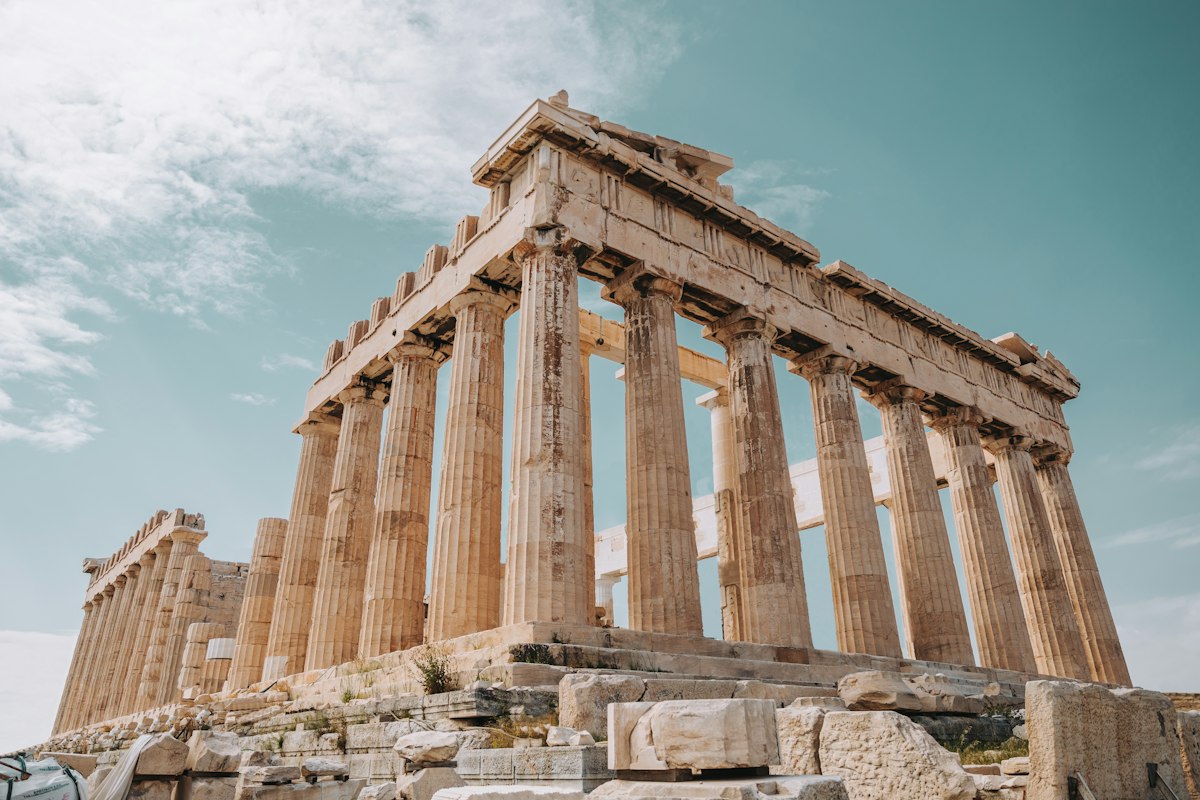
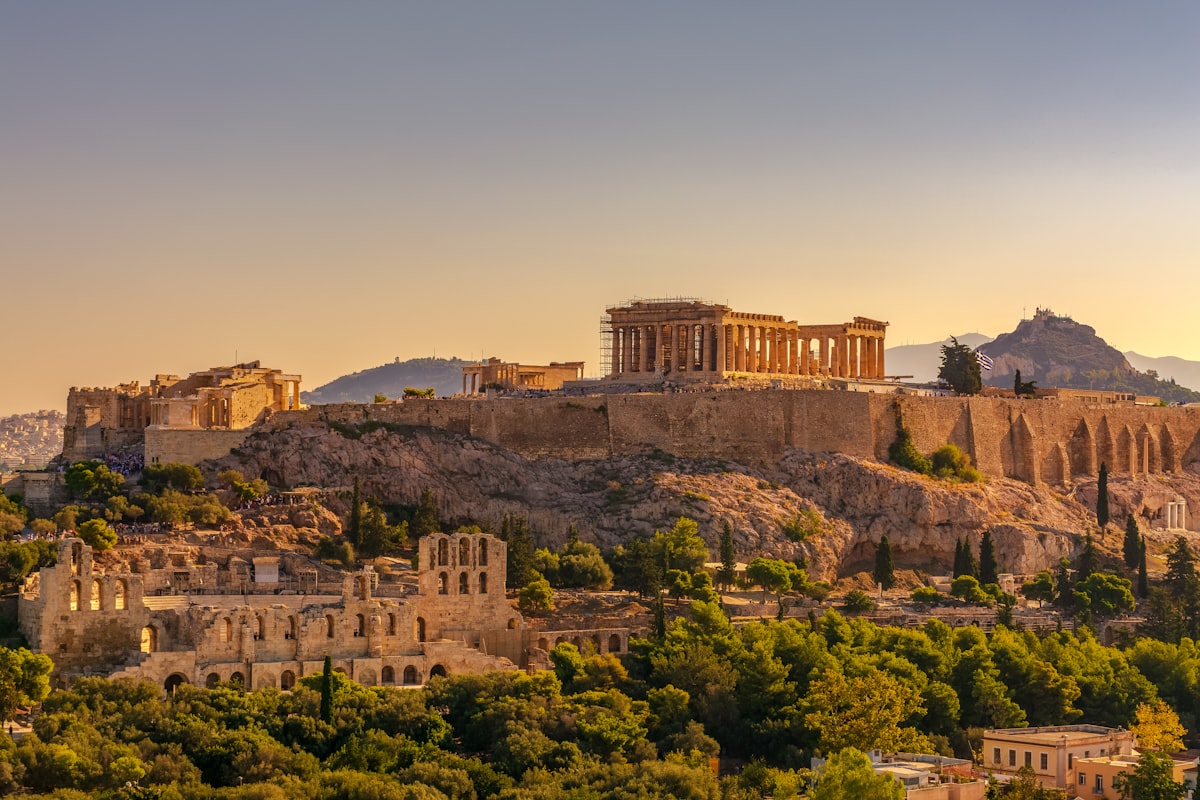
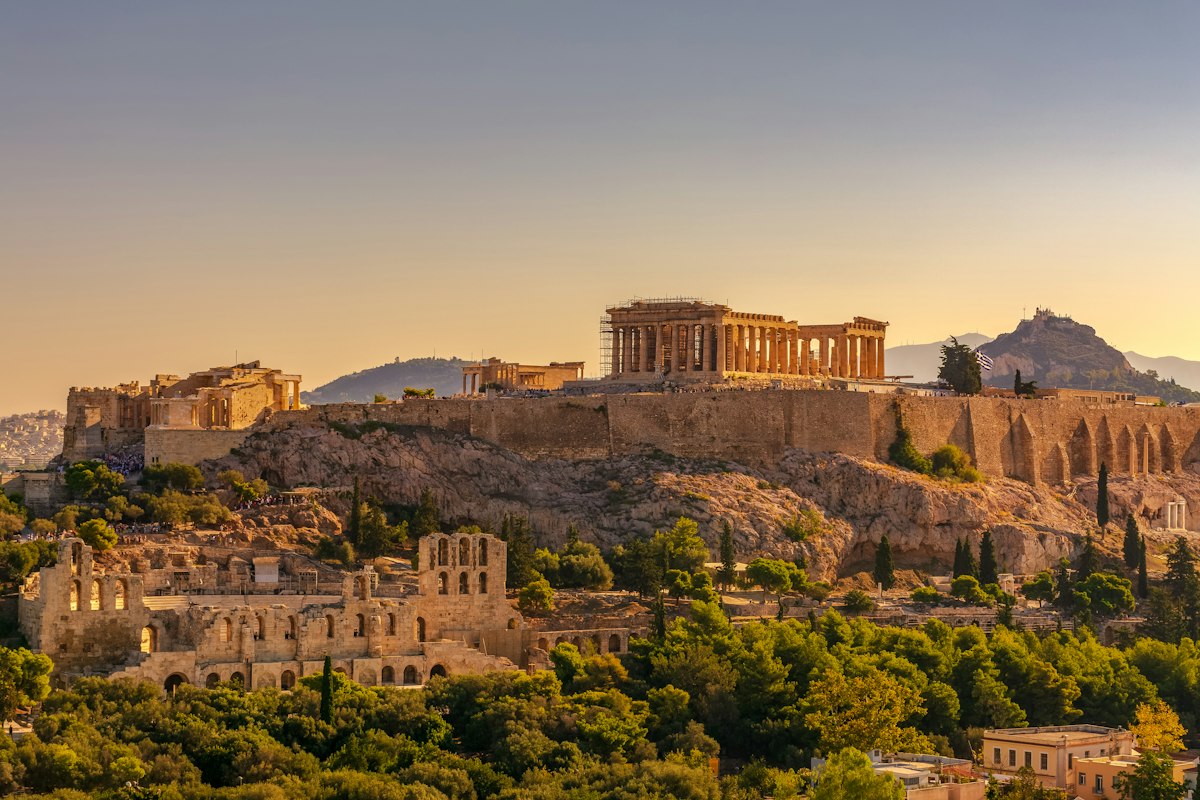
The Acropolis is one of those sites that exceeds expectation despite — or perhaps because of — the enormous weight of cultural significance attached to it. The Parthenon, even partially ruined, even surrounded by scaffolding, even crowded with other visitors, is a building of staggering precision and beauty. The fact that it was built without mortar, using only the precision of the stone cuts to hold it together, and that it has stood for nearly two and a half thousand years, is the kind of fact that does not fully compute until you are standing in front of it.
Buy the combination ticket that includes the Acropolis and seven other sites — it pays for itself quickly and is valid for five days. Go first thing in the morning when the gates open or in the late afternoon when the light is better and the crowds have thinned.
The Acropolis Museum
The Acropolis Museum, at the base of the hill, is one of the finest museum buildings I have been in anywhere. The collection of original sculptures, friezes and architectural elements from the Acropolis is extraordinary; the museum is designed so that the top floor is oriented exactly in line with the Parthenon above, visible through the glass ceiling, which creates an effect that is simultaneously architectural and quietly moving. The Elgin Marbles controversy takes on a different dimension when you stand in the empty spaces left for the sections currently in London.
Monastiraki and Plaka: Old Athens
Monastiraki square, below the Acropolis, is where Athens oldest and most atmospheric neighbourhoods converge. The flea market at Monastiraki is excellent on Sunday mornings — genuinely chaotic, full of junk and occasional treasure, with a soundtrack of Greek music and the smell of grilling souvlaki from the stalls around the square. Plaka, the historic neighbourhood climbing the slopes of the Acropolis hill, is tourist-facing but pleasant: narrow lanes of neoclassical houses, outdoor tavernas, cats sleeping on ancient walls.
The best eating in Athens, however, is in Psiri (just west of Monastiraki) and in the covered market halls along Athinas Street, where butchers, fishmongers and spice merchants have operated side by side for generations.
Beyond the Centre: Neighbourhoods Worth Finding
Exarcheia is Athens’s anarchist-bohemian neighbourhood — graffiti-covered, politically charged, full of excellent cheap restaurants and lively bars. It feels different from the rest of central Athens: scruffier, more authentic, considerably less tourist-oriented. I ate the best meal of my Athens trip at a tiny family taverna there, sitting at a plastic table on the pavement eating slow-cooked lamb and drinking house wine from a jug, for almost nothing.
Koukaki, south of the Acropolis, has gentrified quietly over the past decade into an excellent base — good cafes, interesting small restaurants, easy walking distance to all the main sites, and a slightly calmer atmosphere than the centre.
Day Trips: Cape Sounion and the Islands
The Temple of Poseidon at Cape Sounion, an hour’s drive south of Athens on a promontory above the Aegean, is one of the most dramatically sited ancient monuments in Greece. Byron carved his name in one of the columns — you can still see it — which tells you something about how long this place has been attracting romantics. The sunset from the cape, with the white marble temple in the foreground and the sea spreading out in all directions, is exceptional.
The Saronic Islands — Aegina, Hydra, Poros — are reachable by hydrofoil in under an hour from Piraeus. Hydra, which has no motor vehicles on the island (everything is moved by donkey), is one of the most beautiful and tranquil places I have spent a day in Greece.
Practical Tips
- The Athens metro is clean, reliable and excellent — use it to get from the airport and around the city.
- Athens is extremely walkable in the centre; most of the major sites are within thirty minutes of each other on foot.
- Eat late — Athenians rarely dine before nine, and the restaurants fill up after ten.
- Best time to visit: April-May and September-October for pleasant temperatures and manageable crowds.
Heading to the Greek islands after Athens? Read our guide to Santorini and our picks for the best quiet resorts in Crete.