
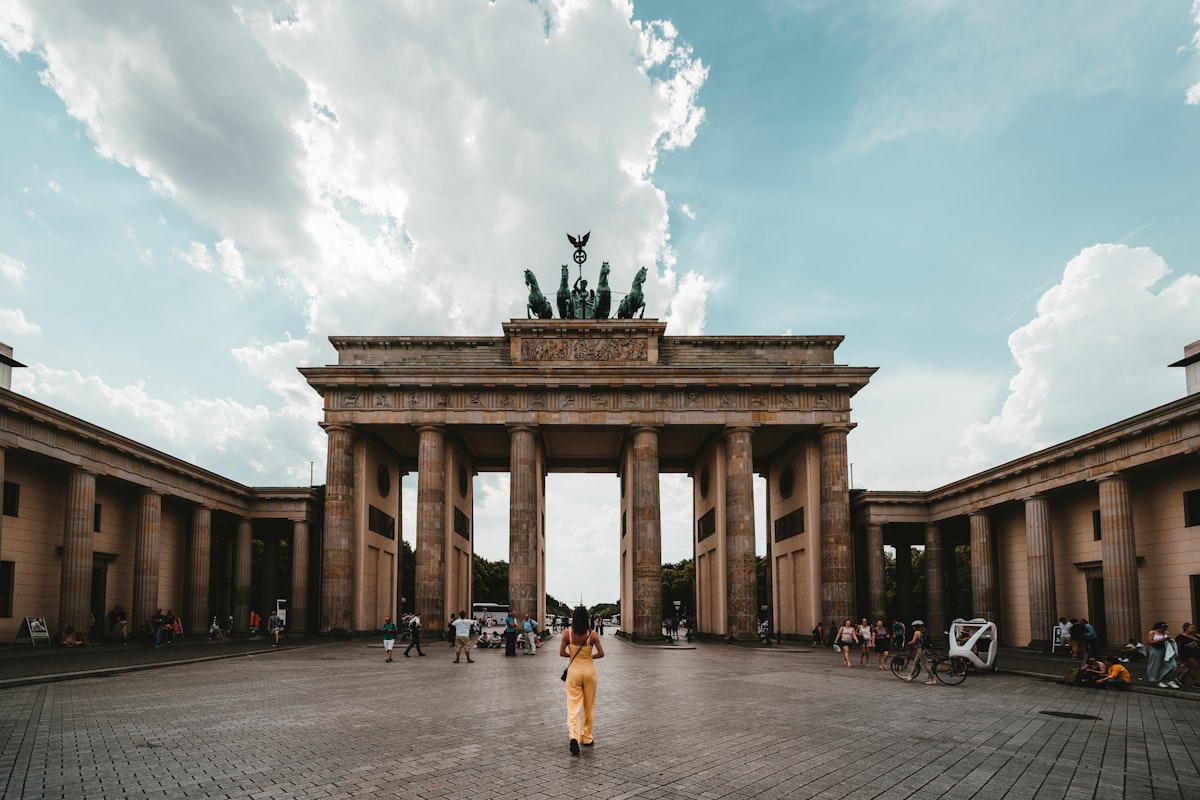
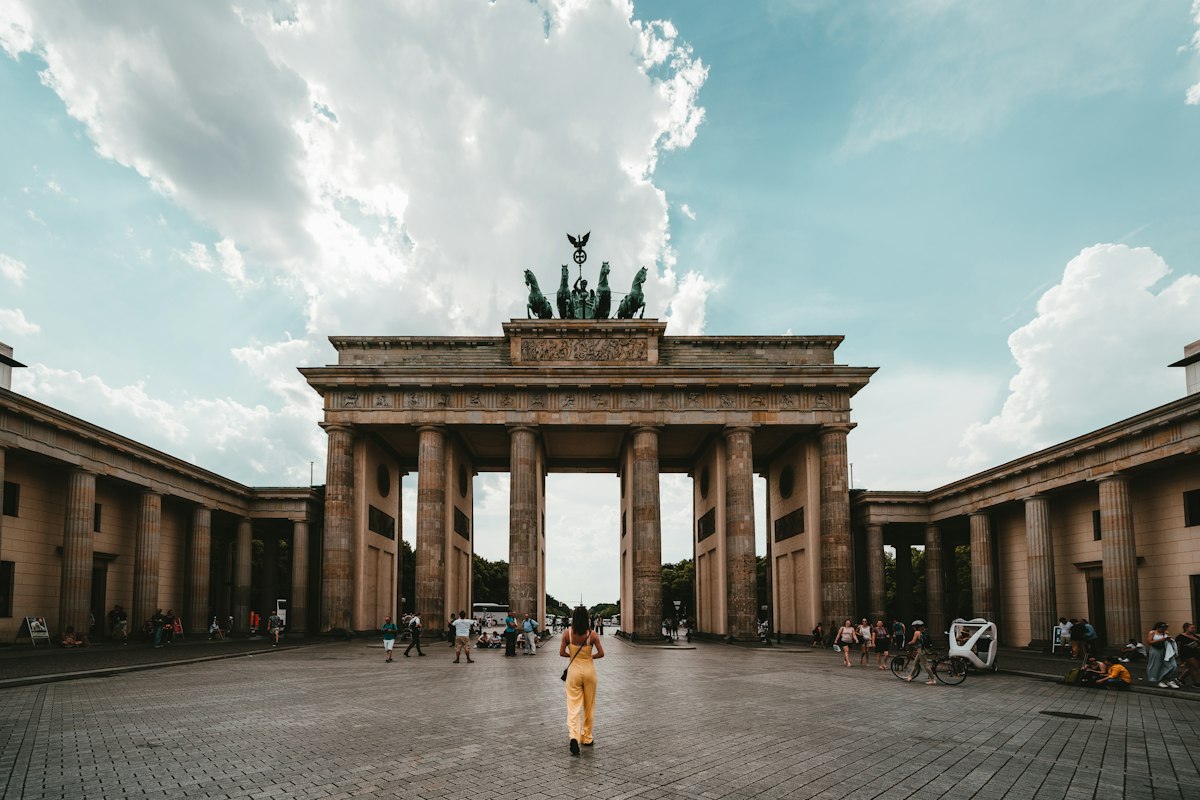
Berlin is Europe’s most restless city. It has been rebuilt, divided, reunified, and reinvented so many times in a single century that the layers of history are visible everywhere — sometimes in the same city block. The Wall that divided it for 28 years left physical and social traces that are still being worked through. The result is a city that is simultaneously a living history museum and one of the most creatively alive places in Europe. The techno clubs, the gallery scene, the street art, the food markets — all of it exists because the city was cheap and available for experimentation in a way that Paris and London have not been for decades.
1. The Memorial to the Murdered Jews of Europe

”
Peter Eisenman’s field of 2,711 concrete stelae covers a full city block near the Brandenburg Gate. Walking into it from the perimeter, the ground slopes down and the stelae rise until the sky disappears and the sounds of the surrounding city become muffled. The effect is disorienting and intended to be. The underground information centre beneath the memorial is sober and comprehensive. It is the most architecturally powerful Holocaust memorial in Germany — which is saying something in a country that has built more and better memorials to its own crimes than any other in history.
2. The Berlin Wall

”
The Wall came down in 1989 and most of it was demolished within months. What remains is scattered — the East Side Gallery (a 1.3-kilometre section covered in murals by international artists), the Topography of Terror documentation centre on the site of the former SS and Gestapo headquarters, and the Checkpoint Charlie crossing point, now surrounded by tourist tat but still historically significant. The best introduction is the Berliner Mauer documentation centre on Bernauer Strasse, which shows a preserved section of the border strip with the death strip, watchtower, and escape tunnel underneath.
3. Museum Island

”
Museum Island is a UNESCO World Heritage site — five major museums on an island in the Spree river, built over the 19th and early 20th centuries to house the Prussian royal collections. The Pergamon Museum has the reconstructed Pergamon Altar and the Ishtar Gate of Babylon. The Neues Museum has Nefertiti’s bust — the single most visited object in Berlin. The Altes Museum has the world’s finest Greek and Roman antiquities collection outside of Athens and Rome. The Bode Museum specialises in Byzantine art and medieval sculpture. Buy a day pass covering all five; it takes two days to see them properly.
4. Kreuzberg and Neukölln

”
Kreuzberg and Neukölln are the neighbourhoods that represent contemporary Berlin most accurately — Turkish and Arab communities that arrived as Gastarbeiter in the 1960s and stayed, overlaid by successive waves of artists, students, and creatives attracted by low rents. The Markthalle Neun food market (Thursday evenings and Saturday mornings) is the best in Berlin. The street art on Schlesische Strasse and around the Admiralbrücke is dense and constantly renewed. The bars stay open until dawn; the correct approach is to arrive after midnight.
5. Charlottenburg Palace

”
Charlottenburg is the largest palace in Berlin — the former summer residence of the Prussian royal family, rebuilt after World War II damage to its 18th-century appearance. The gardens are some of the finest baroque gardens in Germany. The Golden Gallery inside is one of the most extravagant rococo interiors in Europe. It is less visited than the central Berlin attractions and more accessible for it — the queues are manageable on most days and the palace district has good restaurants nearby.
6. The Berliner Philharmonie

”
Hans Scharoun’s concert hall, built in 1963, was revolutionary in design — the orchestra placed at the centre of the hall with the audience surrounding it on all sides. The acoustics are the finest of any concert hall in the world according to most conductors who have performed there. The Berlin Philharmonic under its successive chief conductors has been the world’s pre-eminent orchestra for sixty years. Standing-room tickets are available from the box office 30 minutes before performance for around 10 euros. The Digital Concert Hall streams performances online if the live tickets are sold out.
7. Day Trip to Potsdam

”
Potsdam is 30 minutes from Berlin by S-Bahn and contains Sanssouci — Frederick the Great’s rococo summer palace set in a UNESCO-listed park of palaces, gardens, and follies. The Sanssouci palace is small and intimate compared to Versailles, which was its direct inspiration, and the terraced vineyards cascading down from the south facade are unlike anything else in Prussian architecture. The New Palace at the other end of the park is a more conventional baroque statement. The Dutch Quarter in Potsdam — 134 red-brick houses built for Dutch craftsmen in the 18th century — is the most surprising thing in a city full of surprises.
Practical Information

”
Berlin has two airports — Brandenburg (BER) is the main one, replacing Tegel which closed in 2020. The U-Bahn, S-Bahn, tram, and bus network covers the city comprehensively; a 24-hour ticket covers all modes. Berlin is the cheapest major capital in Western Europe for accommodation, food, and nightlife. The best months are May through September; the winter months are cold but the Christmas markets (particularly at Charlottenburg) are excellent. Many Berlin clubs do not admit visitors in tourist clothing — dress down, not up.