
Switzerland is expensive. There is no point pretending otherwise. A coffee in Zurich costs more than lunch in Lisbon. A night in a mid-range hotel in the Alps costs what three nights in Barcelona would. Anyone who tells you Switzerland is affordable has either not been recently or is working with a different definition of affordable than most people.
And yet, with the right approach, it is possible to spend time in Switzerland without feeling financially ruined by it. The country rewards preparation and specific choices more than almost anywhere else in Europe.
The Swiss Travel Pass: Expensive Up Front, Excellent Value in Practice
The Swiss Travel Pass gives you unlimited travel on trains, buses, boats, and most mountain railways across the country. It also includes free entry to over five hundred museums. For a week of active travel moving between cities and mountain regions, the pass almost always works out cheaper than buying individual tickets, sometimes significantly so.
The catch is the upfront cost, which feels substantial. The daily rate across a week works out to around 70 to 80 Swiss francs. If you are planning to spend most of your time in one place, it will not pay off. If you are moving every day or two between different parts of the country, the maths tips firmly in its favour. Calculate your likely journeys before buying.
Eat at the Supermarket, Not the Restaurant
The Migros and Coop supermarket chains sell prepared food, sandwiches, and hot meals at prices that are still high by southern European standards but reasonable for Switzerland. The Migros restaurant inside larger stores is one of the genuine secrets of Swiss budget travel: hot cooked meals for eight to twelve francs, self-service, consistently good quality, frequented almost entirely by Swiss people going about their daily lives.
This does not mean avoiding Swiss restaurants entirely. But having breakfast from the supermarket, a Migros lunch, and splurging once on a proper Swiss dinner is a strategy that cuts the food budget roughly in half without sacrificing anything essential.
Free Hiking: The Best Parts of Switzerland Cost Nothing
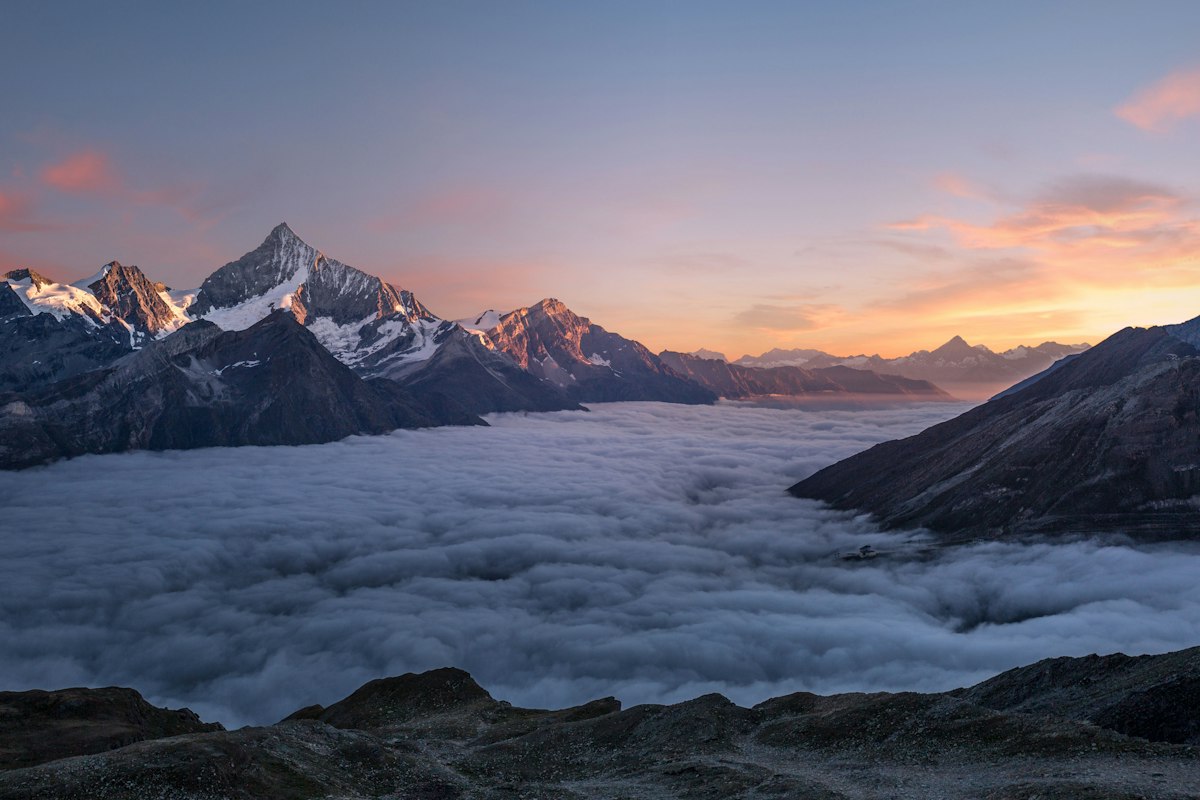
Switzerland has 65,000 kilometres of marked walking trails and walking them is entirely free. The cable cars and mountain railways that access the high terrain cost money, sometimes a lot of it, but the trails themselves and the landscapes they pass through are open to anyone with walking boots.
The Bernese Oberland has some of the best accessible hiking in Europe, with trails from Grindelwald and Lauterbrunnen that reach extraordinary alpine scenery without requiring any paid uplift. The walk from Mannlichen to Kleine Scheidegg below the Eiger north face, with the three great peaks of the Eiger, Monch, and Jungfrau in front of you for the entire two hours, is one of the great mountain walks in Europe and costs exactly nothing.
Sleep in the Mountain Huts
The SAC mountain huts run by the Swiss Alpine Club provide dormitory and private room accommodation in the high alpine terrain at prices significantly below valley hotels. A dormitory bed with dinner and breakfast at a high mountain hut costs around 80 to 100 francs, which sounds like a lot until you consider that you are sleeping at 2500 metres in the Alps with views that hotel guests at three times the price are looking at from a distance.
Booking huts in advance in July and August is essential. In June and September many huts have availability and the mountains are quieter and the light is better. The hut culture in Switzerland is one of the most civilised things the country does: strangers sharing long tables at dinner, conversation in five languages, the mountains visible through the window in every direction.
Route, budget and verification notes
Last editorial review: 1 August 2026. Recheck time-sensitive details shortly before travel.
Build the route
- The Swiss Travel Pass: Expensive Up Front, Excellent Value in Practice
- Eat at the Supermarket, Not the Restaurant
- Free Hiking: The Best Parts of Switzerland Cost Nothing
- Sleep in the Mountain Huts
Use these sections as planning anchors rather than a fixed schedule. Confirm door-to-door transfer times, opening days and reservation requirements, then add recovery time after long journeys.
Budget before booking
Price the trip in four separate groups: accommodation, transport, food and paid activities. Add local transfers, baggage fees, taxes, insurance and a contingency amount. Exact prices vary by season and booking date, so this guide does not invent a single daily figure that may already be outdated.
Sources to verify
- MySwitzerland for official or primary travel information.
- IATA Travel Centre for passport, visa and health-document checks.
