
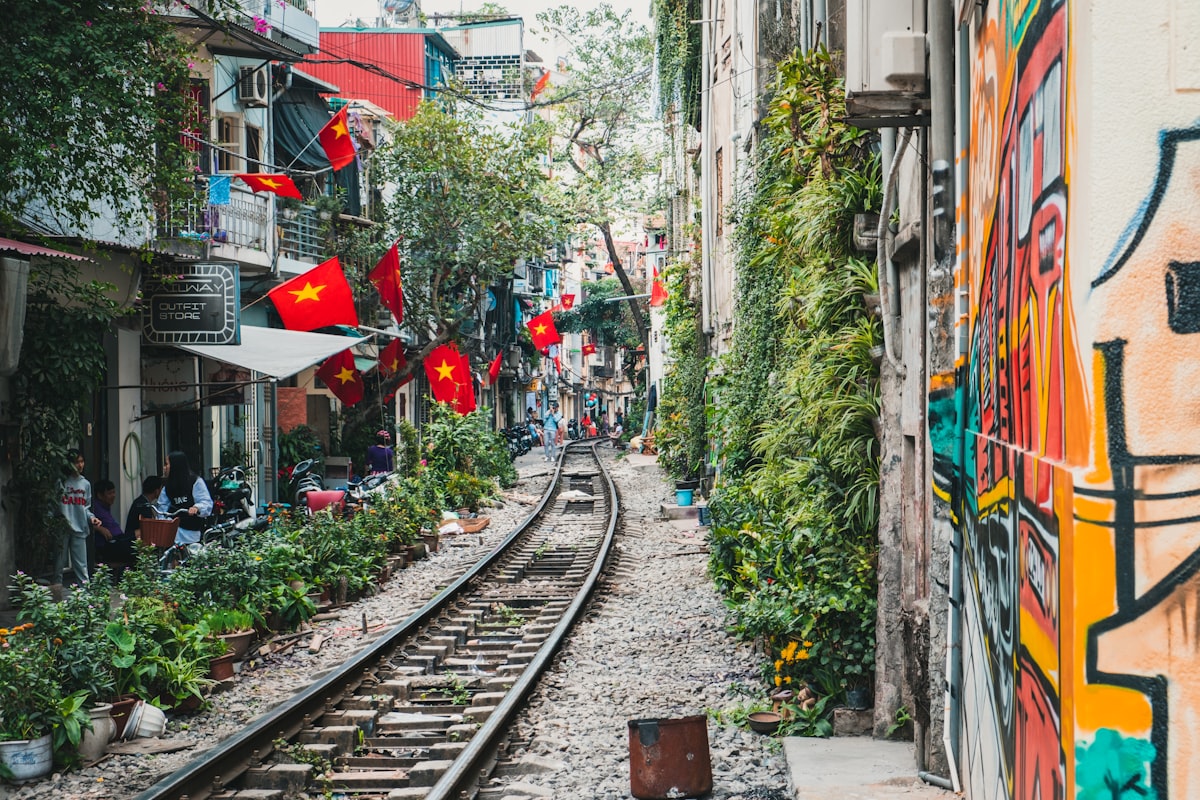
Southern Vietnam moves faster than the north. Ho Chi Minh City (still called Saigon by everyone who lives there) has the energy of a city that added three million people in fifteen years and has not stopped. The traffic is theatrical, the food is more Chinese-influenced than Hanoi, the coffee shops are designer, and the street food is eaten in plastic chairs three inches above pavement level. Between Saigon and the coast is the Mekong Delta — the flat, canal-laced agricultural plain where the rice that feeds much of Southeast Asia is grown, and where floating markets still operate at 5am on rivers that have been trade routes since the Khmer Empire. In the middle of the country, Hoi An is where everyone stays longer than planned.
1. Hoi An Ancient Town
Hoi An is a UNESCO World Heritage trading port frozen, architecturally, in the 17th and 18th century — a grid of Chinese merchant houses, Japanese covered bridges, French colonial buildings, and Vietnamese tube houses that operated as one of Southeast Asia’s most prosperous trading ports until the Thu Bon River silted up and trade moved to Da Nang. The lanterns that line every shopfront are not a contemporary decoration; they are continuations of a tradition that dates to when ships from China, Japan, and Holland traded here simultaneously. The old town is walkable in two hours; the surrounding villages, accessible by bicycle, are the less-photographed Hoi An that makes people stay a week.
2. Cu Chi Tunnels, Ho Chi Minh City
The Cu Chi Tunnels are 250 kilometres of hand-dug tunnels northwest of Ho Chi Minh City where Viet Cong fighters lived, cooked, treated the wounded, and launched operations against American positions during the Vietnam War. The tunnels are presented with historical seriousness — the original tunnels (expanded for visitors) are low and dark, the booby traps are displayed with information about their function, and the context of rural Vietnamese resistance to aerial bombing is explained clearly. Ben Dinh (closer to the city) is the more tourist-oriented site; Ben Duoc (further out) is more authentic and less crowded. The visit takes half a day.
3. Mekong Delta, Can Tho
Can Tho is the largest city in the Mekong Delta — the base for visiting the Cai Rang floating market, the largest floating market in the delta, where hundreds of wooden boats trade wholesale fruit and vegetables before dawn, each boat advertising its cargo by hanging samples on a tall pole above the bow. Arrive by 6am before the tourist boats outnumber the traders. The delta is most interesting by canal — hiring a small wooden boat for a half-day and navigating the back channels between rice paddies, through villages where the houses are built on stilts above the water, and into orchards that supply the wholesale market. Can Tho is five hours from Ho Chi Minh City by bus; the journey through the delta landscape is worth taking slowly.
4. Mui Ne Sand Dunes
Mui Ne is a fishing town on the south coast of Vietnam with two distinctive landscapes within five kilometres of each other: the White Sand Dunes (large, pale-coloured dune fields accessible by jeep at dawn) and the Red Sand Dunes (smaller, terracotta-coloured, more accessible). The nearby Fairy Stream — a shallow river that runs through red and white sandstone canyons to the ocean — is the most photogenic route from the beach town to the dunes. Mui Ne is also one of the best kitesurfing locations in Southeast Asia (the bay is consistently windy from November to April); lessons and equipment rental are available on the beach strip.
5. Da Nang and My Son Sanctuary
Da Nang is the most practical city in central Vietnam — not the most beautiful, but the best hub for reaching Hoi An (30 kilometres south), Hue (100 kilometres north), and the Hai Van Pass (20 kilometres north, best driven on a motorbike at dawn). My Son Sanctuary, 70 kilometres southwest of Da Nang, is a cluster of 4th-14th century Cham Hindu temples in a valley surrounded by jungle — the equivalent for the Cham Kingdom of what Angkor Wat is for the Khmer Empire. The bombing damage from the Vietnam War is visible; what survived is extraordinary. Visit in the morning before the heat; the jungle around the temples has been partially cleared and trails are walkable.
6. Phu Quoc Island
Phu Quoc is Vietnam’s largest island, off the coast of Cambodia in the Gulf of Thailand — 150 kilometres of coastline, most of it undeveloped national park, with the tourist infrastructure concentrated in the northwest around Long Beach and the restaurant-lined Night Market. The island produces the nuoc mam (fish sauce) that is used in Vietnamese cooking nationwide; the factories near Duong Dong town offer tours that explain the twelve-month fermentation process. The snorkelling around the southern An Thoi archipelago (accessible by speedboat or day trip) covers coral gardens that were in significantly better condition than comparable sites on the mainland. Phu Quoc is most accessible from Ho Chi Minh City by 45-minute flight.
7. Saigon Food and Nightlife
Ho Chi Minh City eats at all hours. The banh mi stalls on Huynh Hoa Street are open until midnight and are consistently ranked among the best in the country. The seafood restaurants on De Tham Street operate from a market at the front where you select your fish alive. The rooftop bars in Districts 1 and 3 — Chill Skybar, The View Rooftop Bar — offer the perspective on the city that makes the chaos below comprehensible. The Ben Thanh Night Market, while tourist-oriented, is the easiest orientation point for new arrivals. For the more serious food experience, the Ben Thanh Market itself, in the hour before the tourist tours arrive, is the working wholesale and retail market that supplies the city’s restaurant industry.
Practical Information
The open-jaw routing (fly into Ho Chi Minh City, out of Hanoi, or vice versa) avoids backtracking on the north-south axis. The train from Ho Chi Minh City to Da Nang (reunification express) takes 17 hours in a comfortable sleeper cabin; the coastal section is best in daylight. Vietnam Airlines, VietJet, and Bamboo Airways cover all domestic routes; flights are under most of the year. For Hoi An, rent a bicycle from the accommodation and use it exclusively — the town and surrounding villages are flat, the distances are short, and motorbike traffic in the old town is restricted. The best beaches in southern Vietnam (Phu Quoc, Mui Ne) are driest and clearest November to April; avoid monsoon season (May to October) for coastal trips.
Route, budget and verification notes
Last editorial review: 1 August 2026. Recheck time-sensitive details shortly before travel.
Build the route
- 1. Hoi An Ancient Town
- 2. Cu Chi Tunnels, Ho Chi Minh City
- 3. Mekong Delta, Can Tho
- 4. Mui Ne Sand Dunes
Use these sections as planning anchors rather than a fixed schedule. Confirm door-to-door transfer times, opening days and reservation requirements, then add recovery time after long journeys.
Budget before booking
Price the trip in four separate groups: accommodation, transport, food and paid activities. Add local transfers, baggage fees, taxes, insurance and a contingency amount. Exact prices vary by season and booking date, so this guide does not invent a single daily figure that may already be outdated.
Sources to verify
- Vietnam Tourism for official or primary travel information.
- IATA Travel Centre for passport, visa and health-document checks.
