

Germany is the country where I finally stopped treating “which airport” as a single question, because the honest answer depends entirely on which region you’re actually visiting, and this is a big enough country that the wrong airport can cost you half a travel day. I’ve flown into Frankfurt, Munich and Berlin now, on separate trips built around completely different parts of the country, and each one made sense for its own itinerary rather than any of them being a universally “correct” choice.
Here’s how I actually pick between them now, plus the rail details that make Germany one of the easier countries on this list to move around once you’ve landed.
Below is the breakdown by airport, region and season, the same one I now run through before booking any Germany trip, whichever part of the country it’s actually built around.
Frankfurt: Germany’s Busiest Hub, Not Always the Right Call
Frankfurt Airport (FRA) is Germany’s largest by international traffic and handles the widest spread of direct long-haul routes, including dense connections from North America. It’s also, genuinely, one of the more efficient major hubs I’ve transited through, with a train station built directly into the airport complex that puts you on an ICE high-speed train without a separate shuttle leg.
That said, I’d only make Frankfurt my actual destination if the city itself, or the nearby Rhine Valley, is part of the plan. If Bavaria or Berlin is where you’re headed, flying into Frankfurt just to backtrack by train adds hours you don’t need to spend, and I’ve made that exact mistake once before learning to check the connecting cities’ own airports first. Frankfurt’s own city centre, admittedly, isn’t much of a draw beyond the skyline and the Römer old square, and I’d treat it as a one-night stopover rather than a destination in its own right unless a business trip specifically requires it.
Munich: The Right Airport for Bavaria and the Alps

If Neuschwanstein, Oktoberfest, or the Alps are the actual reason for your trip, Munich Airport (MUC) is the better call, and it’s well served enough with direct long-haul routes that I’ve never had to route through Frankfurt on the way there. The S-Bahn train into central Munich takes about 45 minutes, and it’s the option I default to over the pricier Lufthansa Express Bus, which saves maybe ten minutes for a noticeably higher fare. Munich’s airport itself is genuinely pleasant to spend time in if you land with a long layover, with its own brewery inside the terminal complex, something I didn’t expect the first time I found it and have made a point of visiting again since.
Munich also functions as a genuinely good base for day trips further into Bavaria, and I go through what to actually prioritise once you’ve landed in my Germany city guides, including how Munich and Berlin compare if you’re only picking one.
Berlin: History, Nightlife, and a Third Very Different Airport
Berlin Brandenburg Airport (BER), finally opened in 2020 after a famously delayed construction process, now handles the capital’s international traffic with a direct rail connection into the city centre in about 30 minutes. If your trip is built around Berlin’s history, museums and nightlife rather than the more classically “German” imagery of Bavaria, this is the airport to book, and I wouldn’t route through Frankfurt or Munich first unless the connection genuinely works out cheaper. BER’s route network is still thinner than Frankfurt’s on the long-haul side, so travellers coming from outside Europe sometimes find a one-stop connection through Frankfurt or Munich is unavoidable regardless, in which case I’d just book the whole itinerary as a single ticket rather than treating the domestic leg as a separate purchase.
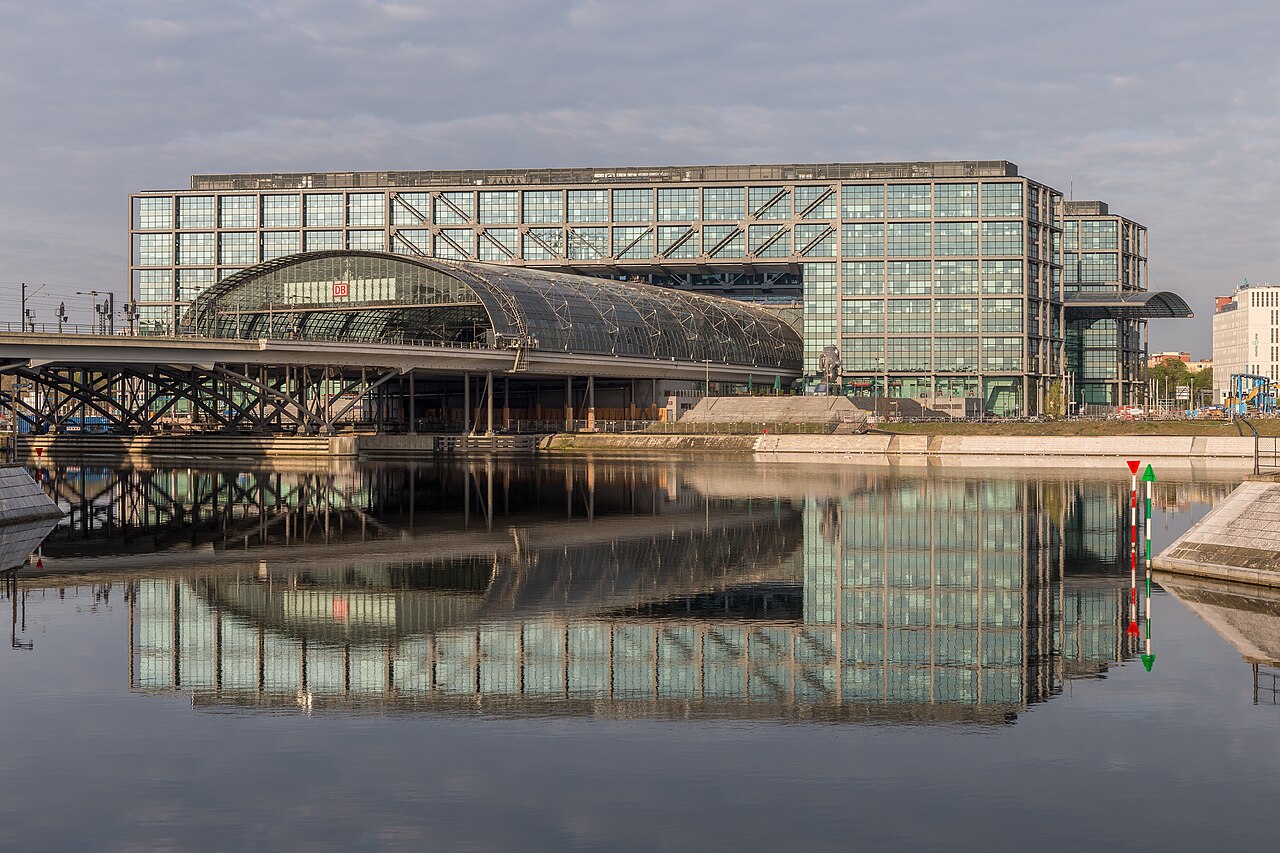
Berlin Hauptbahnhof, the city’s main train station, is one of the more architecturally striking stations I’ve passed through in Europe, a multi-level glass structure that’s worth a few minutes just to look up at even if you’re only passing through on a connection. Berlin’s own history with air travel is worth knowing before you land, too: the old Tempelhof airport, closed since 2008, still sits inside the city as one of the largest public parks in Europe, and I’ve cycled its old runways on a free afternoon purely because the idea of a decommissioned airfield turned park was too strange to skip.
Getting Between German Cities by Train

Deutsche Bahn’s ICE network connects Frankfurt, Munich and Berlin in journeys mostly under four hours, and I’ve stopped renting a car for intercity travel in Germany entirely, since the trains are frequent enough that missing one rarely costs more than a short wait for the next. Booking a Sparpreis fare through DB’s own site a few weeks ahead consistently beats the walk-up price, sometimes by half or more for the same seat. The Deutschland-Ticket, a flat monthly pass covering regional trains, trams and buses nationwide, isn’t worth it for the ICE routes between major cities, but I’ve bought one for a trip that mixed intercity travel with a lot of local exploring, and it paid for itself within the first few days purely on regional connections alone.
Deutsche Bahn’s punctuality has taken a real hit in recent years compared to its old reputation, and I’d build a buffer into any tight connection, particularly if you’re catching an onward flight the same day; delays of 20 to 30 minutes aren’t rare on the longer routes anymore, even if the train itself remains comfortable. On genuinely important connections, like a same-day flight home, I now build in at least an hour of slack rather than booking the tightest legal connection DB’s own planner suggests.
Visa and Entry Basics

Germany is part of the Schengen Area, and travellers from the US, Canada, Australia and most visa-exempt nationalities can enter for stays up to 90 days without applying in advance. Once you’ve cleared passport control at whichever airport you land in, moving on to Austria, France, Poland or any other Schengen neighbour involves no further checks under normal circumstances, though Germany has periodically reinstated spot checks at some land borders in recent years, so keeping your passport reasonably accessible on an overland crossing isn’t a bad habit. I’ve been waved through the Austrian border on foot without a glance more often than not, but I’ve also queued for a genuine ten-minute check on the same crossing a year later, so I wouldn’t assume either experience is the reliable one.
When to Book

Fares into all three airports dip in January through March and again in November, while summer and the Christmas market season from late November push both flights and hotel rates up considerably. I’ve had the best luck booking six to eight weeks ahead for a spring or autumn trip, and considerably earlier for anything landing during Oktoberfest, when Munich hotel prices alone can double compared to the rest of the year. Berlin’s own Christmas markets, running through most of December, push hotel rates up too, though noticeably less than Munich’s autumn spike, which is one more reason I’d lean toward Berlin over Munich for a winter city trip on a tighter budget.
The version I’d actually tell a friend: match your airport to your itinerary rather than defaulting to Frankfurt because it’s the biggest name, and let the ICE network handle the rest once you’ve landed. Germany’s rail system is good enough that a wrong-city arrival costs you hours, not the whole first day.
