
Greece has more than 6,000 islands. About 200 are inhabited. Most visitors see two or three, which is enough to understand why people spend decades returning. Each island has a distinct character shaped by its geology, its history, and its relationship with tourism — from Mykonos, which has embraced its reputation fully, to Tilos, where there are more donkeys than tourists and the taverna owner is likely to invite you to join the family table.
Santorini
”
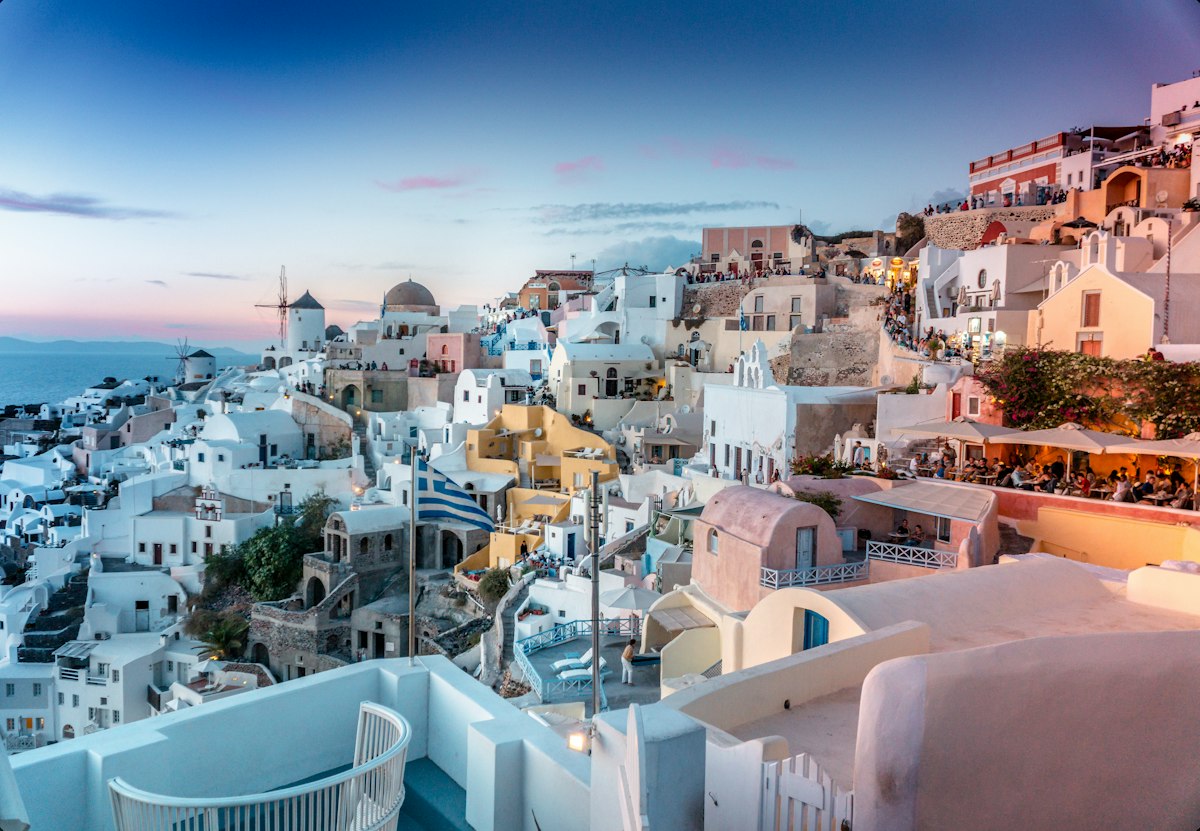
Santorini is the interior of a collapsed volcano, and the caldera view from Oia at sunset is one of the most famous images in travel photography. The crowds that gather for that sunset now number in the thousands. What most people miss is the rest of the island: the black sand beaches at Perissa and Perivolos, the ancient site of Akrotiri buried by the same eruption that created the caldera, the wine produced from vines growing in volcanic soil that look unlike any vineyard you have seen. The island rewards staying longer than a day trip from a cruise ship allows.
Crete

”
Crete is the largest Greek island and functions more like a small country than an island. The north coast has the archaeological sites and the main towns; the south coast has the remote beaches, accessible only by boat or long dirt road, where you can still find a taverna with three tables and fish caught that morning. The Samaria Gorge — a 16-kilometre hike through Europe’s longest gorge ending at the Libyan Sea — is one of the best day hikes in Europe. The Minoan palace of Knossos near Heraklion is the most significant Bronze Age site in the Aegean.
Naxos

”
Naxos is the largest Cycladic island and the one that feeds itself — marble quarries, olive groves, citrus orchards, and mountain villages that have nothing to do with tourism. The beaches on the western coast are among the best in Greece for families, with shallow water and long stretches of sand. The interior is a completely different island: mountain villages connected by hiking trails, Byzantine churches, and the Kouros of Flerio — two enormous unfinished marble statues lying in an orchard exactly where they were abandoned 2,600 years ago.
Lesser-Known Islands Worth Considering

”
Milos has coloured rock formations, sea caves, and the beach at Sarakiniko — white lunar rock eroded by wind into abstract shapes above turquoise water — that rivals anything in the Cyclades. Hydra has no cars or motorcycles; the only transport is donkeys and boats. Symi has a harbour of neoclassical mansions painted in ochre and terracotta that looks more Italian than Greek. Each of these is connected by ferry from Athens or from larger islands, and each operates at a pace that the more famous islands lost a generation ago.
Route, budget and verification notes
Last editorial review: 1 August 2026. Recheck time-sensitive details shortly before travel.
Build the route
- Santorini
- Crete
- Naxos
- Lesser-Known Islands Worth Considering
Use these sections as planning anchors rather than a fixed schedule. Confirm door-to-door transfer times, opening days and reservation requirements, then add recovery time after long journeys.
Budget before booking
Price the trip in four separate groups: accommodation, transport, food and paid activities. Add local transfers, baggage fees, taxes, insurance and a contingency amount. Exact prices vary by season and booking date, so this guide does not invent a single daily figure that may already be outdated.
Sources to verify
- Visit Greece for official or primary travel information.
- IATA Travel Centre for passport, visa and health-document checks.
