
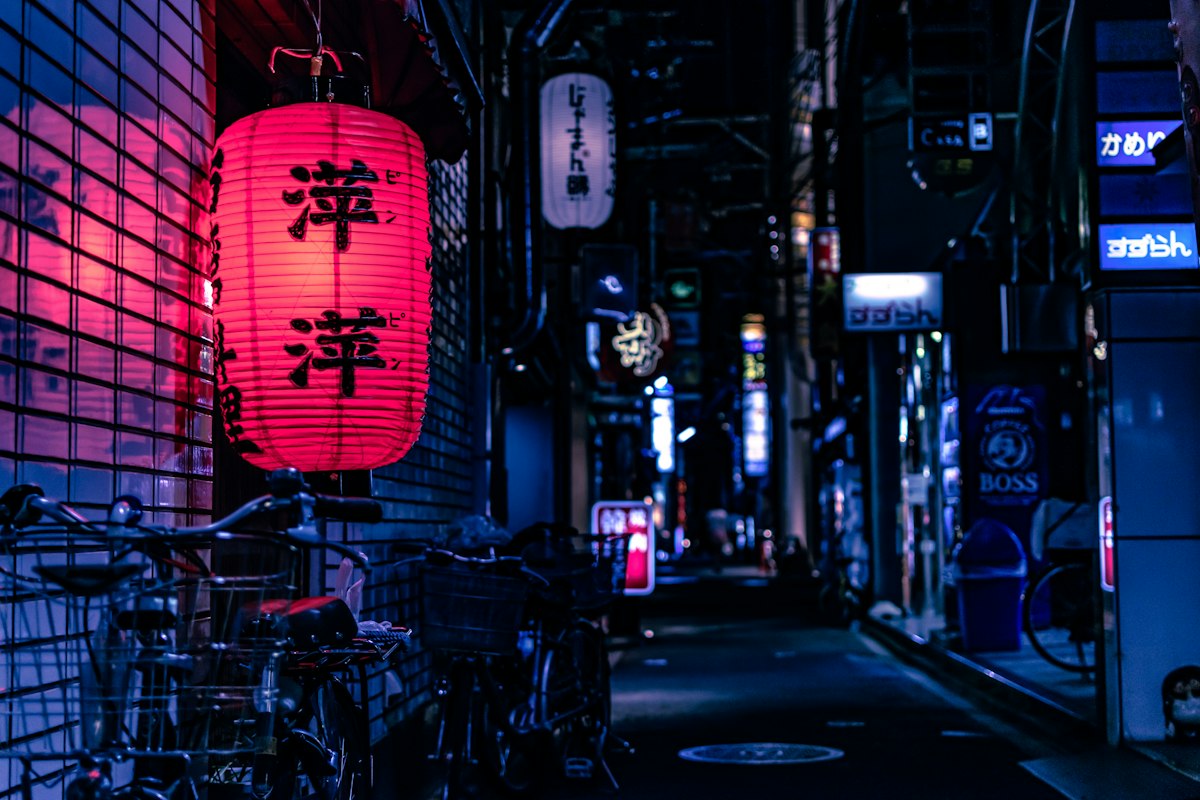
Japan beyond Tokyo is a different country. The shinkansen network means that Kyoto, Osaka, Hiroshima, Nara, and the Kumano Kodo pilgrimage trail are all within a day trip — the country folds itself into reachable distances the moment you have a rail pass. What you find when you leave Tokyo is quieter, older, and in places untouched by the modern city project that reshaped the capital after the war. Kyoto was preserved specifically because its historical significance was recognised; it sits at the centre of the best of rural Japan.
1. Fushimi Inari Shrine, Kyoto
”
The thousands of vermillion torii gates that climb Mount Inari above Kyoto are one of the most photographed places in Japan — the photographs do not prepare you for the experience of walking through them alone. Arrive at 6am and the mountain is yours; the trails continue for four kilometres past the main gate area, through smaller shrines, past stone fox statues, into cedar forest where the crowd disappears entirely. The summit (233 metres) takes about 90 minutes and offers a view south over Kyoto and Osaka Bay. The night lighting of the lower gates is spectacular and less visited than daytime.
2. Arashiyama Bamboo Grove

”
The bamboo grove at Arashiyama is ten minutes of walking through dense bamboo that blocks all sound except the hollow knock of stalks in the wind. The photographs taken at 10am show crowds; the reality at 7am is silence and filtered green light. The Arashiyama neighbourhood itself is worth the morning: the Tenryu-ji Zen garden (a UNESCO World Heritage Site), the river where cormorant fishing still takes place in summer, the Iwatayama Monkey Park on the hill above the river with views over Kyoto. Rent a bicycle at Arashiyama station and explore the backroads north along the river.
3. Nishiki Market, Kyoto

”
Nishiki is a five-block covered market two streets north of Shijo shopping street — 400 years old, 130 vendors, entirely dedicated to Kyoto food culture. The pickled vegetables are unlike anything sold elsewhere in Japan; the tsukemono shops let you taste before buying. Yudofu (silken tofu in hot water served with dipping sauce) and kyo-kaiseki (multi-course traditional cuisine) both originated in Kyoto; Nishiki is the most concentrated introduction to the ingredients behind them. The market is busiest at lunch and empty by 6pm when most vendors close.
4. Nara Day Trip

”
Nara is 45 minutes from Kyoto by express train and contains Todai-ji temple — the largest wooden structure in the world, housing a 15-metre bronze Buddha. The 1,200 sika deer that roam Nara Park are the more photographed attraction: they are considered sacred messengers, they bow for deer crackers, and they are entirely unafraid of humans. The deer crackers are sold at stalls near the park entrance; purchasing them immediately initiates a pursuit by four deer simultaneously. The Kasuga Taisha shrine in the forest beyond the park, with its 3,000 stone and bronze lanterns, is the quieter destination that most tourists skip.
5. Hiroshima and Miyajima

”
Hiroshima requires context before it can be visited well. The Peace Memorial Museum — the most important single museum in Japan — documents what happened on August 6, 1945 with photographs, artefacts, and survivor testimonies that take about three hours to absorb properly. The A-Bomb Dome across the river, preserved in its destroyed state as a memorial, is visible from the museum. Miyajima Island is 25 minutes by ferry from Hiroshima, and contains the Itsukushima Shrine built over the tidal flats with its floating torii gate — photographed at high tide when the gate appears to float. The island also has deer.
6. Kumano Kodo Pilgrimage Trail

”
The Kumano Kodo is a UNESCO-listed network of pilgrimage routes through the mountains of the Kii Peninsula — the same mountains and forests that pilgrims have walked for 1,000 years to reach the Grand Shrines at Kumano. The Nakahechi route from Takijiri-oji to Kumano Hongu Taisha (3-4 days) passes through cedar forests, rice terraces, and mountain onsen villages where the accommodation is in family-run guesthouses that serve multi-course dinners. This is the Japan that does not appear in city guide coverage — rural, ceremonial, and largely untouched by tourism infrastructure.
7. Osaka Food District, Dotonbori

”
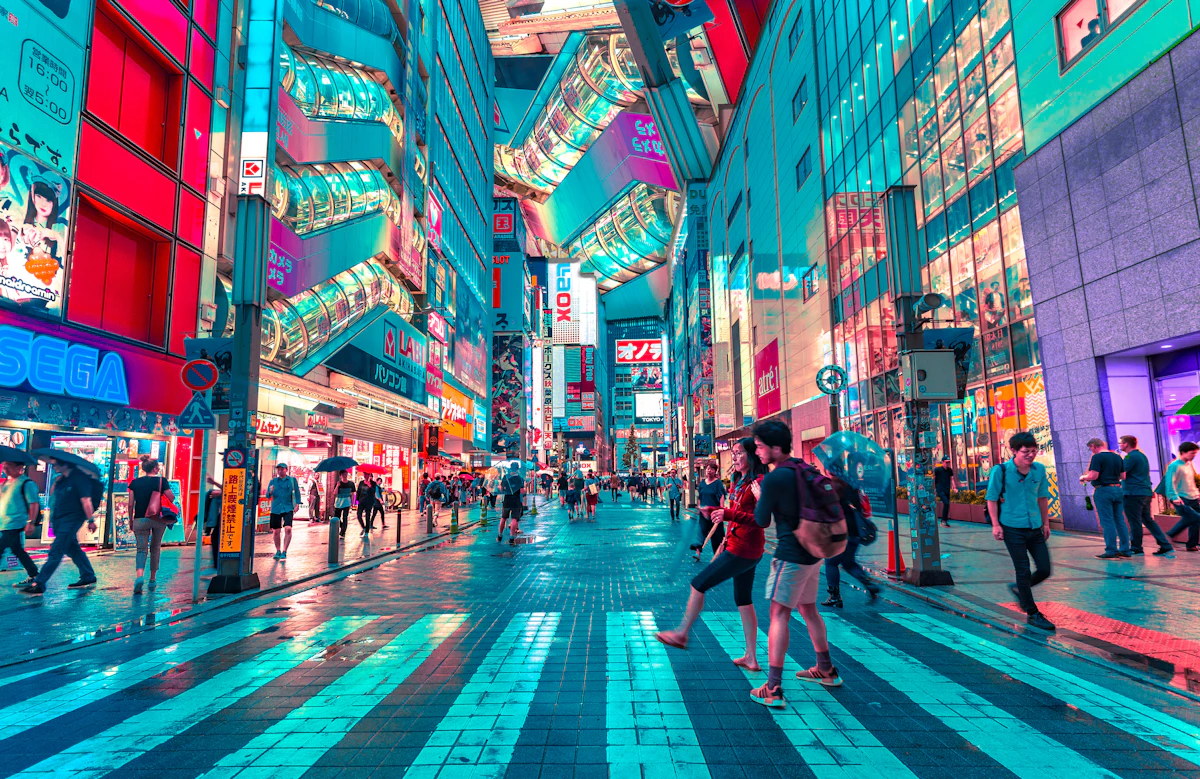
Osaka identifies itself through food — the Osaka motto is kuidaore (eat until you drop). Dotonbori is the neon-lit canal district where the eating is loudest: takoyaki (octopus balls) from street carts, kushikatsu (deep-fried skewers) eaten standing at counters with a no-double-dipping rule enforced aggressively, okonomiyaki (savoury pancakes) made at the table on a hot plate. The kitchen culture here is working-class and cheerful — the opposite of Kyoto’s refined kaiseki. The Kuromon Ichiba covered market sells the same ingredients wholesale to Osaka restaurants and retail to anyone arriving at 8am with a bag.
Practical Information

”
The 14-day JR Pass covers the shinkansen between all destinations listed above and pays for itself on the Tokyo-Kyoto route alone. The pass must be purchased before arriving in Japan; it is not available for purchase domestically. Kyoto accommodation in spring (cherry blossom, late March to mid-April) and autumn (foliage, November) is extremely limited and should be booked three to six months ahead. The Setouchi Hiroshima Navi app provides English-language transport schedules for the Hiroshima region. For the Kumano Kodo, the Tanabe City Kumano Tourism Bureau website books accommodation along the route in advance.
Route, budget and verification notes
Last editorial review: 1 August 2026. Recheck time-sensitive details shortly before travel.
Build the route
- 1. Fushimi Inari Shrine, Kyoto
- 2. Arashiyama Bamboo Grove
- 3. Nishiki Market, Kyoto
- 4. Nara Day Trip
Use these sections as planning anchors rather than a fixed schedule. Confirm door-to-door transfer times, opening days and reservation requirements, then add recovery time after long journeys.
Budget before booking
Price the trip in four separate groups: accommodation, transport, food and paid activities. Add local transfers, baggage fees, taxes, insurance and a contingency amount. Exact prices vary by season and booking date, so this guide does not invent a single daily figure that may already be outdated.
Sources to verify
- Japan National Tourism Organization for official or primary travel information.
- IATA Travel Centre for passport, visa and health-document checks.
