
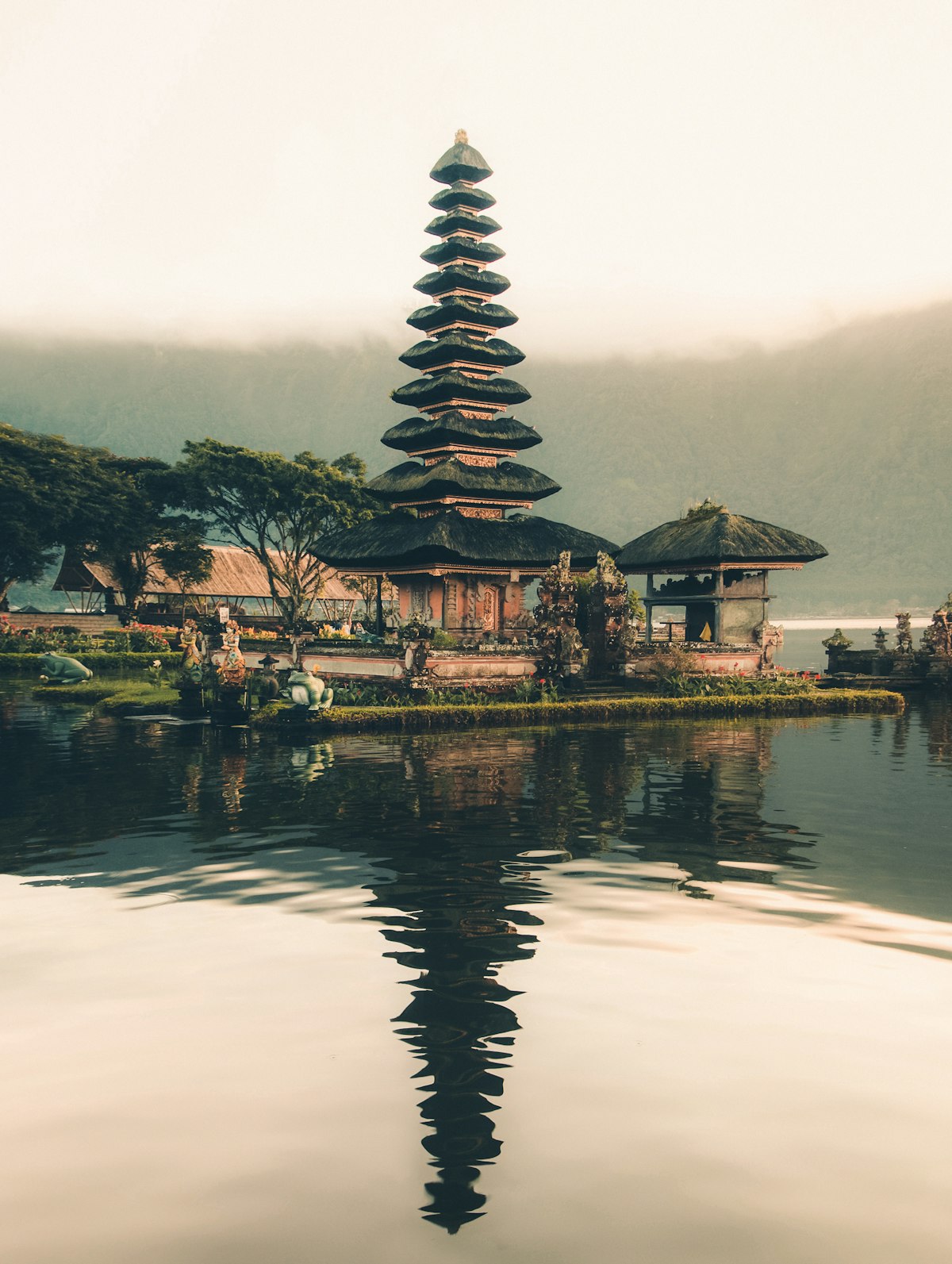
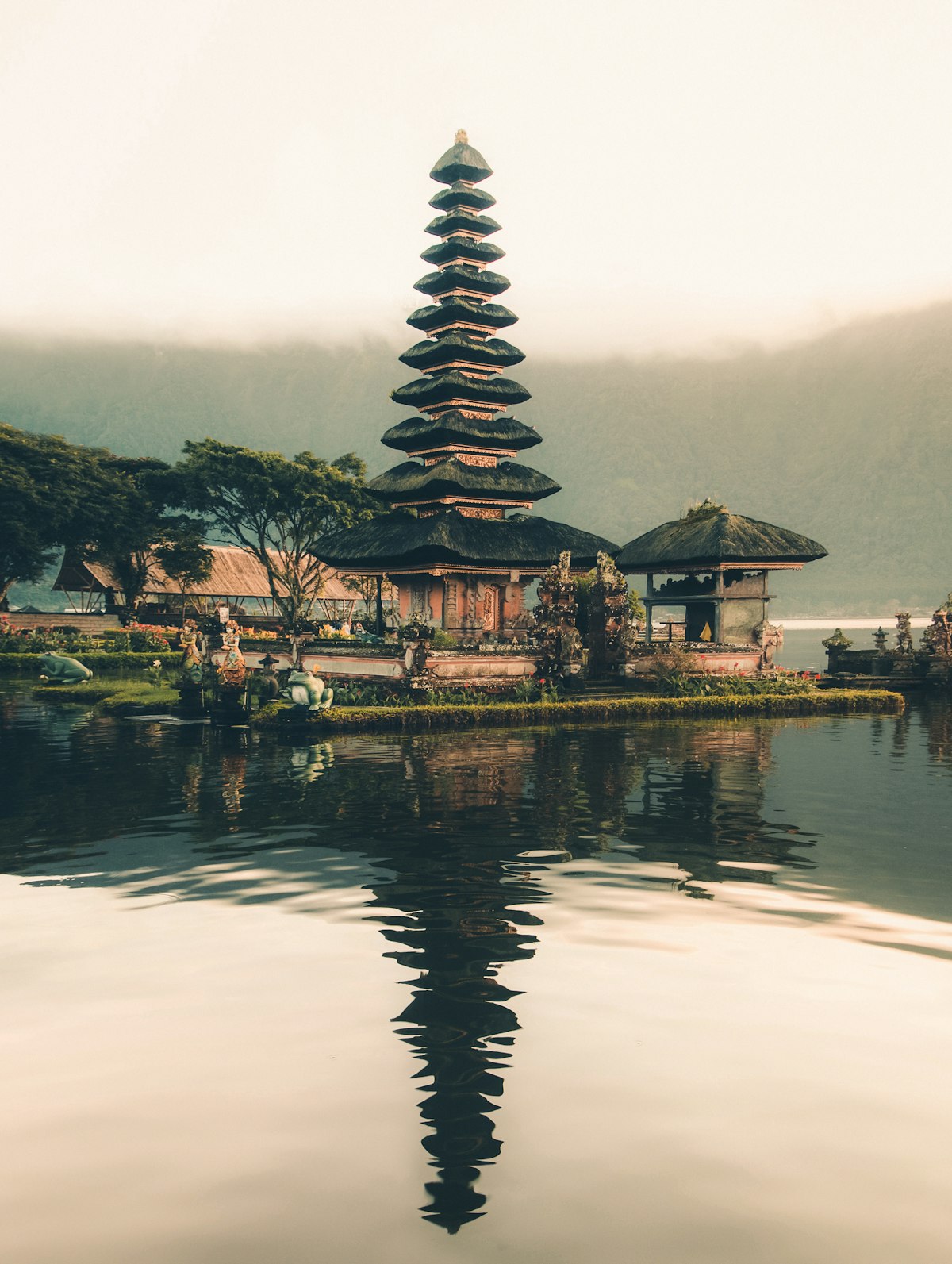
Bali does not need defending. It is the most visited island in Southeast Asia for reasons that are immediately obvious from the moment the plane descends through the clouds and the terraced rice paddies appear below — a landscape that has been continuously farmed and ceremonially maintained for over a thousand years. The question when visiting Bali is not whether it is worth going; the question is where to go that is not covered in every travel piece since 2010. The answer is that the best of Bali has always been inland, in the mountains, along the coasts that face away from Kuta, and in the handful of villages where traditional Balinese Hinduism operates daily without an audience.
1. Tegallalang Rice Terraces at Sunrise
”
The Tegallalang terraces north of Ubud are the most photographed landscape in Bali — the photographs show green staircases descending into a forested valley, mist in the lower sections at dawn, and occasionally a single farmer in the distance. Arrive at 6am and the mist is present, the entrance fee has not yet been collected, and the cafes along the ridge are closed, which means the view from the path is uninterrupted. The subak irrigation system that maintains these terraces is UNESCO-listed; the water cooperative that manages it has operated continuously since the 9th century. What looks like scenery is a functioning agricultural system.
2. Ubud Monkey Forest

”
The Sacred Monkey Forest Sanctuary in Ubud is 12 hectares of forest containing three Hindu temples and approximately 700 Balinese long-tailed macaques that have lived here for generations. The monkeys are wild, they steal food and sunglasses, and they are completely unintimidated by visitors. The temples inside the forest — particularly Pura Dalem Agung Padangtegal — are active places of worship with daily offerings. The forest itself, with its banyan trees and moss-covered statues, is the most atmospheric walking environment in Ubud regardless of the monkeys. Secure all loose items; the monkeys are faster than you.
3. Mount Batur Sunrise Trek

”
Mount Batur is an active volcano (2,171 metres) in the Kintamani highlands, two hours from Ubud, with a sunrise trek that starts at 2am and reaches the crater rim for sunrise at approximately 5:30am. The climb is steep but does not require technical equipment — it is a path of loose volcanic rock, guided by torchlight, with crater views at the top and a vendor at the summit selling boiled eggs heated in volcanic steam. The view from the rim at dawn — over the caldera lake, over eastern Bali, over Lombok’s Mount Rinjani in the distance — is the best single view available in Bali. Book a guide; the trail is unmarked.
4. Tanah Lot Temple at Sunset

”
Tanah Lot is a 16th-century Hindu sea temple built on a rock formation in the ocean 20 kilometres west of Seminyak. At low tide, visitors can walk across the exposed tidal flat to the base of the rock; at high tide, the temple is surrounded by water on all sides, and the sunset silhouettes the structure against orange sky in the photograph that appeared on every Bali brochure printed between 1985 and 2015. It is crowded at sunset. The temple interior is restricted to Hindus; the visit is the approach and the view from the cliff above. Arrive one hour before sunset and position early.
5. Seminyak and Canggu Beach Clubs

”
The beach clubs of Seminyak and Canggu represent Bali’s most competent export — an afternoon culture built around infinity pools, cocktails at sunset, and some of the most technically accomplished DJs in Southeast Asia. Potato Head Beach Club in Seminyak (circular amphitheatre, reclaimed wood and shutters) and Finns Beach Club in Canggu (largest pool in Bali) are the benchmark properties. The surf at Canggu’s Echo Beach and Batu Bolong is legitimate intermediate-level surfing — consistent left-hand breaks, board rental available, lessons for beginners who want to try something other than the pool.
6. Sidemen Valley

”
Sidemen is the valley that Bali looked like before the tourist infrastructure arrived. It is in East Bali, 45 minutes from Ubud, contained between rice paddy slopes and the forested flanks of Mount Agung. The guesthouses here are family compounds that rent rooms and serve breakfast in gardens overlooking the valley; the guests are almost entirely European travellers who found the listing on a small accommodation platform and stayed three days longer than planned. The valley is where Walter Spies (the German artist who was the first European to document traditional Balinese culture) lived in the 1930s. Nothing dramatic happens here, which is precisely its value.
7. Nusa Penida Day Trip

”
Nusa Penida is a limestone island 45 minutes by fast boat from Sanur. The photographs you have seen of Kelingking Beach — the T-Rex shaped cliff headland above a turquoise bay — were taken here. The island is also home to Manta Point, a snorkelling site where oceanic manta rays with wingspans up to five metres congregate year-round, and Crystal Bay, a dive site with the occasional presence of Mola mola (ocean sunfish). The roads are rough, the island is largely undeveloped, and the views from the cliff paths are technically dramatic. One full day is necessary; two is better. Book a private driver for the day.
Practical Information

”
Bali is cheapest and most comfortable April through June and September through October — outside the Australian school holiday peaks and the monsoon season (November to March). A motorbike is the most efficient transport on the island; hire one in Ubud or Canggu with an international driving licence. The tourist tax (Rp 150,000 per international visitor) is paid at Ngurah Rai airport or via the Love Bali app before arrival. Dress conservatively when entering temples — a sarong is required and available at every temple entrance. The Tegallalang area, Sidemen, and Nusa Penida are all worth the slight inconvenience of travelling away from the southern resort strip.
Route, budget and verification notes
Last editorial review: 1 August 2026. Recheck time-sensitive details shortly before travel.
Build the route
- 1. Tegallalang Rice Terraces at Sunrise
- 2. Ubud Monkey Forest
- 3. Mount Batur Sunrise Trek
- 4. Tanah Lot Temple at Sunset
Use these sections as planning anchors rather than a fixed schedule. Confirm door-to-door transfer times, opening days and reservation requirements, then add recovery time after long journeys.
Budget before booking
Price the trip in four separate groups: accommodation, transport, food and paid activities. Add local transfers, baggage fees, taxes, insurance and a contingency amount. Exact prices vary by season and booking date, so this guide does not invent a single daily figure that may already be outdated.
Sources to verify
- Indonesia Travel for official or primary travel information.
- IATA Travel Centre for passport, visa and health-document checks.
