
I spent an embarrassing amount of time before my first Austria trip trying to figure out whether I was overcomplicating something simple. Every forum thread seemed to have a different opinion on airports, trains, and which city actually deserved my first night. After three trips now, I can tell you the honest answer: it’s simpler than the threads make it sound, and almost every version of “overthinking it” costs you nothing more than an extra hour.
This is the guide I wish someone had handed me before that first trip: which airport actually makes sense, when the train beats flying, and how to decide between Vienna and the rest of the country before you’ve even bought a ticket.
Flying In: Vienna Is Almost Always the Right Call

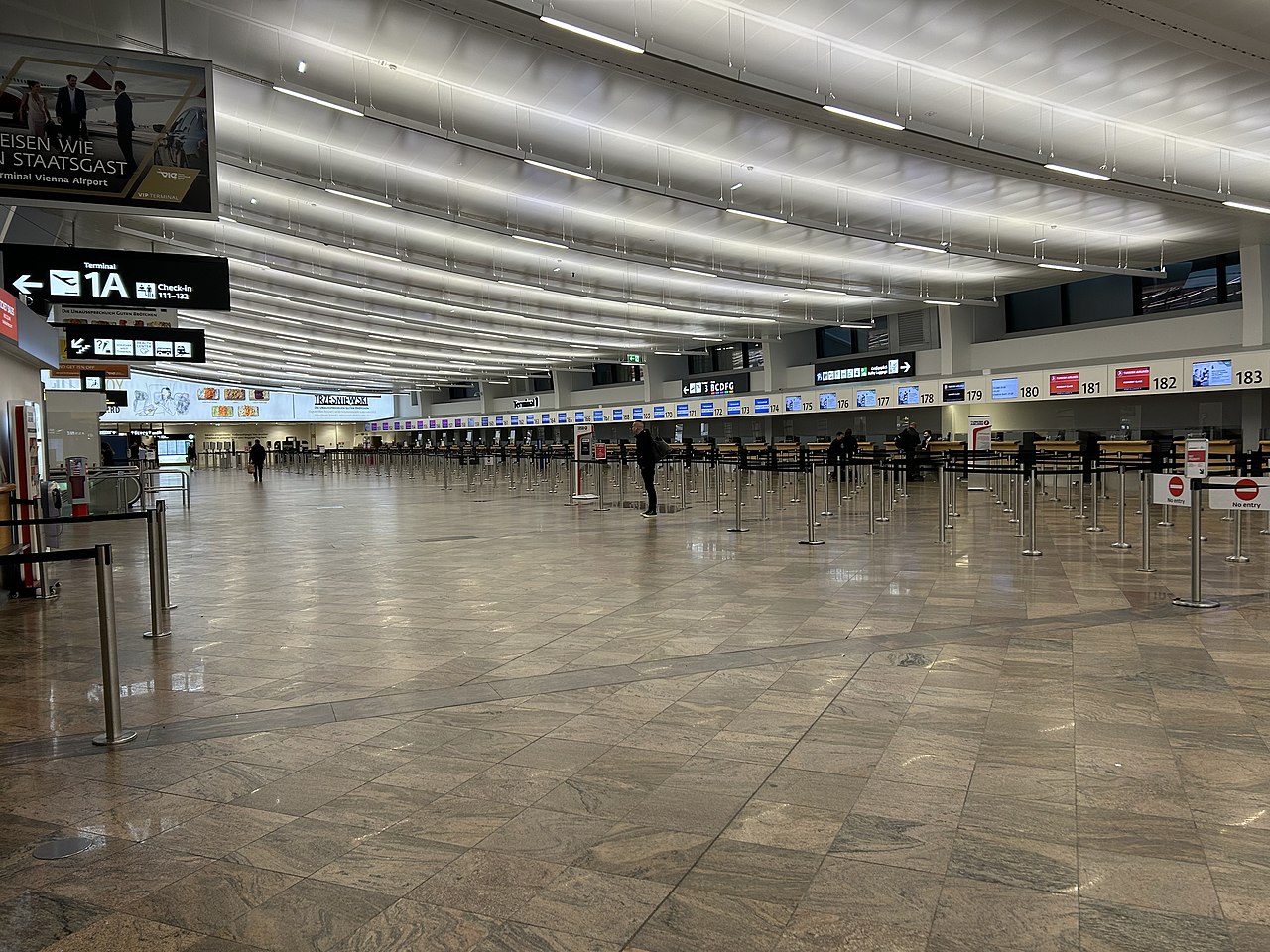
Vienna International Airport (VIE) handles the overwhelming majority of long-haul arrivals into Austria, and unless you have a very specific reason to land somewhere else, it’s the airport I’d point you to first. Austrian Airlines runs direct routes from Chicago, Toronto, New York and Washington D.C., alongside dense connections from every major European hub, so getting a reasonable fare into Vienna is rarely the hard part of planning this trip.
The airport itself sits about 18km southeast of the city centre, and the CAT (City Airport Train) gets you into Wien Mitte station in 16 minutes flat, which is fast enough that I’ve genuinely used the ride to finish checking into my hotel online. A regular S-Bahn train does the same route for a fraction of the price and only costs you about 10 extra minutes, and that’s the one I actually take now that the novelty of the express train has worn off.
If you’re arriving late at night after a long-haul flight, taxis and ride-hailing apps both operate from clearly marked ranks right outside arrivals, and I’ve never waited more than a few minutes for either, even landing well past midnight. It’s roughly three to four times the price of the train, but on the one trip where I arrived exhausted at 11pm, it was worth every extra euro just to skip the platform-hunting.
The Bratislava Trick Nobody Mentions Enough

Here’s the thing almost nobody tells first-time visitors: Bratislava’s airport, in neighbouring Slovakia, is only a 75-minute bus ride from central Vienna, and it’s served by a completely different set of budget carriers than VIE. I’ve booked flights into Bratislava twice now specifically because the fare was less than half of the equivalent Vienna ticket, and the bus connection (run by companies like FlixBus and RegioJet) is comfortable enough that I didn’t feel like I’d cut a corner. If you’re coming from within Europe and your dates are flexible, it’s worth pricing both airports before you commit. The bus itself drops you right at Vienna’s Erdberg station, which connects directly onto the U3 subway line, so you’re not left figuring out a second leg of the journey once you’ve already saved money on the flight.
Arriving by Train: Vienna’s Hauptbahnhof

If you’re already in Central Europe, arriving by rail is genuinely one of the better ways to reach Austria, and Vienna’s Hauptbahnhof is one of the more pleasant major stations I’ve passed through anywhere on the continent, all glass and open sightlines rather than the underground labyrinth some big European termini turn into. Budapest is under three hours away, Prague around four, and Bratislava barely an hour, all on direct trains that don’t require you to switch stations mid-journey.
ÖBB, the national operator, runs the Railjet service on most of these routes, and I’ve found the second-class seating comfortable enough that I’ve never felt pressured to upgrade. Booking a few weeks ahead through ÖBB’s own site rather than a reseller has consistently gotten me the better fare, for what it’s worth. Sparschiene, ÖBB’s discounted advance-purchase fare, sells out on the popular routes well before the day of travel, so if you already know your dates, buying that ticket early is one of the few genuinely useful pieces of admin worth doing before you land.
Vienna or Salzburg: Where Should You Actually Land?

Vienna is the obvious first stop for almost every itinerary, and I wrote a longer breakdown of why in my Vienna guide, but the honest question worth asking before you book anything is whether you actually need to start there at all. If your trip is built around the Alps, lakes, and mountain towns rather than imperial palaces and coffeehouses, flying into Salzburg (which also takes direct flights from several European cities, just fewer of them) and working outward from there can save you a full day of backtracking.
I did exactly that on my second trip, landing in Salzburg and only reaching Vienna at the very end, and it reordered the whole trip in a way that felt more natural than the standard “Vienna first” default. If you’re trying to decide how to split your time between the two, I go into that in more detail in my guide to Austria beyond Vienna.
Innsbruck is the third option worth naming, and it has its own small international airport with limited but useful connections, mostly to other Alpine and Western European cities. I’d only route through it if your whole trip is built around the Tyrolean Alps specifically, since flight options are far thinner than either Vienna or Salzburg and you’ll likely still connect through a bigger hub to get there in the first place.
Getting Around Once You’re There

ÖBB’s domestic network covers over 5,000km connecting all nine federal states, and it’s reliable enough that I stopped renting a car in Austria after my first trip. Vienna to Salzburg takes around two and a half hours by direct Railjet, Salzburg to Innsbruck about two hours, and most of these routes run at least hourly, so you’re rarely waiting long even if you miss a connection.
The KlimaTicket, Austria’s all-network annual pass, isn’t worth it for a single trip, but the regional day passes for specific states can genuinely pay for themselves if you’re planning more than two or three train journeys within the same week. I’d check the current fares on ÖBB’s site before assuming a point-to-point ticket is automatically cheaper, since the maths shifts depending on the season. I’ve also started using the ÖBB Scotty app to check live platform numbers, which change more often than you’d expect on longer routes with multiple stops, and it’s saved me a couple of last-minute sprints across a station concourse.
Visa and Entry Basics

Travellers from the US, Canada, Australia and New Zealand don’t need a visa for stays up to 90 days, and the only real paperwork consideration is passport validity: I’d keep at least six months of validity remaining beyond your travel dates to avoid any awkward conversations at border control, even though the technical requirement is closer to three months. Austria is part of the Schengen Area, so once you’ve cleared passport control on arrival, moving on to Slovakia, Germany, or Italy afterwards involves no further border checks at all. It’s worth noting that Austria still checks passports somewhat more actively at land borders than most of the Schengen bloc, a legacy of periodic controls reintroduced along certain routes, so keeping your passport accessible rather than buried at the bottom of a bag isn’t a bad habit if you’re arriving by train or bus from a neighbouring country.
When to Actually Book Your Flight

Fares into Vienna tend to dip in late autumn and again in the weeks right after New Year, and spike hard around the Christmas markets and the summer festival season from June through August. I’ve had the best luck booking six to ten weeks ahead for spring and autumn trips, and considerably earlier, sometimes four or five months out, for anything landing during ski season or the Salzburg Festival in July and August.
If your travel dates are flexible, shifting a trip by even a week either side of a public holiday or festival period has saved me a genuinely noticeable amount on both flights and Vienna hotel rates in the past. It’s a small effort for a discount that’s usually bigger than any last-minute deal I’ve found by waiting.
None of this needs to be more complicated than it is: land in Vienna unless you have a specific reason not to, take the train rather than renting a car, and don’t be afraid to check Bratislava’s fares before you assume Vienna is the cheaper option. The rest of the country is close enough by rail that where you land matters a lot less than people make it sound. If I had to give one piece of advice to my own first-time self, it would be to stop treating the arrival logistics as the hard part of the trip and save that energy for deciding how long to actually stay once you’re there.
