
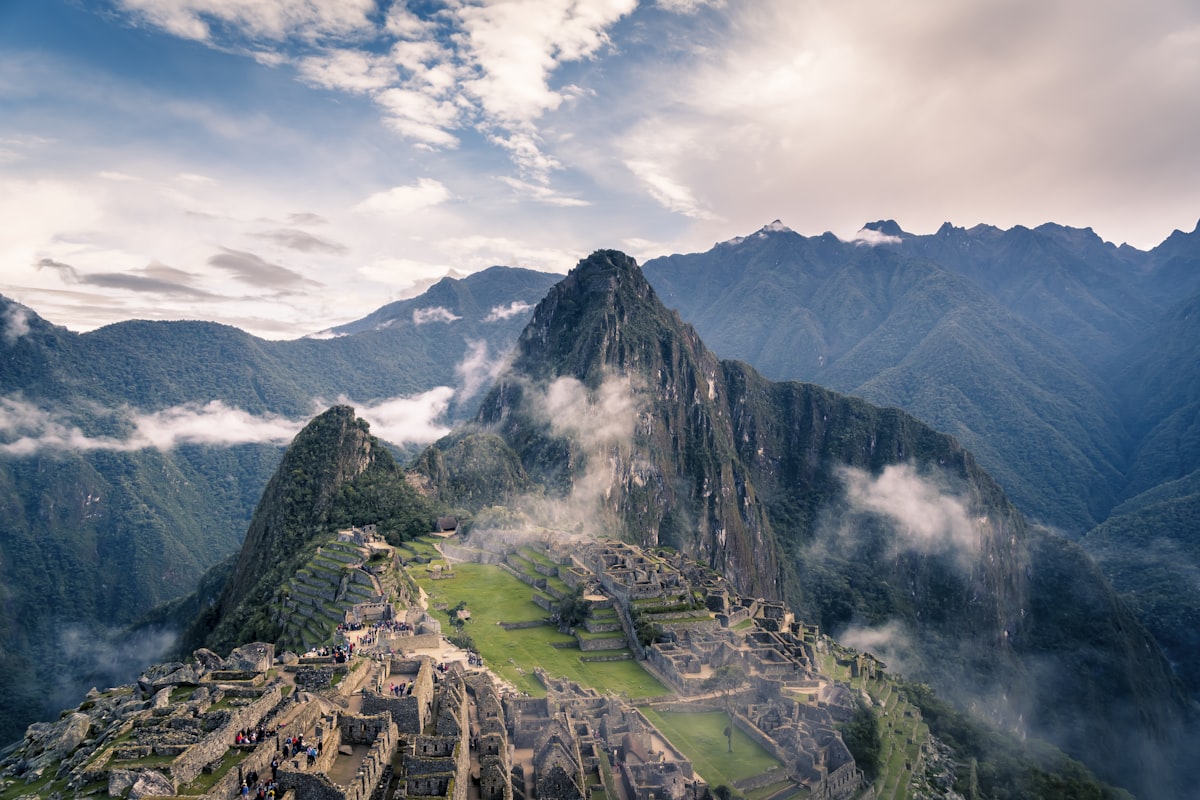
Most people who visit Peru see Cusco, the Sacred Valley, and Machu Picchu. That circuit is extraordinary and entirely worth doing. It is also about five percent of what Peru actually contains. The country is the third largest in South America, encompassing coastal desert, highland Andes, Amazon rainforest, and Lake Titicaca. Each of these is a completely different experience from the Inca heartland.
The Colca Canyon: Twice as Deep as the Grand Canyon

”
The Colca Canyon near Arequipa is one of the deepest canyons in the world and home to one of the largest wild populations of Andean condors on earth. The Cruz del Condor viewpoint is where condors use the thermal updrafts from the canyon to gain altitude, rising from below the rim to eye level in a slow spiral that is one of the most extraordinary wildlife experiences in South America.
The canyon is a two-hour drive from Arequipa, which is itself one of the most beautiful cities in Peru, built entirely from white volcanic stone. Most visitors fly over Arequipa entirely. This is a significant mistake.
Lake Titicaca: Beyond the Floating Islands

”
Lake Titicaca sits at 3812 metres above sea level on the Peru-Bolivia border. The floating reed islands of the Uros people are the main attraction and genuinely interesting. But the larger island of Taquile, two hours by boat from Puno, is where the more significant experience lies. The Taquile people have maintained their textile traditions and social organisation largely independently and a day spent walking the paths between the terrace farms gives you a sense of Andean culture that the museums in Cusco can only describe.
Huacachina: A Real Desert Oasis

”
Huacachina is a natural oasis in the Peruvian coastal desert, a lagoon surrounded by sand dunes that reach 100 metres, with a small village around the water. The dune buggy and sandboarding scene is genuinely exhilarating. Even if it does not interest you, watching the sunset from the top of a sand dune as the Pacific glows in the distance is one of those moments that requires no activity beyond being present.
Lima: One of the World Great Food Cities

”
Lima is where most Peru trips start and most visitors treat it as a transit point to Cusco. The Miraflores and Barranco neighbourhoods on the Pacific clifftop are genuinely beautiful and the food scene means eating well in Lima is an attraction in its own right. Give it two days at the start rather than arriving the night before your Cusco flight.
Route, budget and verification notes
Last editorial review: 1 August 2026. Recheck time-sensitive details shortly before travel.
Build the route
- The Colca Canyon: Twice as Deep as the Grand Canyon
- Lake Titicaca: Beyond the Floating Islands
- Huacachina: A Real Desert Oasis
- Lima: One of the World Great Food Cities
Use these sections as planning anchors rather than a fixed schedule. Confirm door-to-door transfer times, opening days and reservation requirements, then add recovery time after long journeys.
Budget before booking
Price the trip in four separate groups: accommodation, transport, food and paid activities. Add local transfers, baggage fees, taxes, insurance and a contingency amount. Exact prices vary by season and booking date, so this guide does not invent a single daily figure that may already be outdated.
Sources to verify
- Peru Travel for official or primary travel information.
- IATA Travel Centre for passport, visa and health-document checks.
