
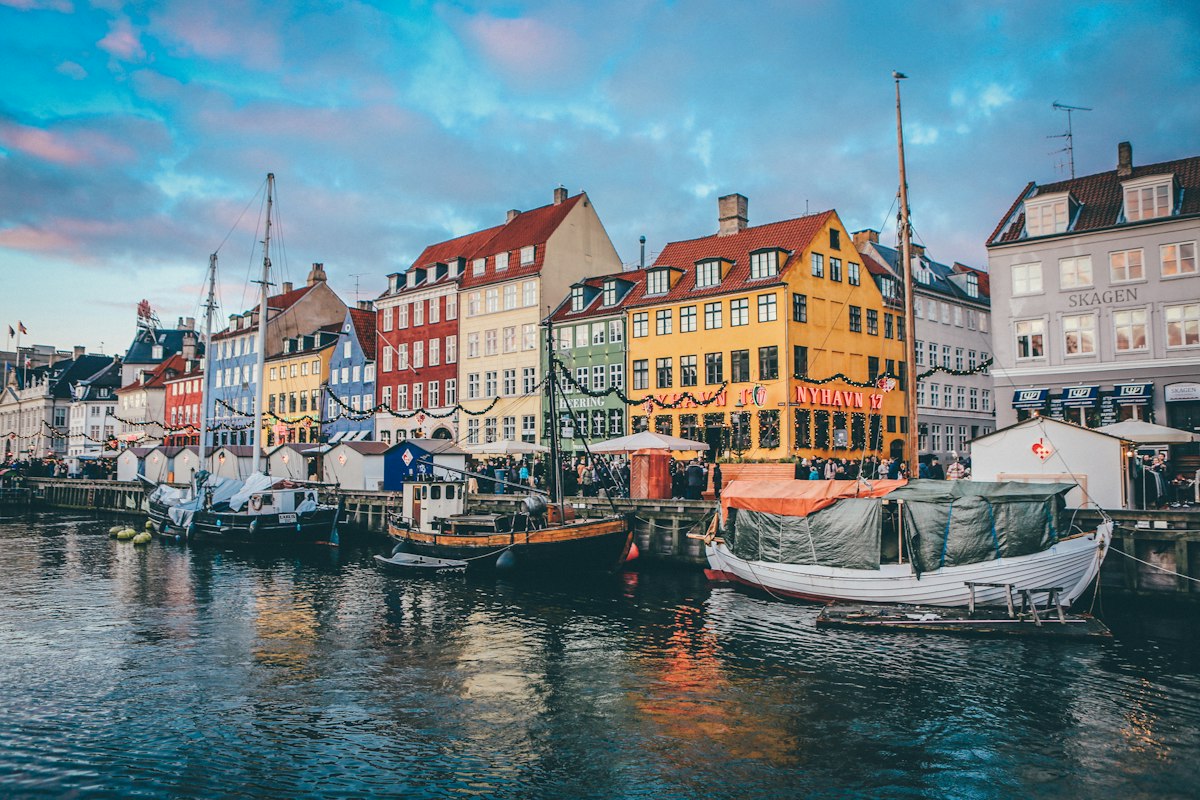
Copenhagen took me by surprise in a way that most European capitals no longer do. I arrived expecting something polished and slightly worthy, a clean Scandinavian city good at design and cycling and not much else. What I found was a city that has worked out how to be genuinely enjoyable in a way that most of its neighbours have not quite managed, and the reason has more to do with the neighbourhoods and the food than with any particular landmark.
The tourist version of Copenhagen is Nyhavn, the colourful canal houses that appear on every postcard, and the Little Mermaid statue, which is one of the most disappointing monuments in Europe relative to its fame. The actual city is somewhere else entirely.
Norreport and the Lakes: Where Copenhagen Actually Lives
The neighbourhood around Norreport station and the three lakes to its west, Sortedams So, Peblinge So, and Sankt Jorgens So, is where you start understanding the city. The lakes are a park at water level, ringed by a path that Copenhageners use for running, cycling, and sitting with coffee watching the swans. The streets immediately behind them in the Frederiksberg and Norrebro directions contain the independent shops, bakeries, and wine bars that define the city’s actual character.
Norrebro in particular has a density of good eating and drinking that rivals anywhere in Europe. The street food on Jagtvej and the natural wine bars on the side streets off Norrebrogade are where the food culture Copenhagen is famous for actually lives, as opposed to the tourist restaurants around Nyhavn charging three times as much for half the quality.
Christianshavn: The Alternative Quarter
Christianshavn is an island neighbourhood connected to the rest of Copenhagen by bridges and with a canal running through its centre. It contains Christiania, the famous freetown commune that has occupied a former military barracks since 1971, and which is simultaneously a genuine social experiment, a tourist attraction, and a neighbourhood that most of its residents experience as simply home.
Walk along the Christianshavn canal in the early evening when the light comes in low across the water and the cafe terraces fill up. This is one of the most beautiful urban settings in northern Europe and it receives a fraction of the attention of Nyhavn, which is architecturally similar but far more crowded.
The Food: What Copenhagen Actually Does
Copenhagen’s food reputation is built around restaurants that most visitors cannot afford and some cannot get into. But the city also has one of the most interesting everyday food cultures in Europe. The smørrebrød open sandwich tradition, updated and taken seriously by a new generation of Danish chefs, is available at lunch places across the city at entirely reasonable prices.
Torvehallerne, the covered market near Norreport, is the best place to eat in the city on a budget: fresh oysters, Danish pastries that have nothing to do with what is sold in coffee chains internationally, smoked fish from the stalls at the back, and a wine shop with a generous tasting policy. Go at eleven in the morning before it fills up.
How Many Days Do You Need?
Three days is the right amount. Two leaves you feeling you missed things. Four starts to require day trips to justify the cost of staying. The day trip to Roskilde, forty minutes by train, adds the Viking Ship Museum and the cathedral where Danish kings are buried, and is worth a half day on its own. Louisiana Museum of Modern Art at Humlebaek, also by train, has one of the best sculpture parks in Europe with views across the Oresund to Sweden.
Route, budget and verification notes
Last editorial review: 1 August 2026. Recheck time-sensitive details shortly before travel.
Build the route
- Norreport and the Lakes: Where Copenhagen Actually Lives
- Christianshavn: The Alternative Quarter
- The Food: What Copenhagen Actually Does
- How Many Days Do You Need?
Use these sections as planning anchors rather than a fixed schedule. Confirm door-to-door transfer times, opening days and reservation requirements, then add recovery time after long journeys.
Budget before booking
Price the trip in four separate groups: accommodation, transport, food and paid activities. Add local transfers, baggage fees, taxes, insurance and a contingency amount. Exact prices vary by season and booking date, so this guide does not invent a single daily figure that may already be outdated.
Sources to verify
- VisitDenmark for official or primary travel information.
- IATA Travel Centre for passport, visa and health-document checks.
