

The Great Wall is the single image most people carry into a China trip, and it is a genuinely worthwhile reason to go, but building an entire itinerary around one wall, however long, sells the country drastically short. China is roughly the size of Europe and holds a comparable internal variety: an ancient buried army in the northwest, karst mountain scenery in the south that inspired centuries of classical landscape painting, and one of the most futuristic skylines on Earth, all connected by a high-speed rail network that puts most Western countries’ infrastructure to shame.
This guide covers the classic first-time China circuit: the Wall itself, Beijing’s imperial core, Xi’an’s ancient army, Guilin’s painted landscapes, and Shanghai’s modern skyline, along with the visa and technology practicalities that trip up unprepared first-time visitors more than any single sight does.
The Great Wall: Choosing the Right Section
The Great Wall is not a single continuous structure but a network of walls and fortifications built and rebuilt by successive dynasties over roughly two thousand years, and the section you choose to visit matters enormously. Badaling, the closest and most accessible section from Beijing, is also by far the most crowded and the most heavily restored, to the point where parts feel closer to a reconstruction than an ancient monument. Mutianyu, a little further out but still a comfortable day trip, strikes the best balance of accessibility, restoration quality and manageable crowds, with a cable car up and a toboggan ride back down that makes for a genuinely fun descent rather than just a practical one.
For a more serious and rewarding experience, unrestored sections like Jiankou, steep, crumbling and unmaintained, draw experienced hikers specifically because they show the wall in its raw, weathered state rather than a polished tourist version, though they require proper hiking fitness and, ideally, a local guide familiar with the more hazardous sections. Whichever section you choose, going early on a weekday rather than a weekend makes a substantial difference; even Mutianyu, generally the calmer option, fills with domestic and international tour groups by mid-morning on weekends and public holidays.
Beijing: The Forbidden City and Imperial History

The Forbidden City, the imperial palace complex for both the Ming and Qing dynasties across nearly 500 years, is the largest surviving palace complex in the world, and its scale is genuinely difficult to appreciate from photographs — nearly a thousand buildings across nearly a million square feet, requiring the better part of a full day to see properly rather than the rushed two-hour version most tour groups attempt. Its layout, oriented on a strict north-south axis with the emperor’s throne hall at its centre, was designed to reflect a cosmological order placing the emperor at the centre of the universe, and even without deep knowledge of Chinese imperial symbolism, the sheer repetition of golden roofs and red walls across successive courtyards conveys the scale of the authority it was built to project. Tiananmen Square, immediately south of the palace’s main entrance, is the largest public square in the world and remains one of modern China’s most historically loaded sites.
The Temple of Heaven, where Ming and Qing emperors once performed annual ceremonies to pray for good harvests, and the Summer Palace, a vast imperial garden estate built around Kunming Lake, both give a different register of Beijing’s imperial history from the Forbidden City’s dense formality, with far more open space and, in the Summer Palace’s case, a genuinely beautiful lakeside setting.
Xi’an: The Terracotta Army
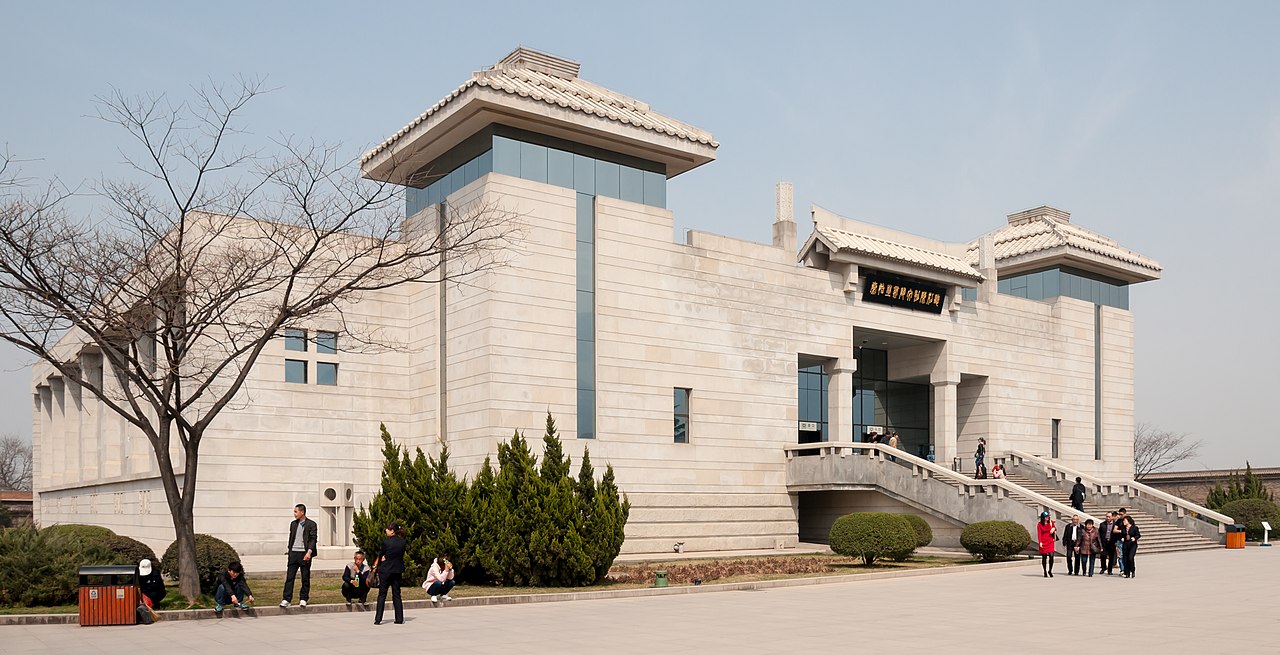
The Terracotta Army, discovered accidentally by farmers digging a well in 1974, consists of an estimated 8,000 life-sized soldiers, along with horses and chariots, buried to guard China’s first emperor, Qin Shi Huang, in his afterlife, and each figure was originally crafted with individual facial features rather than a mass-produced mould. Only a fraction of the full site has been excavated; archaeologists have deliberately left much of it untouched, partly out of preservation concerns and partly because the emperor’s actual tomb, believed to be nearby and reportedly rigged with mercury rivers according to ancient texts, has never been opened at all. Visitors can walk along elevated platforms overlooking Pit 1, the largest of the three excavated pits, giving an overview of row upon row of soldiers still standing largely as they were found, many still awaiting the painstaking restoration work that has been ongoing at the site for decades.
Xi’an itself, the eastern terminus of the ancient Silk Road, has its own well-preserved city walls, among the most complete in China, and a Muslim Quarter with a street food scene, centred around Xi’an’s distinctive Biang biang noodles and roujiamo (a Chinese answer to a pulled-meat sandwich), that is worth as much time as the Terracotta Army itself.
Guilin and the Li River

Guilin’s karst limestone peaks, rising abruptly from flat rice paddies and the Li River, have been the subject of Chinese landscape painting and poetry for over a thousand years, and seeing the scenery in person clarifies immediately why — it looks genuinely painterly, almost too perfectly composed to be a natural landscape rather than an artistic invention. A cruise down the Li River from Guilin to Yangshuo, the small riverside town that has become the region’s backpacker and cycling base, is the classic way to see the peaks, though renting a bicycle around Yangshuo’s surrounding countryside gives a slower, more immersive alternative to the boat.
Yangshuo’s West Street, now a busy pedestrian strip of shops and restaurants, can feel like a jarring contrast to the surrounding rural scenery, but a short ride in almost any direction out of town returns you to the quiet rice paddies and limestone peaks the region is actually famous for.
Shanghai: China’s Futuristic Face

Shanghai’s Pudong skyline, bristling with some of the tallest buildings in the world including the Shanghai Tower, sits directly across the river from the Bund, a strip of colonial-era European buildings from the city’s early-20th-century treaty-port era, and the contrast between the two waterfronts, viewed from either side at night when both are lit up, is one of the more striking urban juxtapositions anywhere in the world. Shanghai runs at a noticeably faster, more cosmopolitan pace than Beijing, with a stronger international business presence and a food scene blending Chinese regional cuisines with genuinely excellent international options.
The French Concession, another legacy of Shanghai’s colonial past, has tree-lined streets, converted lane houses and a café culture that gives the city’s more relaxed, walkable side, a useful counterpoint to Pudong’s vertical intensity and the Bund’s dense evening crowds.
Visas, Transport and When to Visit

Most Western visitors require a visa for China, though a growing number of nationalities now qualify for visa-free transit or short stays under recent policy changes, so checking current requirements well before booking is essential rather than assuming past rules still apply. China’s high-speed rail network is the best in the world by most measures, connecting Beijing, Xi’an, Guilin and Shanghai in journeys that would take considerably longer by plane once airport transfer time is factored in, and booking tickets through official channels or a reliable third-party app in advance, particularly around Chinese national holidays, avoids the worst of the crowds.
Spring (April to May) and autumn (September to October) offer the mildest weather across most of the country covered in this guide; be aware that China operates almost entirely on domestic mobile payment apps (Alipay and WeChat Pay), and setting one up in advance, or carrying a reasonable amount of cash as backup, is worth doing since foreign cards are not universally accepted even in major cities. Two to three weeks comfortably covers Beijing, Xi’an, Guilin and Shanghai without rushing, and note that many Western websites and apps, including Google and most social media, are blocked, so arranging a VPN before arrival, rather than after, is a piece of practical advice worth taking seriously.
Language remains the biggest everyday obstacle for independent travel outside the major hotels and tourist sites, since English proficiency drops off quickly beyond central Beijing and Shanghai; a translation app with offline capability and a hotel business card with the address in Chinese characters to show taxi drivers are both worth arranging before you leave the hotel each day, particularly outside the largest cities covered in this guide.
Practical planning notes for this trip
A useful itinerary for The Great Wall Isn’t Enough: Where to Actually Go in China should be built around travel time, opening days, weather and realistic energy levels rather than a list of attractions. The notes below turn the destinations in this guide into practical decisions. Confirm transport schedules and entry rules with official sources shortly before departure, because seasonal services and local requirements can change.
When planning around The Great Wall: Choosing the Right Section, check where you will sleep the night before and after, then compare the door-to-door journey rather than the advertised travel time. Leave a margin for station transfers, meals and weather delays. If the stop requires an early reservation, secure that first and arrange flexible activities around it. This keeps one delayed connection from disrupting the rest of the route.
Treat Beijing: The Forbidden City and Imperial History as a route decision, not just a photo stop. Ask what time of day best suits the place, how crowded periods affect the experience, and whether a slower alternative would add more value. Group nearby sights on the same day, but avoid packing distant areas together simply because they look close on a map. Local terrain and traffic often matter more than straight-line distance.
Final checks before departure
- Recheck official entry requirements, opening times and transport schedules.
- Keep bookings, insurance details and essential addresses available offline.
- Allow recovery time after long journeys instead of planning a major activity immediately.
- Review the route a few days before travel and replace any outdated detail.
China planning update: entry rules, bookings and realistic preparation
Last fact-check: 3 August 2026. This guide is research-led rather than a first-hand trip diary. Entry rules change by passport and itinerary, so confirm them with the Chinese authorities before paying for non-refundable travel.
Start with the Chinese government?s Visit China information hub. Eligible transit passengers may be able to use the 240-hour transit-without-visa scheme, but it is not a general tourist visa: the traveller, port, permitted area and confirmed onward journey to a third country or region must satisfy the rules. Read the National Immigration Administration explanation for the current conditions.
A practical booking order
- Confirm entry eligibility for every traveller and every border crossing.
- Choose the Great Wall section and reserve major Beijing attractions before fixing day trips.
- Book the longest intercity rail legs, then accommodation near convenient metro or station connections.
- Save hotel names and addresses in Chinese, plus offline copies of confirmations.
- Check how your phone, payment cards and essential apps will work before arrival.
Visa exemptions, attraction quotas and transport procedures can change faster than a general guide can be revised. Treat official government and attraction pages as the final authority.
