

India resists the kind of tidy summary that works for smaller countries — it is less a single destination than a continent’s worth of distinct regions, languages and cuisines operating under one flag, and the culture shock that first-time visitors are warned about is real, but it runs in both directions: alongside the noise, crowds and poverty that outsiders anticipate sits a level of hospitality, colour and monument-density that few countries anywhere can match. The Golden Triangle — Delhi, Agra and Jaipur — remains the standard first-time route for good reason, and it deserves that reputation while still representing only a small slice of what the country actually offers.
This guide covers the classic Golden Triangle route, plus Varanasi’s spiritual intensity and Kerala’s slower southern pace, for anyone looking to build a longer, more varied first trip.
The Taj Mahal: Living Up to Its Reputation
The Taj Mahal, built by Mughal emperor Shah Jahan as a mausoleum for his favourite wife, Mumtaz Mahal, who died in childbirth, is one of the few monuments in the world that genuinely exceeds the expectations set by a lifetime of photographs; the white marble, inlaid with semi-precious stones in intricate floral patterns, appears to change colour throughout the day depending on the light, from a soft pink at dawn to blinding white at midday to a warm gold at sunset. Arriving at opening, shortly after sunrise, is worth the early start both for the changing light and to see the monument before the day’s heaviest crowds and heat set in.
Agra Fort, a UNESCO World Heritage site a short distance away, is where Shah Jahan was later imprisoned by his own son and reportedly spent his final years gazing at the Taj Mahal from a window across the river, and visiting it either before or after the Taj gives useful historical context to the more famous monument’s construction and the dynasty behind it. Agra itself is a rushed, congested city that most visitors treat purely as a day trip from Delhi, roughly three to four hours away by road or a faster dedicated Gatimaan Express train, and there is little reason to argue with that approach beyond the Taj and the Fort themselves.
Jaipur: The Pink City and Amber Fort

Jaipur, Rajasthan’s capital, earned its “Pink City” nickname from a 19th-century decree painting the old city’s buildings a terracotta pink to welcome a visiting British prince, a tradition maintained by law to this day within the walled old city. Amber Fort, a hilltop fortress-palace a short drive outside the city, combines Hindu and Mughal architectural styles across a sprawling complex of courtyards, halls and mirrored chambers, and arriving early avoids both the worst heat and the crowds that build steadily through the morning.
The City Palace, still partly home to Jaipur’s royal family, and Hawa Mahal, the ornate five-storey “Palace of Winds” whose honeycomb facade of hundreds of small windows was designed to let royal women observe street life unseen, are both within walking distance of each other in the old city, and Jaipur’s markets, particularly for block-printed textiles and gemstones, are among the best in Rajasthan for genuinely skilled, if occasionally hard, bargaining. Jantar Mantar, a collection of nineteen astronomical instruments built in the early 18th century including the world’s largest stone sundial, is a UNESCO World Heritage site and a genuinely unusual stop for anyone interested in pre-telescope astronomy, sitting almost unnoticed a short walk from the more famous City Palace.
Varanasi: The Ganges and Sacred Ritual
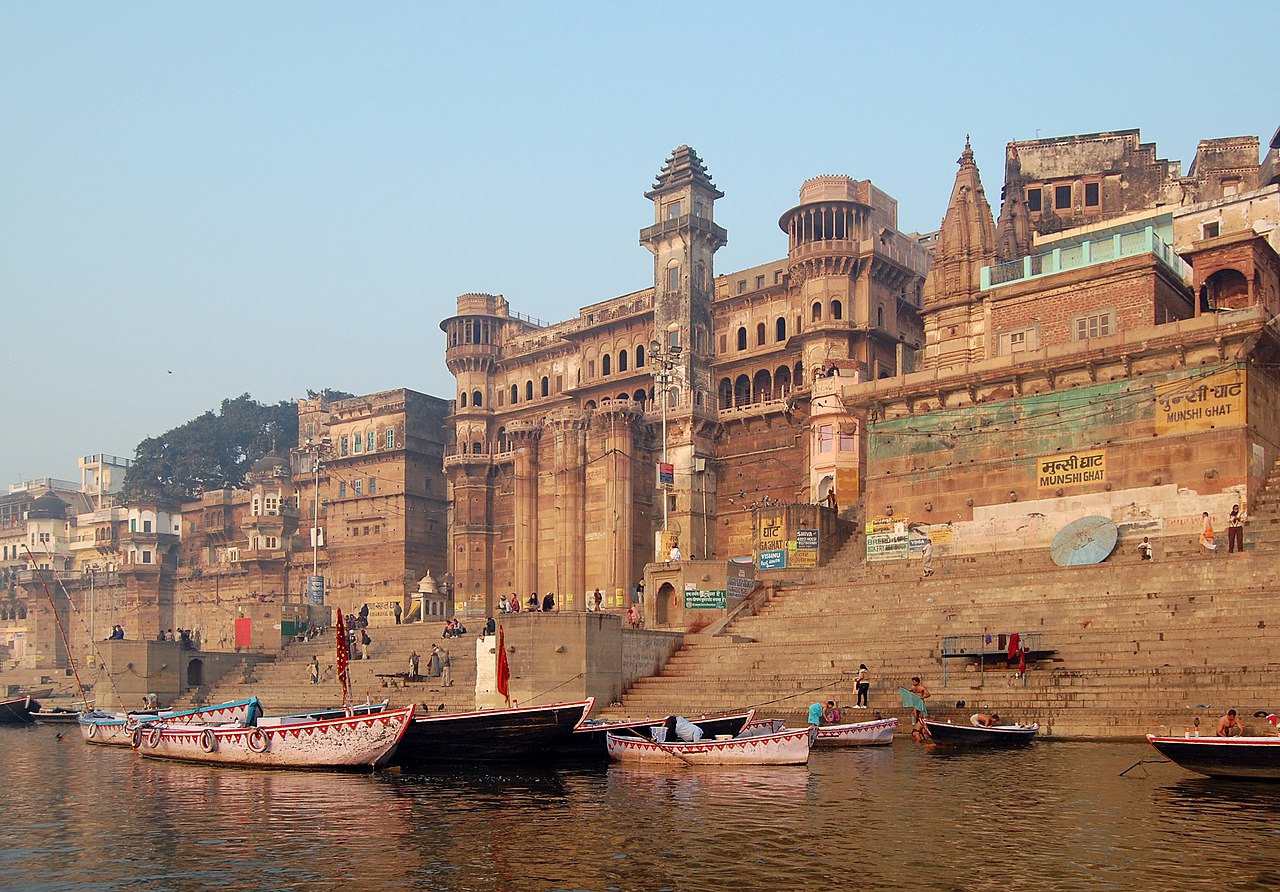
Varanasi, one of the oldest continuously inhabited cities in the world and Hinduism’s holiest, sits along a stretch of the Ganges lined with ghats, stone steps leading down to the water where pilgrims bathe, cremations are performed in public view, and daily life unfolds in a way that can feel overwhelming to first-time visitors unprepared for its intensity. A sunrise boat ride along the river, past the ghats as the city wakes and morning rituals begin, is the classic and genuinely worthwhile way to take in the scale of what happens here daily, and the evening Ganga Aarti ceremony, a choreographed fire ritual performed nightly at Dashashwamedh Ghat, draws large crowds of both pilgrims and visitors.
Manikarnika Ghat, one of the main cremation sites, operates in full public view as a matter of religious practice rather than spectacle, and visitors are welcome to observe respectfully from a distance, though photographing cremations directly is considered deeply disrespectful and should be avoided regardless of what a tout offering a “better view” might suggest. Beyond the ghats, the narrow lanes of the old city, full of temples, shrines and cows wandering freely between them, reward slow, aimless walking more than any fixed sightseeing itinerary, and Varanasi’s silk weaving tradition, particularly its famous Banarasi sarees, is worth seeking out directly from small workshops rather than tourist-facing shops closer to the main ghats.
Kerala’s Backwaters

Kerala, in India’s tropical southwest, offers a genuinely different register of the country from the Golden Triangle’s forts and deserts: a network of interconnected canals, lakes and lagoons known as the backwaters, best explored aboard a converted rice barge houseboat (kettuvallam), drifting slowly past palm-lined banks, paddy fields and small riverside villages over one or two nights. The pace here is deliberately slow, and Kerala’s broader reputation as “God’s Own Country,” used in its own tourism marketing without much exaggeration, extends to its Ayurvedic wellness traditions, spice plantations in the Western Ghats hill country, and some of India’s best-preserved colonial-era architecture in Fort Kochi.
Kerala also has among the highest literacy rates and best healthcare indicators in India, and it shows in the visitor experience: infrastructure, cleanliness and general ease of travel are noticeably better here than in much of the rest of the country, making it a gentler entry point for anyone nervous about India’s more famously chaotic northern cities.
Delhi: Old and New

Delhi functions almost as two cities in one: Old Delhi, dense, chaotic and centred on the Mughal-era Red Fort and the Jama Masjid, one of India’s largest mosques, and New Delhi, the wide, tree-lined colonial-era capital built by the British, home to India Gate and the government buildings of Rajpath. Chandni Chowk, Old Delhi’s main market street, running directly below the Red Fort, is one of the most intense sensory experiences available in the city, dense with spice merchants, jewellery shops and some of the best street food in northern India, best explored on foot or by cycle rickshaw rather than any motorised transport, since the lanes are simply too narrow and crowded for anything larger.
Food, Safety and When to Visit

A thali, a compartmentalised platter offering small portions of several regional dishes at once, is the best way to sample a region’s specific cuisine in a single sitting, and India’s regional food variation is significant enough that a Kerala thali and a Rajasthani thali bear only a family resemblance to each other. Standard travel health precautions matter more in India than in most of Europe or East Asia: stick to bottled water, be selective about street food stalls based on turnover and visible hygiene, and expect some digestive adjustment regardless of how careful you are, which is a normal and manageable part of the trip rather than a reason to avoid the country’s food scene.
October through March offers the most comfortable weather across most of the regions in this guide, avoiding both the brutal pre-monsoon heat of April and May and the heavy rains of the summer monsoon; Kerala’s backwaters, however, are arguably at their most lush and dramatic during and just after the monsoon, a genuine exception to the general rule. Two to three weeks is realistic for combining the Golden Triangle with either Varanasi or Kerala, and India’s domestic flight network, along with an extensive and famously chaotic train system, makes long-distance travel between regions manageable, if rarely fast, without needing to drive yourself.
Most Western nationalities require a visa, most conveniently arranged through India’s e-Visa system before departure rather than on arrival. Bargaining is expected in markets and with unmetered rickshaws nationwide, and agreeing a price before getting in, rather than after arriving at the destination, avoids the vast majority of the disputes that give Indian taxi and rickshaw travel its reputation among first-time visitors.
Practical planning notes for this trip
A useful itinerary for India Travel Guide: The Golden Triangle, Varanasi & Kerala should be built around travel time, opening days, weather and realistic energy levels rather than a list of attractions. The notes below turn the destinations in this guide into practical decisions. Confirm transport schedules and entry rules with official sources shortly before departure, because seasonal services and local requirements can change.
When planning around The Taj Mahal: Living Up to Its Reputation, check where you will sleep the night before and after, then compare the door-to-door journey rather than the advertised travel time. Leave a margin for station transfers, meals and weather delays. If the stop requires an early reservation, secure that first and arrange flexible activities around it. This keeps one delayed connection from disrupting the rest of the route.
Treat Jaipur: The Pink City and Amber Fort as a route decision, not just a photo stop. Ask what time of day best suits the place, how crowded periods affect the experience, and whether a slower alternative would add more value. Group nearby sights on the same day, but avoid packing distant areas together simply because they look close on a map. Local terrain and traffic often matter more than straight-line distance.
Final checks before departure
- Recheck official entry requirements, opening times and transport schedules.
- Keep bookings, insurance details and essential addresses available offline.
- Allow recovery time after long journeys instead of planning a major activity immediately.
- Review the route a few days before travel and replace any outdated detail.
India trip planning: sequence, official checks and realistic pacing
Last fact-check: 3 August 2026. This is a research-based planning guide. Entry permissions, monument rules and transport procedures should always be confirmed through official channels.
A practical first itinerary separates the intense Golden Triangle section from Varanasi and Kerala. Delhi, Agra and Jaipur can fill six or seven days without rushing. Varanasi normally needs an additional flight or long rail journey, while Kerala is a separate southern leg that deserves several days. Trying to fit all three regions into one week creates more transit than useful sightseeing.
Book in this order
- Confirm the correct visa or entry permission through the Government of India?s official channels.
- Reserve international and major domestic transport.
- Check Taj Mahal visitor rules on the official Taj Mahal website, including closure days and restrictions.
- Choose accommodation based on arrival time and transport, not only the lowest nightly rate.
- Leave buffer time before international departures; weather and transport delays can affect connections.
Use registered providers for complex transfers and activities, keep digital and offline copies of essential bookings, and obtain personalised medical advice before travel. Prices quoted in general guides should be treated as planning ranges rather than guarantees.
