
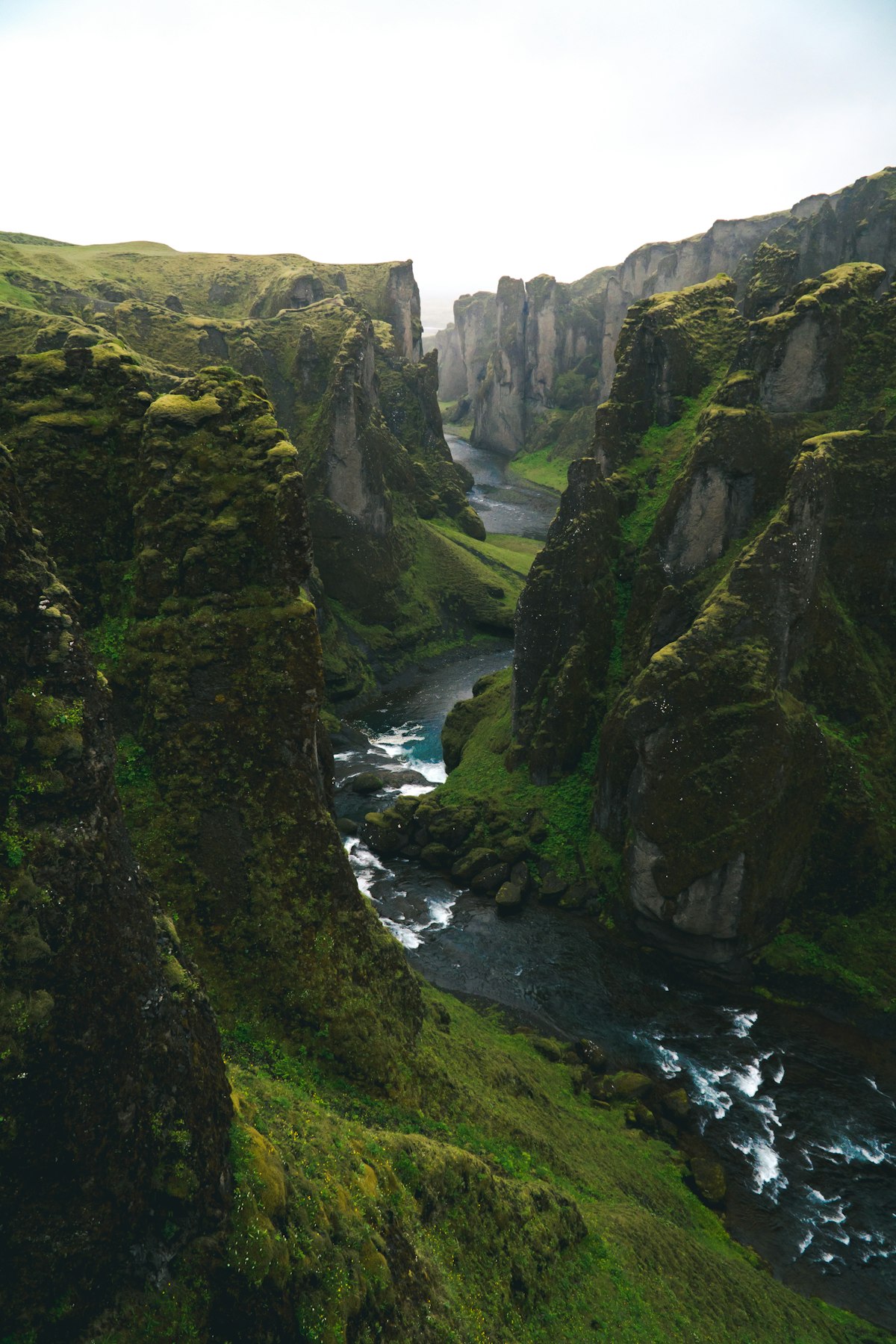
Route 1 — the Ring Road — circles Iceland for 1,332 kilometres. It passes glaciers, active volcanoes, sea cliffs with puffin colonies, geothermal fields, and fjords. The entire loop can be driven in ten days, but two weeks allows time to stop at things that are not in any guidebook: a pull-off where steam rises from a crack in the road, a farm selling skyr from an unmanned fridge on the honour system, a black sand beach with no name on the map. Iceland is a country that rewards slowing down.
The South Coast
”
The south coast between Reykjavík and Höfn is the most-visited section and earns its reputation. Seljalandsfoss and Skógafoss are within two hours of Reykjavík. The black sand beaches at Reynisfjara have basalt column formations and dangerous surf that the warning signs do not adequately describe — waves here have killed people who turned their backs on the sea. Jökulsárlón glacier lagoon, where icebergs calve from Breiðamerkurjökull and float to the sea, is the most otherworldly landscape in Iceland. Diamond Beach, directly across the road, has ice blocks washed ashore on black sand.
The East Fjords

”
The East Fjords are where the Ring Road slows down to match the landscape. The road winds in and out of narrow fjords for hours, passing fishing villages, reindeer on the hillsides, and views that change completely with every headland. Seyðisfjörður — reached by a switchback mountain road — is a small town of Norwegian-style wooden houses built around a fjord that looks like a film set. The East Fjords see a fraction of the visitors that the south coast receives and reward travellers who do not need a waterfall every fifteen minutes.
The North: Myvatn and Akureyri

”
Lake Mývatn in the north is a geothermal landscape concentrated into a small area: pseudocraters, lava formations at Dimmuborgir, the Krafla caldera, the Námaskarð sulphur fields, and the Mývatn Nature Baths. Akureyri, Iceland’s second city, is a base for whale watching in Eyjafjörður and for day trips to Goðafoss — the Waterfall of the Gods — where the Norse settler Þorgeir threw his pagan idols into the river after converting to Christianity in 1000 AD.
Practical Information

”
A 4WD is not required for the Ring Road itself but opens up the highland F-roads that cross the interior in summer. The Ring Road is driveable year-round but winter conditions — ice, darkness, and closures after storms — require experience and appropriate tyres. June through August gives the longest daylight hours. The shoulder months of May and September offer fewer crowds, lower accommodation prices, and the possibility of northern lights from mid-August onward.
Route, budget and verification notes
Last editorial review: 1 August 2026. Recheck time-sensitive details shortly before travel.
Build the route
- The South Coast
- The East Fjords
- The North: Myvatn and Akureyri
- Practical Information
Use these sections as planning anchors rather than a fixed schedule. Confirm door-to-door transfer times, opening days and reservation requirements, then add recovery time after long journeys.
Budget before booking
Price the trip in four separate groups: accommodation, transport, food and paid activities. Add local transfers, baggage fees, taxes, insurance and a contingency amount. Exact prices vary by season and booking date, so this guide does not invent a single daily figure that may already be outdated.
Sources to verify
- Visit Iceland for official or primary travel information.
- IATA Travel Centre for passport, visa and health-document checks.
