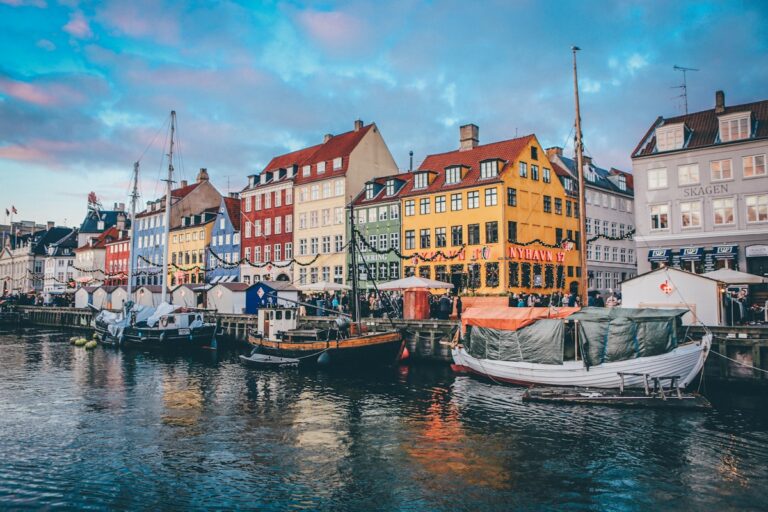


Denmark might be the single easiest arrival on this entire list, and I say that as someone who actively looks for the complicated version of every trip I plan. There’s really only one airport that matters, the train from it is embarrassingly efficient, and the only genuine decision you have to make is whether to bother with a bike the moment you land. Most guides pad this topic out with options that barely apply; I’d rather just tell you what actually happens once you touch down.
This is that version: the one airport that matters, the fifteen-minute train ride that gets you into the city centre, and the handful of genuine decisions worth making before you land rather than after.
Copenhagen Airport: The Only Arrival Point You Need
Copenhagen Airport (CPH) in Kastrup handles essentially all of Denmark’s international arrivals, and unlike some of the other countries on this list, there isn’t really a meaningful secondary airport worth comparing it against. It’s well connected from North America, with direct flights from cities like New York, Chicago and Newark, and even better connected within Europe, where I’ve found short-notice fares here noticeably cheaper than equivalent routes into Stockholm or Oslo.
The airport sits right on the edge of the city, and that proximity is the whole reason this arrival feels so painless. Billund Airport, in the country’s centre near Legoland, is the one genuine exception worth naming if that specific park is the actual reason for your trip, since it takes a decent number of seasonal charter and budget routes directly from the UK and other parts of Northern Europe without needing to connect through Copenhagen first.
Fifteen Minutes to the City Centre, No Exaggeration

The metro station sits directly beneath the terminal, and the ride into Copenhagen’s city centre genuinely takes under 15 minutes, which is faster than I’ve managed to get from some cities’ downtown train stations to their own airport-adjacent hotels. There’s no separate airport line or premium express fare to worry about either; it’s the same metro network you’ll use for the rest of your stay, running on the same ticket.
Trains run roughly every four to six minutes through most of the day, dropping to every 20 minutes overnight, and I’ve never waited long enough on the platform to regret skipping a taxi. If you’re arriving with heavy luggage or landing very late, taxis queue right outside arrivals and the fare into the centre rarely runs more than 30-40 minutes’ worth of metro fares combined, which is a smaller gap than in most European capitals. Buy your metro ticket from the machine at the platform or through the DOT Tickets app before you board, since inspections happen regularly and I’ve watched more than one jet-lagged tourist get an on-the-spot fine for assuming they could pay on arrival at the other end.
Arriving by Train From Sweden or Germany

If you’re already in Scandinavia, the train option is genuinely worth considering over flying. Direct trains connect Hamburg to Copenhagen in around four hours 40 minutes, and the Öresund Bridge line from Stockholm takes about five and a half hours, crossing the same striking bridge-and-tunnel combination that’s shown up in more than one Scandinavian crime drama.
Malmö, on the Swedish side of that bridge, is only about 35 minutes from central Copenhagen by regional train, and I’ve used it as a genuinely practical day trip base more than once when Copenhagen hotel prices spiked during a festival week. The border crossing itself is a non-event; you’ll barely notice you’ve left Denmark’s airspace, let alone its rail network. I’ve also used the direct train from Berlin, roughly seven hours including the ferry-train combination across the Fehmarn Belt, as a genuinely relaxed way to end a longer Germany trip without needing to fly at all, arriving directly into Copenhagen’s city centre rather than an airport on its outskirts.
Copenhagen Central Station and Getting Around Once You’ve Arrived

Copenhagen Central Station (København H), a short walk from Tivoli Gardens and most of the city’s main hotels, is where international and domestic trains both arrive, and it’s compact enough that I’ve never needed more than a few minutes to find my connecting platform even without checking a map first. For a fuller sense of what to actually do once you’ve settled in, I go through the city in depth in my Copenhagen travel guide.
Copenhagen’s public transport runs on a single integrated ticketing system covering metro, train and bus, and a Rejsekort travel card, tapped in and out at each journey, works out cheaper than single tickets if you’re staying more than a couple of days. I’ve bought one on every trip since my first and never regretted the small upfront deposit. Copenhagen’s harbour buses, running on that same ticket, cut straight across the water between neighbourhoods that would otherwise mean a longer detour by land, and I’d genuinely recommend taking one at least once purely for the different view of the city it gives you.
Renting a Bike (Because Everyone Actually Does)

Copenhagen’s cycling infrastructure isn’t a tourist gimmick; it’s how the city actually functions, with dedicated, physically separated lanes running along nearly every major street. Renting a bike for even a single day changes how much of the city you can reasonably cover, and I’ve found it faster than the metro for anything within about a 20-minute radius of the centre, traffic lights included.
Donkey Republic and similar bike-share apps let you unlock and return bikes from stands scattered across the city without needing to return to a fixed rental shop, which removes the one bit of friction that used to put me off renting in cities I didn’t know well. If cycling in city traffic makes you nervous, the dedicated lanes here are genuinely more forgiving than in most of the other cities I’ve tried this in. Helmets aren’t legally required for adults, and locals mostly skip them, but I still wear one on rental bikes purely out of habit, and no rental shop has ever made an issue of it either way.
Visa and Entry Basics

Denmark is part of the Schengen Area, so travellers from the US, Canada, Australia and most other visa-exempt countries can enter for stays up to 90 days without applying for anything in advance. Once you’ve cleared passport control at Copenhagen Airport, moving on to Sweden or Germany by train involves no further checks under normal circumstances, though Denmark has occasionally reinstated temporary spot checks at the Swedish border in recent years, so it’s worth having your passport within reach on that particular crossing even if you don’t expect to need it. Outside of that one border, Denmark’s entry process is about as low-friction as international travel gets; I’ve cleared passport control at Kastrup in under ten minutes on every trip so far, even landing alongside two other wide-body flights.
When to Book

Fares into Copenhagen are cheapest in the depths of winter, January through early March, and climb steadily from May onward, peaking hard around Midsummer and the long daylight stretch of June and July that draws the whole of Scandinavia outdoors. I’ve had the best luck booking a June trip about two to three months out, since good weather and long evenings here get priced in earlier than you’d expect for a country this far north.
Denmark isn’t a cheap country by any measure, a topic I go into with real numbers in my Denmark budget breakdown, but the arrival itself costs you nothing extra to get right: fly into Copenhagen, take the metro, and don’t overthink the rest.
If there’s one thing I’d tell my own first-time self, it’s to spend the mental energy this trip usually burns on logistics somewhere else entirely, because Denmark genuinely doesn’t ask much of you before you’ve even left the airport.