
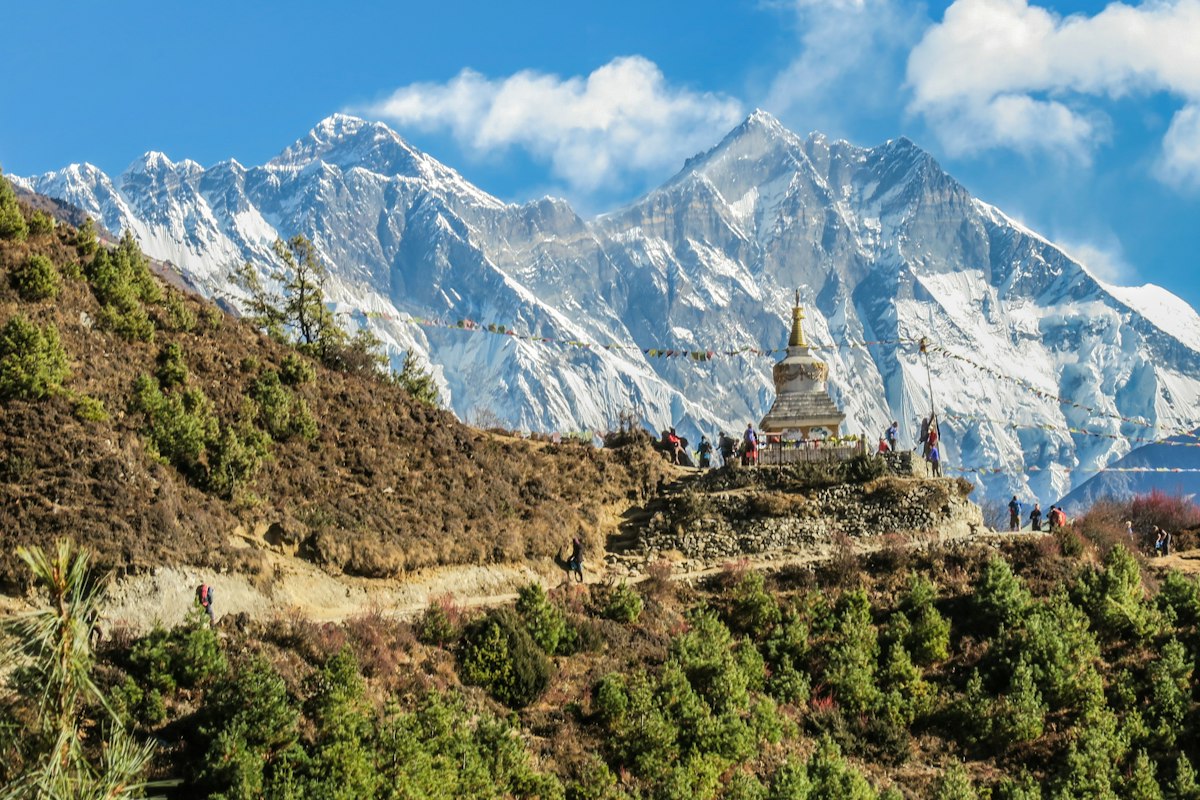
Most people assume Everest Base Camp is for serious mountaineers only. It is not. The trek to Base Camp at 5,364 metres is a long, cold, physically demanding walk — but it requires no technical climbing skills. Hundreds of thousands of people have done it, including complete beginners. What it requires is time, acclimatisation, and a willingness to put one foot in front of the other for about twelve days.
How Long Does the Trek Take?

”
The classic route from Lukla takes 12 to 14 days return, including rest days for acclimatisation in Namche Bazaar and Dingboche. Skipping rest days is the most common reason trekkers fail to reach Base Camp — altitude sickness does not care how fit you are, and it cannot be pushed through. The rest days feel slow but they are what makes the difference between reaching the top and turning back at Dingboche.
The Route

”
The trail follows the Khumbu Valley from Lukla through Phakding, Namche Bazaar, Tengboche, Dingboche, Lobuche, and Gorak Shep before the final walk to Base Camp. Each section has its own character — the lush lower valley with rhododendron forests, the stark high-altitude landscape above Dingboche, the surreal grey moraine of the Khumbu Glacier near Base Camp itself. The scenery changes dramatically with every day of altitude gained.
What to Expect at Base Camp

”
Base Camp during trekking season is a busy place — rows of expedition tents, the sound of ice cracking on the glacier, prayer flags strung across the moraine. The view is not of Everest’s summit; the peak is hidden behind the Khumbu Icefall from this angle. The reward is not the view but the feeling of having walked there under your own power. The view everyone recognises — the classic Everest shot — is actually from Kala Patthar, a separate two-hour side hike at 5,545 metres that most trekkers add to their itinerary.
Practical Details

”
You need two permits: the Sagarmatha National Park permit and the Khumbu Pasang Lhamu Rural Municipality permit. Both can be obtained in Kathmandu or at checkpoints along the trail. Most trekkers fly from Kathmandu to Lukla on a 35-minute flight that ranks among the world’s most dramatic airport approaches. A guide is not legally required but is strongly recommended — they handle logistics, know the teahouses, and can recognise altitude sickness symptoms before you do.
Route, budget and verification notes
Last editorial review: 1 August 2026. Recheck time-sensitive details shortly before travel.
Build the route
- How Long Does the Trek Take?
- The Route
- What to Expect at Base Camp
- Practical Details
Use these sections as planning anchors rather than a fixed schedule. Confirm door-to-door transfer times, opening days and reservation requirements, then add recovery time after long journeys.
Budget before booking
Price the trip in four separate groups: accommodation, transport, food and paid activities. Add local transfers, baggage fees, taxes, insurance and a contingency amount. Exact prices vary by season and booking date, so this guide does not invent a single daily figure that may already be outdated.
Sources to verify
- IATA Travel Centre for official or primary travel information.
- IATA Travel Centre for passport, visa and health-document checks.
